India’s over INR 1 lakh Crore arms boost: Strengthening defense capabilities and domestic industry
By Anita Mathur
India has taken a significant step toward bolstering its military capabilities with a landmark decision to approve arms and ammunition purchases totalling INR 102000 Crores Announced by the Indian Defense Ministry on July 3, this comprehensive procurement package aims to enhance operational readiness across the Indian Army, Navy, and Air Force, while reinforcing New Delhi’s ongoing push to strengthen its domestic defense manufacturing base.
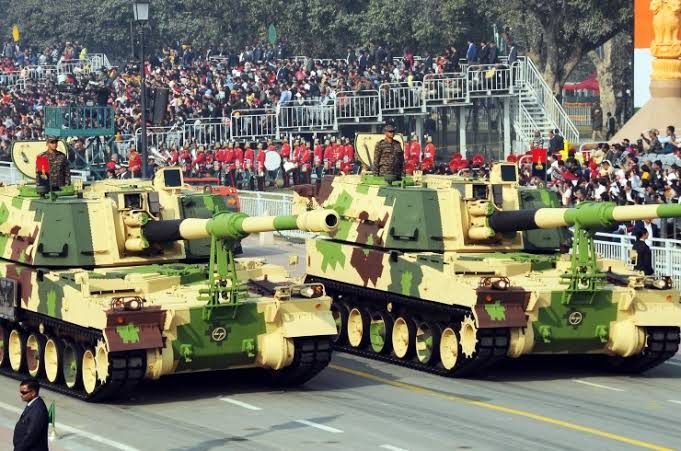
The approvals, ratified by India’s Defense Acquisition Council (DAC), cover a wide spectrum of advanced military equipment. These include armored recovery vehicles, state-of-the-art electronic warfare systems, integrated common inventory management systems, and surface-to-air missiles for the Army.
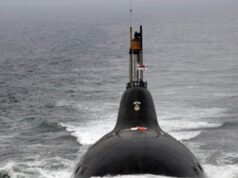
The Indian Navy also received the green light to acquire moored mines, mine countermeasure vessels, super rapid gun mounts, and submersible autonomous vessels-critical for safeguarding maritime security and protecting vital shipping lanes.
The Defense Ministry highlighted that these procurements will significantly mitigate risks posed to both naval and merchant vessels. As India’s strategic interests expand across the Indian Ocean and beyond, ensuring the protection of maritime trade routes and territorial waters has become a paramount priority. The inclusion of advanced mine warfare and countermeasure capabilities reflects a recognition of emerging naval threats, including the risk of naval mines disrupting commercial and military navigation.
While India remains one of the largest global importers of defense equipment, this INR 102000 Crores package emphasizes a clear policy shift towards self-reliance and domestic manufacturing. The government is committed to transforming India from a major defense importer into a global defense production hub under its ambitious “Make in India” initiative. This strategy aims to reduce dependency on foreign suppliers, promote indigenous technology development, create employment, and enhance India’s geopolitical autonomy.
Historically, India’s defense procurement has been heavily reliant on Russian technology and equipment. The relationship between the two countries, which dates back to the Cold War era, continues to be a cornerstone of India’s military modernization. However, in recent years, this partnership has evolved beyond mere import-export dynamics to emphasize joint production and technology transfer.
A prime example of this evolving defense collaboration is BrahMos Aerospace-a joint Indo-Russian venture established in 2005 and named after the Brahmaputra and Moskva rivers. BrahMos Aerospace is a symbol of successful international cooperation in defense manufacturing, with India’s Defense Research and Development Organization (DRDO) holding a 50.5% stake and Russia’s NPO Mashinostroyenia holding 49.5%. The company produces the BrahMos supersonic cruise missile, widely regarded as one of the world’s fastest and most advanced cruise missiles.
The BrahMos missile has been a critical asset in recent military confrontations, including India’s four-day military engagement with Pakistan in May. Its deployment showcased the missile’s effectiveness in precision strikes, long-range capability, and strategic deterrence, highlighting the importance of advanced indigenous weapon systems in India’s security doctrine.
India’s naval modernization efforts also continue apace. The recent handover of INS Tamal, a Russian-built Krivak-class frigate, underscores ongoing cooperation between Indian and Russian defense industries. Although constructed at Russia’s Yantar shipyard in Kaliningrad, the frigate incorporates 26% Indian components, reflecting incremental progress in local content and joint manufacturing.
Indian naval specialists from the Warship Overseeing Team monitored the frigate’s construction, ensuring that Indian standards and operational requirements were met. This reflects India’s growing capacity to integrate and eventually manufacture complex naval platforms, a critical capability given the strategic importance of the Indian Ocean Region.
This latest INR 102000 Crores acquisition follows an earlier tranche of approvals from March this year when the DAC sanctioned arms and equipment purchases exceeding INR 53000 Crores. That package included upgraded engines for the Indian Army’s Russian-made T-90 battle tanks, additional anti-submarine torpedoes for the Navy, and airborne early warning and control systems for the Air Force.
Together, these procurements paint a picture of a comprehensive military modernization effort focused on enhancing mobility, firepower, situational awareness, and supply chain efficiency. The emphasis on upgrades and new acquisitions across all branches of the armed forces reveals a coordinated approach to addressing emerging security challenges
India’s renewed focus on expanding and upgrading its military capabilities is driven by a complex geopolitical environment. Tensions along the northern borders with China and Pakistan, ongoing security challenges in the Kashmir region, and a rising assertiveness of China in the Indo-Pacific have all contributed to New Delhi’s urgency in strengthening defense preparedness.
Moreover, the Indian Ocean is increasingly becoming a theater of strategic competition, with India aiming to assert itself as the predominant regional power. Protecting sea lines of communication, countering piracy, and deterring potential adversaries requires a modern and capable navy equipped with the latest technology.
The inclusion of advanced electronic warfare systems reflects an understanding of the modern battlefield’s evolving nature. Electronic warfare capabilities are critical to disrupting enemy communications, protecting own forces from cyber and electronic attacks, and gaining information superiority-essential for success in contemporary conflicts.
While the INR 102000Crores procurement marks a significant step forward, India faces ongoing challenges in defense procurement and indigenization. Historically, delays, bureaucratic hurdles, and quality control issues have hampered the pace of modernization. Domestic industries must scale up production capabilities and improve technology development to meet the ambitious goals set by the government.
India’s focus on joint ventures and technology partnerships, especially with Russia, will likely continue as a transitional strategy while indigenous capabilities mature. The success of ventures like BrahMos Aerospace offers a blueprint for future collaborations.
India’s approval of INR 192000 Crores in arms and ammunition purchases reflects both its strategic imperatives and its commitment to developing a robust domestic defense industry. By investing in advanced systems across the Army, Navy, and Air Force, New Delhi is positioning itself to better respond to evolving threats and secure its regional interests.
The continuing partnership with Russia, exemplified by joint ventures like BrahMos Aerospace and the construction of naval vessels such as INS Tamal, will remain integral to India’s defense strategy in the near term. At the same time, the emphasis on “Make in India” initiatives aims to transform the country into a self-sufficient defense power with greater technological independence.
As geopolitical competition intensifies in Asia and beyond, India’s substantial arms boost and modernization efforts will play a crucial role in shaping the future balance of power in the region, while supporting the nation’s aspirations of strategic autonomy and military prowess.