After India’s rebuff on tariffs and Russian oil, US ties up with Pakistan once again
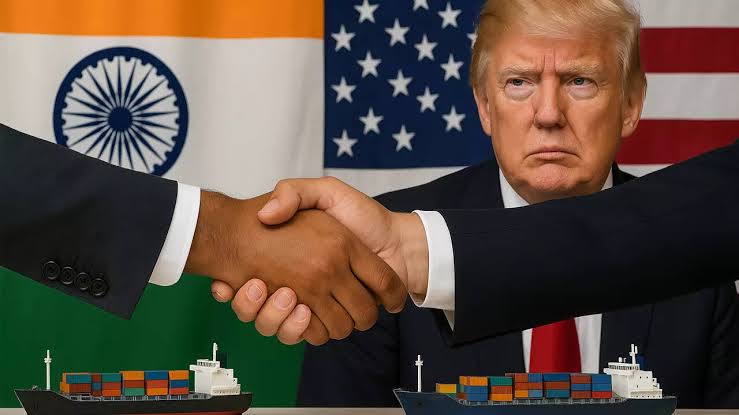
After souring its relationships with India, China, Russia, Brazil and tiffs with Canada, Mexico and even the EU, the United States of America, the largest democracy geographically is now going into relationship with a terror supporting failed State of Pakistan.
The relationship between the United States and Pakistan has long been defined by convenience rather than conviction, punctuated by moments of intense cooperation followed by spells of deep mistrust. As recent developments begin to raise eyebrows, it is becoming increasingly evident that a new chapter may be unfolding—one marked not by a sincere partnership but by calculated strategic necessity.
US President Donald Trump’s reported upcoming visit to Pakistan and the high-profile visit of Pakistan’s Army Chief Field Marshal Asim Munir to Washington have sent clear signals that both sides are once again exploring a tighter embrace. But what lies beneath these gestures?
Is this an authentic shift or merely a transactional dance, choreographed by geopolitical compulsions? History casts a long shadow on the US-Pakistan relationship.
For decades, their engagement has followed a familiar script: Washington courts Islamabad in times of need, showering it with aid and promises, only to withdraw affection when priorities shift or Pakistan’s duplicity becomes too glaring to ignore.
From the Cold War to the post-9/11 era, the partnership has rarely transcended its opportunistic core. Every time the United States found itself in a regional quandary—whether it was countering Soviet expansion or hunting terrorists in Afghanistan—Pakistan presented itself as an indispensable ally. But once the urgency faded, so did the illusion of camaraderie.
The present moment bears the unmistakable scent of déjà vu. The United States, preoccupied with China’s growing footprint, India refusing to join any military alliance with it and an increasingly complex Indo-Pacific matrix, sees value in reactivating its lines to Islamabad. Pakistan, battered economically and diplomatically isolated, is desperate to regain relevance and secure strategic patronage.
It is a classic case of mutual convenience masquerading as renewed friendship. The question is not whether both countries need each other—clearly, they do—but whether this need is rooted in sustainable goals or another fleeting convergence of interests. Pakistan’s military establishment, the true power center of the country, has always been adept at selling its strategic geography.
Wedged between Iran, Afghanistan and India, and with Tajikistan, Tibet and China close by, Pakistan offers prime real estate on the geopolitical chessboard. But that geography comes with a price—one that Washington has paid before.
Decades of American military and economic assistance have yielded little in terms of lasting reform or ideological alignment. Instead, the US often found itself underwriting a security apparatus that played both sides—hunting terrorists with one hand while harbouring them with the other.
Consider the bitter legacy of Afghanistan. While publicly siding with the US in its war on terror, Pakistan simultaneously gave sanctuary to the Taliban and other extremist elements. Osama bin Laden was discovered not in a remote cave but in Abbottabad, a stone’s throw from a Pakistani military academy. Billions in aid could not buy loyalty; it merely sustained a regime skilled in hedging its bets. The withdrawal from Afghanistan in 2021, with its chaotic final days, was a stark reminder of the cost of trusting Islamabad too easily.
Now, as the Biden administration recalibrates its foreign policy priorities, and with Donald Trump potentially re-entering the global stage, the temptation to revive a working relationship with Pakistan is palpable. Trump’s anticipated visit may be billed as a diplomatic outreach, but it is likely a signal to Beijing, Delhi, and even Riyadh that Washington still sees value in Islamabad. In return, Pakistan hopes to leverage this attention to escape its pariah status and secure economic lifelines.
This may even anger India enough to start diplomatic talks with North Korea and apart from it, start strengthening it’s ties with Iran.
Therefore such maneuvering by USA is going to prove to be dangerous. It rewards ambiguity and penalizes clarity. While India—America’s primary partner in the region—remains firmly in the camp of democratic values and open markets, Pakistan continues to operate in murky waters.
The same terror supporting military establishment now reaching out to Washington is also clamping down on democratic dissent at home. Political opponents are jailed, press freedom is strangled, and civil society remains under siege. How does the United States reconcile these facts with its professed commitment to liberal values?
Furthermore, the strategic rationale is itself questionable. If the idea is to counterbalance China’s perceived ( buy USA ) growing influence in South Asia, relying on Pakistan is a paradox. Islamabad is deeply enmeshed in Beijing’s orbit through the China-Pakistan Economic Corridor (CPEC) which passes through Indian territory illegally occupied by Pakistan in 1947, a flagship component of the Belt and Road Initiative.
Chinese investments have tied Pakistan’s infrastructure, telecom, and energy sectors to it. Any US hope of peeling Pakistan away from China is not just naïve—it borders on delusional.
This is not to say that engagement with Pakistan is futile. Dialogue is necessary, especially with a nuclear-armed state teetering on the edge of political and economic collapse. But engagement must be disciplined, not desperate.
The US cannot afford to repeat the mistakes of the past, offering carrots without demands for real change. If Pakistan seeks legitimacy, it must earn it—not merely by allowing high-level visits or agreeing to intelligence sharing, but by taking concrete steps to dismantle extremist networks, uphold human rights, and shift its foreign policy posture from duplicity to transparency.
Field Marshal Asim Munir’s visit to Washington may be seen as an opening salvo, a signal of Pakistan’s willingness to reset. But it is vital to remember that such resets have occurred before—with limited results.
From Musharraf to Kayani, from Raheel Sharif to Bajwa, every military leader has spoken the language of reform and cooperation, only to revert to old habits once the checks cleared.
There is no evidence yet that Munir represents a meaningful break from this tradition. His public statements may emphasize development and diplomacy, but Pakistan’s internal dynamics suggest otherwise.
Ultimately, what makes this moment perilous is the global context. The United States is no longer operating in a unipolar world. India, Russia and China have already taken their position as other three poles in this multipolar world.
Even Europe and the Middle East is in flux. In such an environment, the margin for error is razor-thin. This misstep in Pakistan will surely alienate India, embolden terrorists in Pakistan which will invite a massive punishment this time several times more than OP Sindoor or simply waste resources in a dead-end alliance. Realism demands cold calculations—not nostalgia for a partnership that never truly was.
The US must resist the lure of tactical engagement without strategic depth. It must demand accountability, not mere access. And it must remember that short-term alliances built on necessity are seldom sustainable.
For Pakistan, the message should be equally clear: the era of exploiting geography for aid is over. If it wishes to be seen as a credible partner, it must act like one. So, are the US and Pakistan recalibrating ties for strategic convenience?
Undoubtedly. But convenience is not conviction. And until both sides confront the ghosts of their past dealings, this reset risks becoming just another rerun in a long history of missed opportunities, broken promises, and dangerous illusions.
Blitz