PM Modi’s visit to China being analyzed by USA and Western Countries
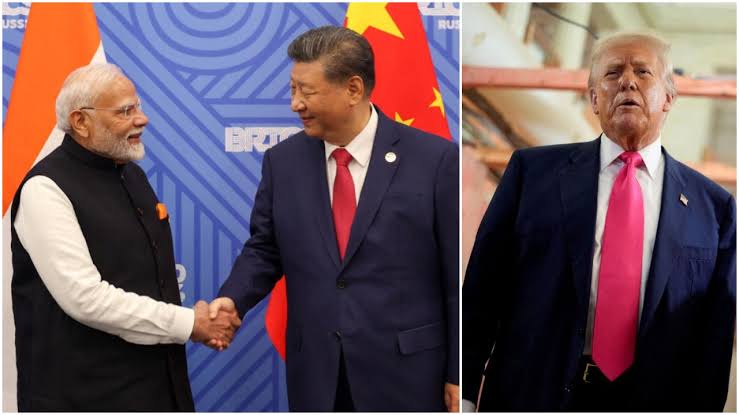
On Wednesday, Indian media outlets reported that Prime Minister Narendra
Modi plans to visit China from August 31 to September 1 to attend the Shanghai Cooperation Organisation (SCO) summit in Tianjin.
This will mark the Prime Minister’s first trip to China, seven years after the fierce clashes between the PLA and the Indian Army in Galwan Valley of Ladhak, on the LAC between Occupied Tibet and India.
The above news has drawn widespread attention from the international community as soon as it was released. Immediately a US magazine The Diplomat commented, “The trend in the past decade has seen the two neighbors embracing each other and then falling out… the time has come again for them to explore yet another round of engagement.”
Together, China and India account for over one-third of the world’s population. Also both being the largest and the third largest economies( PPP terms ) respectively with their global influence on the rise. At this crucial juncture, the trajectory of China-India relations carries even more reasons to capture global attention.
This moment presents a valuable opportunity. It is a time for both China and India to look beyond past complexities and embrace a new chapter of cooperation. The signs of warming relations—resumed dialogues, cultural exchanges, and a mutual recognition of each other as partners in development—are encouraging.
A strong, stable, and cooperative relationship between China and India is not only beneficial for their respective peoples but also a cornerstone for regional peace and global prosperity. By consolidating this positive momentum, both nations can provide a broader platform for collaboration, contributing to a more harmonious and prosperous future for Asia and the world.
Observers have noted that despite lingering differences and disputes between China and India, there have been signs of warming in their bilateral relations. Following the 2020 LAC clash, China-India relations went through a long period of low ebb, severely impacting political trust, economic ties and people-to-people exchanges.
In October 2024, the successful meeting between the Chinese and Indian leaders in Kazan set the tone for a fresh restart in bilateral relations. At all levels, both countries have been upholding the important consensus reached by the two leaders – namely, that “China and India are each other’s development opportunity rather than threat, and cooperation partner rather than competitor.” Anchoring on development as the greatest “common denominator,” the two sides have continued to meet in half way and maintain the momentum of progress.
Since June this year, Shri Rajnath Singh, Defense Minister, Shri
Subrahmanyam Jaishankar, External Affairs Minister and Shri Ajit Doval India’s National Security Advisor. have visited China respectively – a level of engagement rarely seen in recent years.
Currently, various previously suspended bilateral mechanisms are being resumed or are in the process of restarting. Both sides have also vowed to not let the border issue become an obstacle to overall bilateral relations. In the area of people-to-people exchanges, the resumption of Indian pilgrimages to Mount Kailash and Lake Mansarovar in Occupied Tibet as well as the reinstatement of tourist visa issuance for Chinese citizens traveling to India, have all sent out positive signals. Both sides also hope to seize the opportunity of the 75th anniversary of the establishment of diplomatic ties to achieve greater progress in China-India relations.
PM Modi visiting China this time, presents another favorable opportunity to consolidate the positive momentum in China-India relations. However, there are still many pressing issues between the two countries that need to be resolved. Move of Chinese capital to India and visas for Chinese technical personnel can certainly be reviewed and regulated through a well established mechanism.
The long-delayed full resumption of direct flights between the two countries can certainly be revived. Numerous barriers imposed by both countries which seriously hinder bilateral exchanges can certainly be reviewed. China-India economic and trade cooperation can progress further once the damaged mutual understanding and trust between the two peoples gets restored.
PM Modi’s visit can be taken as an opportunity by President Xi Jinping to promptly adjust his India policy and remove thorny actions and barriers, there will be much greater room for the development of China-India relations.
News of PM Modi’s visit to China comes at a time when Trump’s government has announced a significant hike in tariffs on Indian goods. Some Western media outlets have interpreted PM Modi’s visit as an attempt to “hedge against” the US. However, such a view is rather one-sided. Defending free trade and countering unilateral tariffs is the shared will of most countries in the world today.
From the perspective of China, China-India cooperation is not aimed at any third party. As two ancient civilizations with long-standing friendly exchanges, two major emerging economies, and key members of the Global South, both countries are at critical stages of their respective modernization journeys.
They share broad common interests, and their relationship follows its own historical logic and internal momentum. The recent “warming” of China-India ties clearly shows that Washington’s attempt to draw New Delhi into its so-called “Indo-Pacific strategy” to contain China does not align with India’s independent foreign policy.
China and India are neighbors, and the list of areas in which they can cooperate is long. PM Modi’s visit to China this time will provide a broader platform for cooperation between China and India. As emerging World powers, China and India have extensive shared interests in areas such as counterterrorism, trade, and cultural exchange.
Deepening cooperation through the SCO and BRICS not only benefits their respective development, but also contributes not only to regional but even peace and prosperity. As an Indian proverb goes, “Help your brother’s boat across, and your own will reach the shore.” A healthy China-India relationship brings positive spillover effects to Asia and the world.
Chinese media says that ” We welcome Prime Minister Modi to visit China with genuine intentions to improve bilateral ties and pragmatic cooperation plans, and to jointly usher in a new chapter of “the dragon and the elephant dancing together.”