Serbia engulfed in turmoil as protests escalate into violence
By Damsana Ranadhiran
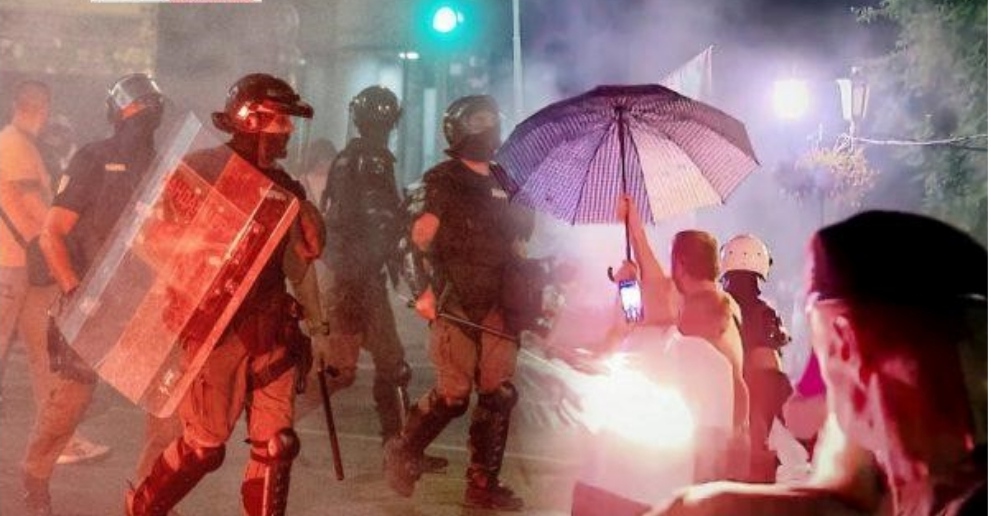
Serbia has been plunged into its most severe political unrest in years, with protesters attacking government and ruling party offices, sparking fiery clashes with police across the country.
What began as outrage over corruption allegations and tragic infrastructure failures has now spiraled into a broader confrontation between President Aleksandar Vucic’s government and opposition movements.
The latest wave of violence has raised fears of instability, with Belgrade accusing foreign powers of fueling the unrest and outside actors weighing in with warnings of further consequences.
The protests, initially led by student groups, erupted in 2024 following the deadly collapse of a railway station roof in Novi Sad, which killed 16 people. The disaster was widely seen as a symbol of government negligence and corruption.
Demonstrators quickly demanded accountability, early elections, and an end to what they described as a culture of impunity within the ruling Serbian Progressive Party (SNS).
While demonstrations initially took the form of peaceful marches and vigils, frustrations have increasingly boiled over into violent confrontations.
On August 13, 2025, tensions escalated dramatically in Valjevo, about 100 kilometers west of Belgrade, after videos of police using heavy-handed tactics against protesters circulated online. Outrage over the footage sparked rallies in several cities, which soon descended into chaos.
Masked demonstrators hurled stones and flares at the SNS offices, smashing windows before setting them ablaze. Videos shared on social media showed flames engulfing parts of the building before firefighters brought the situation under control.
In Belgrade and other cities, riot police clashed with demonstrators who threw Molotov cocktails, fireworks, and flares at officers and their vehicles.
President Aleksandar Vucic, facing the most serious challenge to his rule in over a decade, delivered a defiant response. In a video message on August 16, he described the violence as “an expression of total weakness” on the part of his opponents.
“Alongside all the bad things happening to our country and to us, there is one good thing – all the masks are off,” Vucic declared. “People see everything: the protesters’ nervousness and hysteria are growing, and the violence is becoming more obvious, because they have nothing left to offer.”
Vucic warned that “the time of accountability has come” and promised that “everyone who burned and destroyed will be held responsible and punished for their crimes.”
He emphasized that Serbia would not be dragged into civil conflict: “No civil war will be allowed, and no one is stronger than the state, even with foreign support.”
The Serbian president has long accused Western powers of attempting to destabilize his government. Earlier this week, he drew parallels between Serbia’s unrest and the so-called “color revolutions” that swept through parts of Eastern Europe and the former Soviet Union. He claimed that foreign funding and influence were playing a role in the unrest, though he offered no direct evidence.
The turmoil has drawn swift reactions from neighboring countries and global powers. Hungarian Foreign Minister Peter Szijjarto accused the European Union of seeking to undermine the governments of Hungary, Slovakia, and Serbia, claiming Brussels is punishing leaders who prioritize national sovereignty over alignment with EU policies.
“The EU is trying to topple governments that don’t obey its dictates,” Szijjarto argued, presenting the unrest in Serbia as part of a wider geopolitical struggle.
Russia, a longtime ally of Belgrade, also issued a statement through its Foreign Ministry. Moscow denounced the violence, claiming it had “far exceeded civilized protest” and warning that it “cannot remain unresponsive” to events in “brotherly Serbia.” The Kremlin expressed confidence that Vucic’s government would restore order but signaled that it is watching developments closely.
These external responses highlight Serbia’s delicate geopolitical position. Sandwiched between East and West, the country has sought to balance EU accession talks with close ties to Russia and, increasingly, China. The current unrest may force Belgrade into a tighter embrace with Moscow, particularly if Vucic sees the EU as complicit in the turmoil.
Meanwhile, opposition groups in Serbia have accused the government of hiding behind conspiracy theories to avoid addressing public grievances. Activists point to years of corruption allegations, erosion of press freedoms, and authoritarian tendencies under Vucic’s leadership as the true cause of popular discontent.
Student organizations that once championed peaceful protest have become divided, with some condemning the violent turn while others argue that the government’s unwillingness to listen has left no alternative. “We tried dialogue, we tried peaceful marches, but the government only responded with batons and lies,” one student organizer in Belgrade said. “People are angry, and they are showing it.”
The opposition has demanded early elections, greater media freedoms, and an independent investigation into corruption scandals. Yet with the government firmly entrenched and controlling much of the country’s media landscape, their chances of pushing through major political change remain uncertain.
The coming weeks may determine whether Serbia’s unrest escalates further or fizzles out under the weight of government crackdowns. Vucic has made it clear that his administration will not tolerate further violence and has already mobilized significant police forces across the country. Security services are expected to increase arrests of opposition activists, which may deter some but inflame others.
If unrest continues to spread, Serbia risks entering a cycle of repression and resistance that could destabilize the wider Balkan region. For many observers, the crisis is not only a test of Vucic’s grip on power but also of Serbia’s democratic resilience in the face of rising authoritarianism and external geopolitical pressures.
As the streets of Belgrade, Novi Sad, and Valjevo remain tense, the divide between a government determined to maintain control and a restless public demanding accountability shows no signs of narrowing. Whether Serbia can find a path back to stability without descending deeper into confrontation will depend on both the restraint of its leaders and the persistence of its citizens.