
Will India reconsider joining the RCEP amid tariff tiffs with the USA?
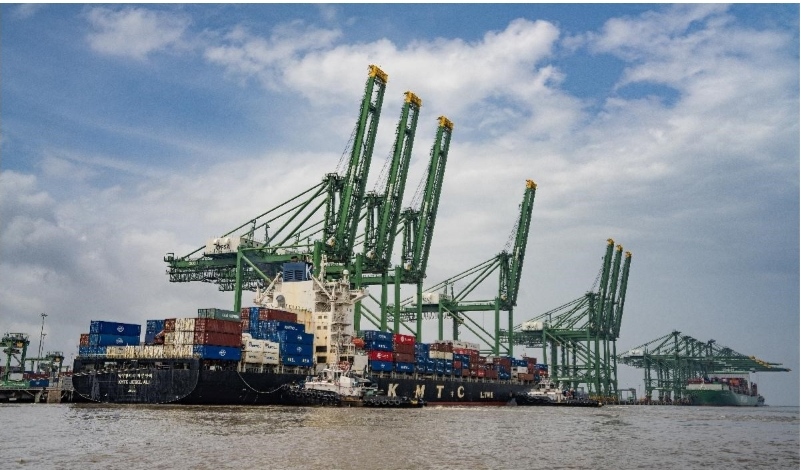
Shipping containers stacked on the KMTC Jebel Ali container ship at Jawaharlal Nehru Port in Navi Mumbai, Maharashtra, India, on August 9, 2025
The current trade landscape indicates that India’s exports to USA and imports from USA has increasingly become a vulnerability in light of rising tariffs by both sides.
In this context, exploring a strategic pivot toward South East Asian markets will certainly help reduce the loss of American market and also provide greater maneuverability and opportunities for diversification.
Many economists are now visualizing India joining the Regional Comprehensive Economic Partnership (RCEP), saying that India should be part of the RCEP, and that would be a very dynamic way to grow for years to come.
The Regional Comprehensive Economic Partnership (RCEP) currently has 15 member countries: the 10 ASEAN member states (Brunei, Cambodia,
Indonesia, Laos, Malaysia, Myanmar, Philippines, Singapore, Thailand, and Vietnam), plus five of their free trade partners -Australia, China, Japan, South Korea, and New Zealand.
Some feel that India could achieve a 7-percent GDP growth in the coming decade by focusing on South East Asia. India certainly cannot be blackmailed Trump’s market.
PM Modi is now focusing on the vast internal market of India itself ! Also there will be a big rise in trade with Russia, Central Asia and even China. India has also signed bilateral FTA with Australia and UK.
In recent years, India had witnessed a surge in its exports to the US, making it India’s second largest export market, with up 18 percent of exports amounting to 2.2 percent of GDP.
However, the US’ imposition of a 50 percent tariff on Indian goods and a reciprocal tariff by India has dramatically heightened the uncertainty surrounding both Indian exports to USA and imports from there.
Under such circumstances, seeking alternative markets will certainly help. Meanwhile, the South East Asian market, Central Asian Market and the Indian market itself, with its vast untapped potential, offers the promise of a more stable growth path for India.
The economic and trade potential of South East Asian markets goes without saying, and joining the RCEP may be considered a helpful step to make a real difference in its trade with South East Asia.
The RCEP, with its vast regional population, substantial GDP and significant volume of goods trade, each accounting for approximately 30 percent of the global share, encompasses 15 economies, including China.
Its effect is expected to grow incrementally for the next 10 to 15 years, by which point 90 percent of the goods within the agreement will achieve zero tariffs, according to China’s State Council Information Office.
Given the market potential and trade prospects, this region could provide India with enough buffer to set off against US trade volatility.
Though India will have to suitably reorient its production and export structures to align with South East Asian demand. There are significant differences between the goods India exports to the US and those it sells in the South East Asian markets.
The US has a strong demand for India’s information technology services, pharmaceuticals, and textiles, while South East Asian countries engage more frequently in trade in electronics, automotive components, and agricultural products.
As it is, India is already restructuring its industrial sector, increasing investment in the research and development (R&D) to various markets needs.
Such an adjustment involves not only enhancing production capacity but also restructuring supply chains, optimizing trade policies, and improving companies’ ability to adapt to new markets.
This ability to flexibly adjust production in response to market changes is attributed to well-established industrial and supply chains, as well as the high market sensitivity and innovation capabilities of its companies.
A trade shift to South East Asia may face some challenges. Nevertheless, in the long run, this shift ultimately offers a crucial pathway to achieving sustainable trade growth and aligning with the eastward shift of global economic gravity. India, with its vast market potential, holds similar opportunities for growth.