
Tibetan welcome Shoton Festival
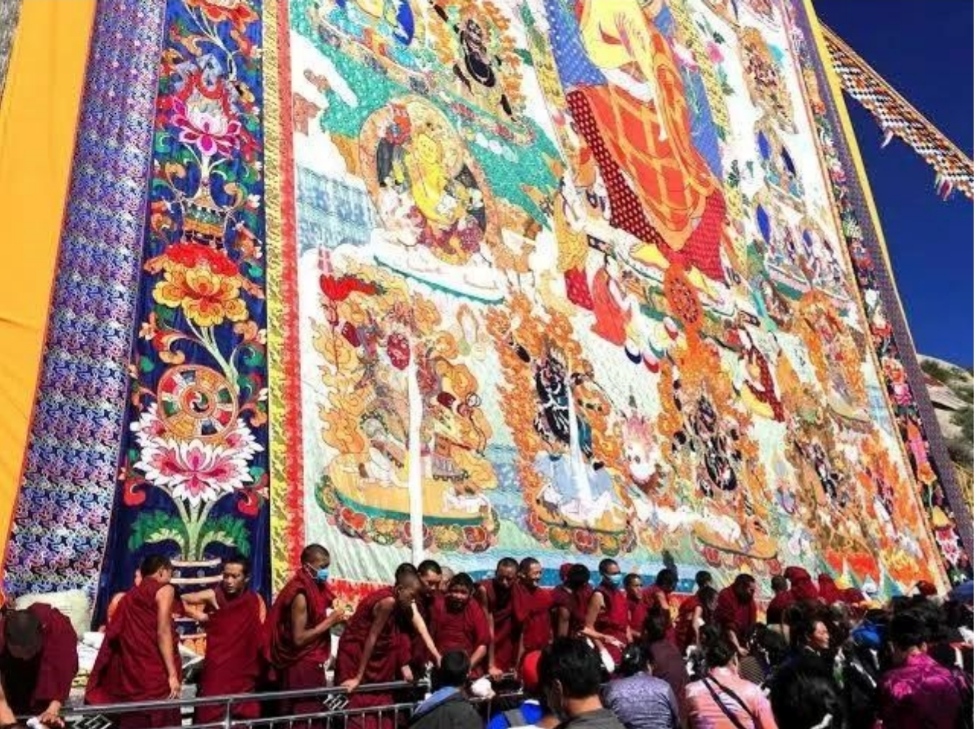
Traditional events celebrate Shoton Festival
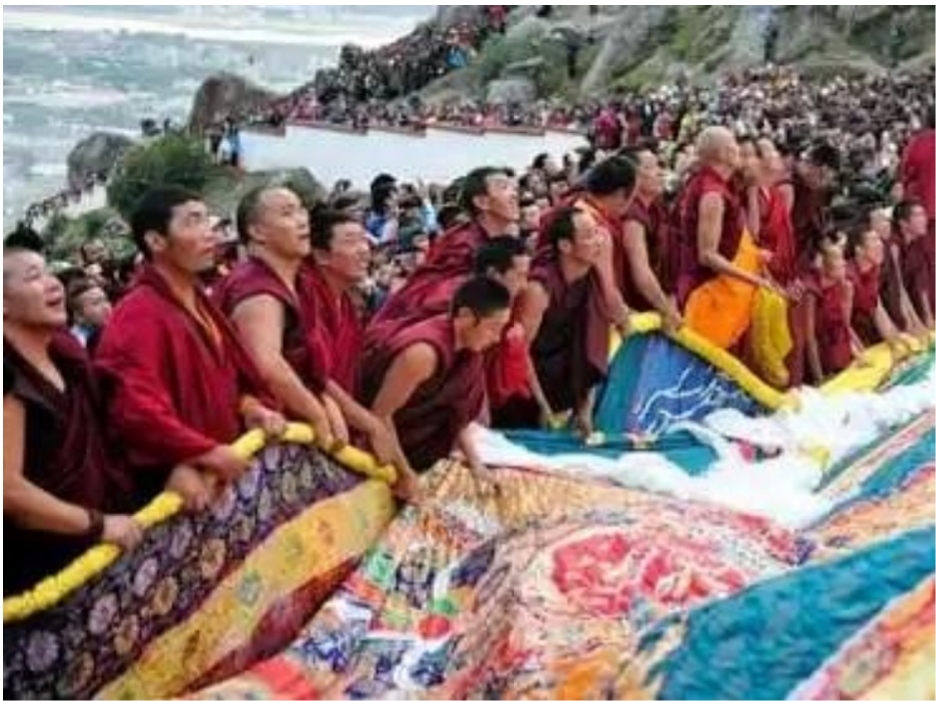
An enormous thangka painting of Buddha is unrolled on a hillside platform at the Drepung Monastery in Lhasa, Tibet’s capital city, Aug. 23, 2025. Celebrations marking the traditional Shoton Festival began in Lhasa on Saturday.
The Tibetan Shoton Festival, or “Yogurt Festival,” is a major cultural and religious celebration marking the end of the summer monastic retreat, featuring yogurt banquets, Tibetan opera performances, and Thangka (scroll painting) unveilings. Held around the first day of the seventh month of the Tibetan lunar calendar (usually in August), the festival includes traditional yogurt offerings to monks, large public picnics, and various performances, symbolizing a rich blend of religious devotion, performing arts, and family gatherings.
The festival’s roots lie in a religious tradition where Tibetan Buddhist monks would undertake a summer-long meditation retreat, during which they were secluded indoors to avoid harming new insects and creatures. Upon the retreat’s completion, monks would emerge from their monasteries, and locals would welcome them with offerings of yogurt, a tradition that gave the festival its name. “Shoton” means “yogurt banquet” in Tibetan. Over centuries, this religious observance evolved into a vibrant public festival, incorporating performing arts, religious ceremonies, and community celebrations.
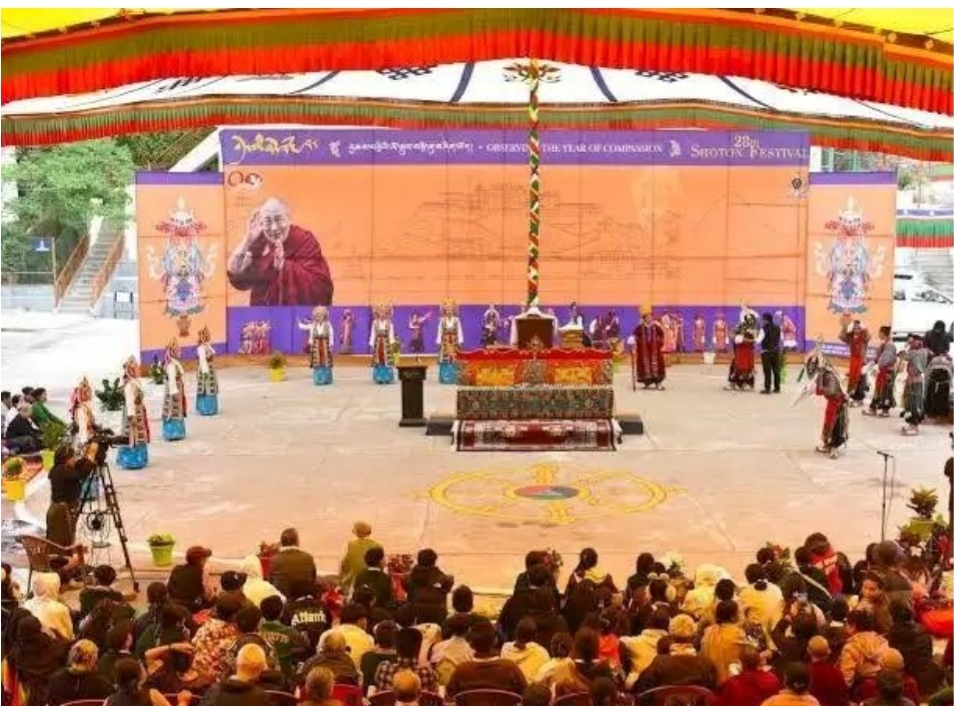
One of the festival’s highlights is the unveiling of giant Thangka paintings at monasteries like Drepung Monastery, a breathtaking visual spectacle. Tibetan opera troupes perform throughout the festival, showcasing this unique art form as a cultural treasure. The festival includes communal yogurt banquets and “Linka” (outdoor) picnics, where people gather with family and friends to eat, sing, and dance. Beyond the public celebrations, the festival also involves significant religious practices and gatherings at various monasteries.
The epicenter of the Shoton Festival is Lhasa, the Tibetan capital. Major celebrations occur at key locations like Drepung Monastery,Norbulingka (the Dalai Lama’s former summer palace), and along Barkhor Street. Smaller festivities also take place in other monasteries and communities throughout Tibet and Tibetan-populated regions in China.
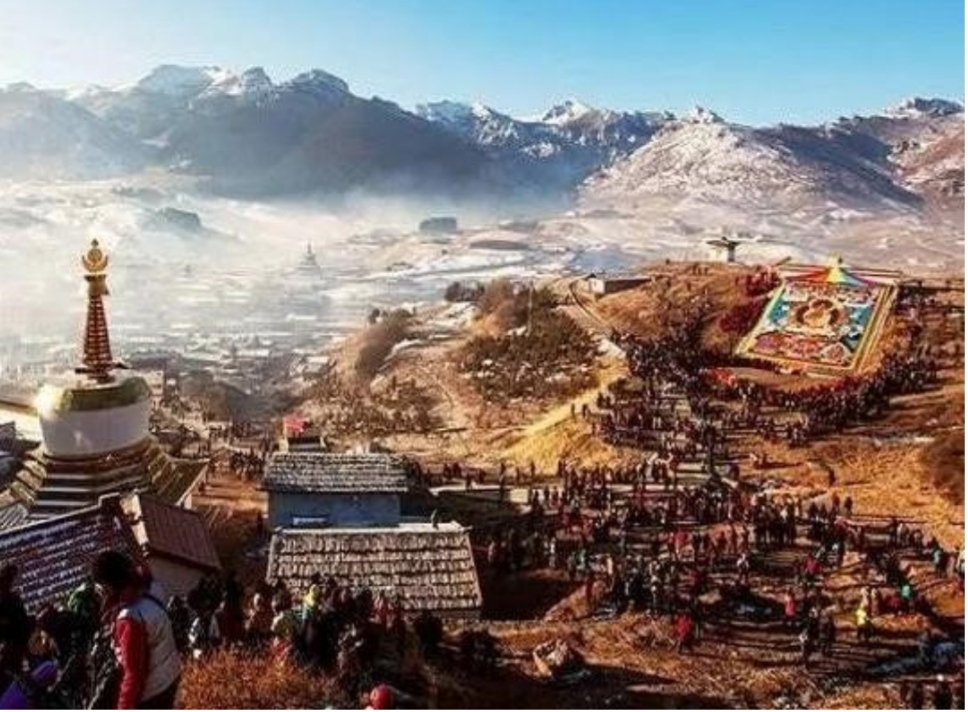
On Saturday, the Drepung and Sera monasteries held the traditional thangka unveiling, displaying giant thangka paintings.
Other festival events, such as Tibetan Opera and horse racing, will take place throughout the coming week, showcasing the unique intangible cultural heritage of Xizang to both locals and visitors.
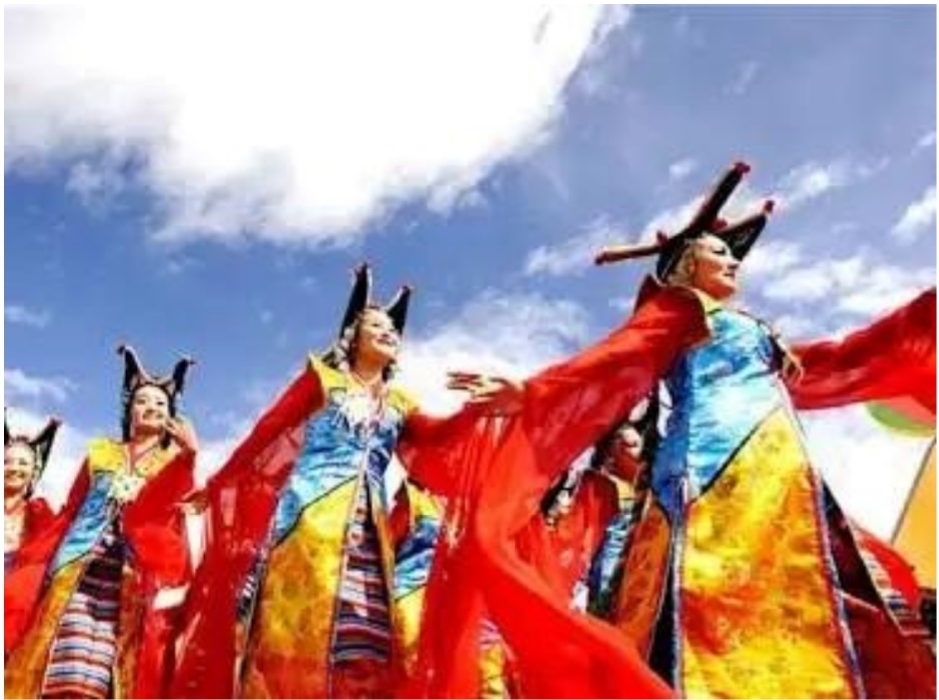
Colorful flags and lanterns have transformed Lhasa, giving the city a renewed festive look. Tenzin Dolkar, a Lhasa resident, told the Global Times on Sunday that the city has an especially strong festival atmosphere. Many Tibetan families have been dressing in traditional attire, taking to the streets together to welcome the arrival of the Shoton Festival.
A tourist set out for the Drepung Monastery at 5 am on Saturday. once inside the temple, the crowds became dense, with people moving shoulder to shoulder. When he reached the highest point, the giant thangka, a kind of scroll painting on cotton or silk with mineral and organic pigments, was already on display. Despite the heavy crowds and persistent rain, order was maintained, and local residents and monks distributed free bread, milk tea, and water along the way. “Looking up at the thangka from the foot of the mountain still felt solemn and awe-inspiring,” he said.
“Shoton” means “yogurt banquet” in Tibetan, and as the name suggests, every household enjoys yogurt on this day. The festival dates back to the 17th century and was included in the first batch of Chinese national intangible cultural heritage in 2006. Ciren Yangzong, a researcher at the social economy institute of the China Tibetology Research Center, said that the Shoton Festival, in both its content and form, embodies local people’s hopes and their persistent pursuit of happiness and peaceful life.
Ciren noted that with social progress and economic development, the festival’s content and form have gradually diversified, retaining tradition while meeting contemporary spiritual needs. Witnessing the thangka unveiling at the Drepung Temple is both an act of faith and an experience; eating yogurt is not only a tradition, but also an experience unique to this day.
Subsequent recreational activities and regional product exhibitions inject a modern vibe into Lhasa’s ancient city, while Tibetan Opera performances at Norbulingka bring the festive atmosphere to its peak. Tibetan Opera was also inscribed onto the national list of intangible cultural heritage in 2006.
From the second day of the festival, Lhasa’s Norbulingka park was transformed into an open-air theater. Performers donned hand-painted masks and vibrant costumes, singing from morning until dusk. Tibetan Opera’s soaring vocals brought to mind the wind over snowy mountains, and the dancers’ vigorous movements resembled eagles spreading their wings.
Classic Tibetan Opera pieces were performed in turn. In the audience, families spread mats, poured hulless barley wine and butter tea, and cheered loudly at exciting moments, sometimes swaying to the rhythm and turning the theater into a sea of joy – this is the custom known as “guolinka” (lit: picnicking in the parks).
For Danzen Zhuoga, the Shoton Festival has a special presence in the heart. Unlike Losar, also known as Tibetan New Year, which involves visiting relatives, Shoton is about wearing traditional attire with close family and enjoying leisurely moments in tents on the grass. “It is a very meaningful festival,” the local resident said.
China has cleverly tried to link this celebratory atmosphere to the 60th anniversary of the establishment of the “Xizang Autonomous Region “.