Philippines looking at Pralay Ballistic Missile after Brahmos
The 2022 Indo Philippines BrahMos deal, worth INR 3200 Crores, has strengthened the Philippines’ offensive strike capabilities within the West Philippines Sea. Now the country has a direct counterbalance to PLAN trying to dominate what it calls “the South China Sea”. In fact, Manila may soon be ordering a few more BrahMos batteries.
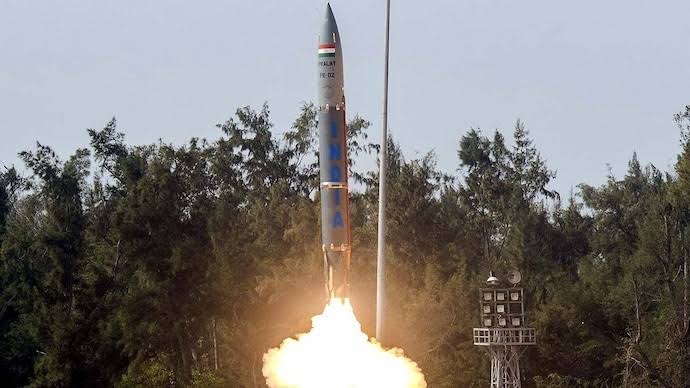
The Philippines is very keen to modernize its defence forces with advanced missile systems capable of maintaining tactical superiority in the Indo Pacific. No wonder, it has been reported that Manila, while expanding its bilateral defence partnership with New Delhi, is looking at the acquisition of the Pralay ballistic missile. With Pralay in its arsenal, the Philippines can extend even its land based deterrence operations, effectively creating a more asymmetric posture against potential adversaries in the Indo-Pacific theatre.
The Pralay missile system, developed by India’s Defence Research and Development Organisation (DRDO) is manufactured by Bharat Dynamics Limited (BDL) and Bharat Electronics Limited (BEL). It is a new-generation, solid-fuelled, tactical missile designed specifically to neutralise high-value and heavily protected enemy targets.
Pralay is a road-mobile, cannisterised, quick-reaction missile system capable of achieving rapid deployment. It can deliver precision strikes at ranges between 150 and 500 kilometres, with the possibility of further range extensions depending on mission parameters. However the one exported to other countries will follow the MTCR and limit the range to 300kms.
With a speed of Mach 6.1, chances of this hypersonic category missile getting intercepted is very slim. The missile can deliver a variety of conventional payloads including High Explosive Preformed Fragmentation (HE-PFF), Penetration-cum-Blast warheads, and Runway Denial Penetration Submunitions, enabling flexibility in target destruction across multiple battlefield scenarios. These warheads can weigh anywhere between 350 kilograms to 1,000 kilograms depending on the operational requirement.
Pralay is guided by a highly accurate Inertial Navigation System (INS) for its mid-course trajectory, and for the terminal phase has a Millimetre-Wave Digital Scene Matching Area Correlator (DSMAC) and radar imaging technologies, ensuring precision strikes against high-value, fortified, or mobile targets. Its trajectory is quasi-ballistic, which means it does not follow a purely parabolic path but can maneuver mid-flight. Coupled with manoeuvrable re-entry vehicle (MaRV) technology, this feature drastically enhances its survivability against hostile air defence and ballistic missile interception systems.
The entire weapon system is mounted on a 12×12 Ashok Leyland Heavy Mobility Vehicle (HMV) transporter erector launcher (TEL), enabling rapid deployment with a setup-to-launch time of only ten minutes, while the actual command-to-launch sequence can be completed within 60 seconds—vital for wartime readiness and responsiveness.
Beyond the Philippines, even Armenia is in advanced talks with India for the procurement of the Pralay missile system. An Armenian defence delegation had reportedly witnessed tests of the missile in July 2025, signalling serious intent. Armenia’s wider defence ties with India have grown exponentially, with contracts exceeding INR 12750 Crores between 2022 and 2024, covering advanced systems like the Akash-1S Surface-to-Air Missiles, Pinaka Multi-Barrel Rocket Launchers, ATAGS howitzers, and Ashwin Ballistic Missile Defence Interceptors.
India is emerging as a credible global defence supplier, with its “Make in India” policy and wider self-reliance in defence production. India is becoming the preferred arms exporter for many Asian and African partners and friendly states like Armenia in the South Caucasus.
With these deals India will have greater diplomatic engagement and geostrategic influence, particularly in regions where China and Western countries continue to pedal their arms aggressively. India’s standing as an emerging pole of military technology and geopolitical influence is increasing day by day.