India releases 3 joint doctrines for armed forces
A Joint Doctrine has been released by the Armed Forces to define its concepts of conducting future operations in a new way . It lays down the broad Principles for the three Services to organise, plan and conduct operations against the adversary at any level of War and in any domain. This doctrine, which also includes Special Forces Operations, will give an impetus to ongoing Jointness and integration to the Armed Forces right from the level of upcoming Theaterisation to the lowest Formation .
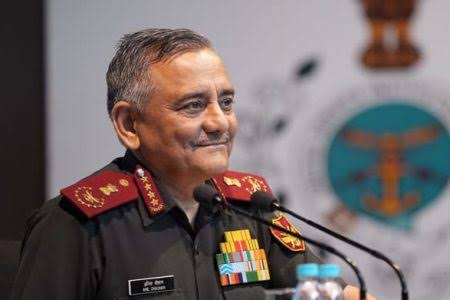
The joint doctrine for SF operations, released by chief of defence staff General Anil Chauhan at the Ran Samwad military conclave, seeks to enhance common understanding, terminologies and basic procedures, paving the way for greater interoperability and synergy among the commandos of the three services (the army’s Para-SF, the navy’s Marine Commandos and IAF’s Garuds). The Joint SF doctrine for SF operations covers joint training, future weapon profile, operational imperatives, and issues related to command, control, planning and logistics .
Special Forces provide support and punch to the field formations at the Operational level . Therefore they are employed under the command and control of regional commands. When employed for joint operations, SF will be employed through Headquarters Integrated Defence Staff (IDS)/Theatre HQ / intended Joint structure .
In his foreword to the doctrine, Chauhan writes, “This doctrine articulates a unified philosophy encompassing principles, capabilities and employment strategies for SF across land, maritime and air domains. It is envisaged as a foundational reference to facilitate joint planning, execution and capacity building for Special Forces in consonance with emerging roles and missions of the 21st century.”
When employed jointly, SF must have a high level of interoperability by way of common standard operating procedures, joint training and common means of communication. Joint training of Para (SF), MARCOS (marine commandos) and IAF SF Garud is vital for maintaining highly capable, adaptable and interoperable SF to address complex security challenges.
In the coming decade, a range of potentially revolutionary technologies and novel uses could change the character of Special Operations, the doctrine says. Advancements in weapon systems, new technologies and the methods for employing these weapons and equipment will revolutionise the battlefield, the doctrine adds.
As per the new doctrine, to minimise duplication and enhance effectiveness, SF may be trained jointly on advanced skills. Existing Special Forces Training Schools of the three services will be upgraded to Joint Service Training Institutes (JSTIs), each being a Centre of Excellence for a specific core competency. This will be done without transferring the command and control from lead service and by optimising existing infrastructure with assets and resources from all the services.
The new doctrine includes training of SF and crew of platforms/assets (including aircraft and submarines) for insertion and extraction by night, in adverse weather, using night vision and other conventional methods; joint training of SF on electronic warfare assets of the three services, and training for terminal guidance of precision guided munitions launched from air, long-range artillery and NGFS (naval gun fire support).
A separate joint doctrine has been released for airborne and heliborne operations, and also a doctrine for multi domain operations, putting the spotlight on the steps being taken towards jointness, which is an essential prerequisite to the creation of theatre commands. In the current and future battlefield milieu, the success of airborne/heliborne operations will hinge on the integration of advanced technologies, joint services cooperation and comprehensive training to facilitate technological absorption and synergy of tactics, techniques and procedures,” says the second doctrine.
As per the CDS, the principles and guidelines outlined in this document will hopefully ensure that India’s airborne/heliborne forces remain a credible and responsive element of our national military power, capable of decisive action across the full spectrum of military operations, from peacetime military engagement to high intensity conflicts. Hopefully after this new doctrine the role, ethos, organisation, equipment and regimentation of SF and airborne infantry will be fully differentiated at all levels.
Commenting on the joint doctrine for multi domain operations which charts the way forward for integrated and synergised employment of the armed forces across land, sea, air, space and cyber cognitive domains, strengthening jointness and future readiness, the defence ministry said. This was released by the Raksha Mantri .
The multi domain operations construct has the potential to create a resilient, responsive and agile force structure, capable of leveraging significantly augmented military power that actively accompanies the warfighter into the tactical battle area while empowering the decision makers in the operation centres, as per General Chauhan, CDS .