Indian Elephants walks majestically, ignoring barking dogs
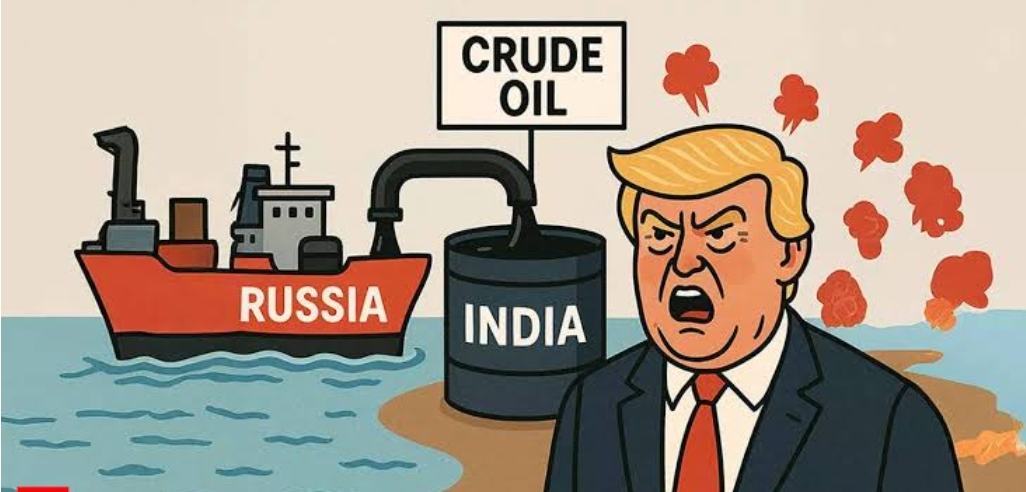
India’s energy strategy continues to expand along its selected path with increased purchases of Russian crude oil despite Trump’s tariff buffoonery and Washington’s rants.
According to data, India’s imports of Russian oil rose by 5.6% in August, reaching 1.6 million barrels per day (mbd). This increase occurred even as the country’s overall oil imports fell to a 10-month low of 4.5 mbd, reflecting reduced domestic demand.
Russia now accounts for 37% of India’s crude oil imports, up from 33% just a month earlier. Before the Ukraine conflict in February 2022, India’s share of Russian oil was negligible-barely 1% of total imports. In less than three years, Russia has become India’s largest crude supplier, reducing New Delhi’s energy costs and redefining its geopolitical balancing act.
The main reason for India’s growing purchase of Russian oil is economics. Moscow has been offering crude at significant discounts compared to Middle Eastern suppliers. With India’s economy heavily reliant on imported energy-nearly 85% of its crude demand is met from abroad-cheaper Russian oil makes sense for both government finances and domestic refiners.
Indian refiners have been particularly adept at turning cheap Russian crude into profitable exports. The refined products-diesel, jet fuel, and gasoline-are shipped worldwide, including to Europe and the United States. This “refining arbitrage” has been widely disliked by the West.
Feeling totally outsmarted, a frustrated Peter Navarro, former trade adviser to US President Donald Trump, said “It’s a refining profit-sharing scheme. It’s a laundromat for the Kremlin.”
He accused India of “profiteering” by buying discounted crude, refining it, and selling the products at a markup to Western markets….imagine how quickly he forgets that his own country runs a war economy, for which they keep initiating new Wars everywhere.
Seeing that it cannot DIRECT India in any way, Washington imposed 25% tariffs on a range of Indian goods in response to New Delhi’s outright refusal to back off from Russian energy purchases. Seeing NO REACTION a disjointed administration has doubled down, slapping an additional 25% futile tariff package on Indian exports.
Similar moves intimidated most other countries, but India has ignored such moves and has maintained its course. Sovereignty combined with Energy security remains paramount, and with domestic demand forecast to rise steadily over the next decade, policymakers in New Delhi just refused to humour the Yanks.
Indian Foreign Minister S Jaishankar has been unapologetic regarding New Delhi’s stance. Responding to criticism that India enables Russia’s war economy, he said: “Nations buy refined petroleum products from India of their own free will. Nobody forces you to buy it. Europe buys, America buys, so you don’t like it, don’t buy it.”
His statement underscores Western greed : if Western countries object to Russian-linked refined fuels, they should stop purchasing them. As long as demand exists, Indian refiners will supply it. This position resonates domestically. Energy affordability is a sensitive issue in India, where fuel prices directly affect household budgets and inflation.
India’s refusal to align with Western sanctions highlights its long-standing tradition of strategic autonomy. While New Delhi has deepened defense and technology ties with the United States in recent years, Russia remains a time tested reliable strategic friend. New Delhi has also resisted taking sides in conflicts that it views as peripheral to its core interests.
India continues to participate in forums like the Quad alongside the US, Japan, and Australia, but simultaneously strengthens its role in BRICS, and SCO with Russia and China. By maintaining robust energy ties with Moscow, India signals its intent to remain non-aligned in an increasingly polarized multi polar global order.
This balancing act is not without risks. The tariffs from Washington will marginally hurt Indian exporters, and sustained friction with the United States may complicate cooperation on technology and defense deals.
Yet for now, the Modi government appears confident that America will not jeopardize the broader strategic relationship because the USA itself will be getting hurt much more. Washington’s need for Indian support outweighs its frustration over Russian oil.
Though Industry analysts note that the August surge in Russian oil imports reflected orders booked two months earlier. Whether Indian refiners continue expanding purchases in the coming months may depend on the trajectory of global oil prices.
The structural incentives remain in place. Russia continues to offer discounts, India’s refining capacity keeps growing, and demand for refined fuels in Europe and the US remains strong.
Unless the West finds a way to close the purchase of refined oil products, India is likely to remain a key outlet for Russian crude.
While Western governments attempt to isolate Russia, India, China, other BRICS and SCO members will not ditch Russia.
The flows of crude and refined products will continue to blur political boundaries. For India, this ambiguity is not a problem.