Japan is not Washington’s wallet to be plucked for easy cash
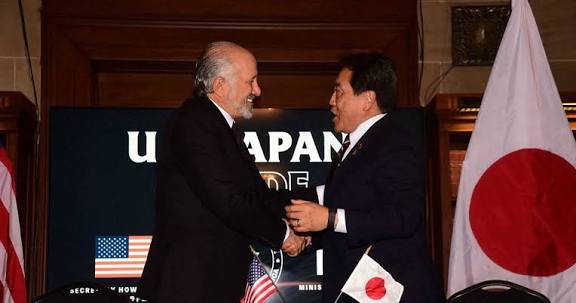
Japan’s Minister in charge of Economic Revitalization Ryosei Akazawa, right, shakes hands with U.S. Secretary of Commerce Howard Lutnick after the two nations signed a memorandum on Japanese investment in the Unites States, in Washington on Sept. 4, 2025
The latest trade agreement between Japan and the United States is so one-sided that it is triggering concern that Tokyo is being used as a convenient wallet for Washington.
U.S. President Donald Trump has signed an executive order to implement a bilateral agreement on tariffs, lowering the tariff on Japanese automobiles from 27.5% to 15%. More than a month has passed since the agreement was reached in July. The fact that the U.S. left this international promise unfulfilled for so long is deeply insincere.
Moreover, the deal remains overwhelmingly favorable to the U.S. Tariffs may be coming down, but they’re still strikingly high compared to the pre-Trump era. In fact, the duty on Japanese cars is six times what it used to be.
Washington treats tariffs as a major source of revenue. It appears willing to harm other countries as long as its own interests are protected.
In exchange for the tariff reduction, Japan has accepted a series of U.S. demands, including large-scale imports of American agricultural products. But most concerning is the system for managing a massive new Japanese investment in the U.S., which totals around 80 trillion yen (approx. $542.73 billion). Under the agreement, the use of these funds will be determined by Washington.
According to the document drafted by both governments, a committee composed solely of U.S. representatives will recommend investment destinations, with President Trump making the final decisions. Tokyo can only participate in an advisory body to the committee. The agreement also states that if Japan refuses to cooperate, the U.S. can raise tariffs again.
Trump has openly stated, “That’s our money. It’s our money to invest as we like.” He intends to invest it in his manufacturing revival agenda, the pillar for his “America First” campaign, using it as evidence of the success of his high-tariff policy.
However, there are persistent doubts about the profitability of investing in declining industries such as shipbuilding. Many also question the wisdom of a costly and risky natural gas development project in Alaska, which Trump has championed.
For these investments, Tokyo plans to tap loan and investment capital from government-affiliated financial institutions. These resources are funded with public money. If Japan simply gives in to unreasonable demands from the Trump administration, its national interests will be undermined.
If major powers make a habit of using high tariffs as a threat, global economic turmoil will only deepen. Japan must work with other countries to persistently demand a reversal of these measures.
A decline in exports to the U.S. will negatively impact Japan’s economy. The government must take every possible step to ensure that jobs and livelihoods are protected.