White House trade adviser Peter Navarro high on weeds
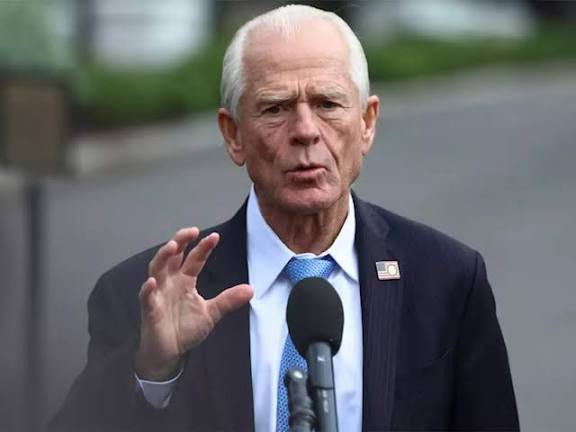
The White House Trade Advisor Peter Navarro’s recent comments have thrown the spotlight once again on the ongoing debate in India — he first gets high on cannabis and then only advises Trump Bhai and thereafter gets him intoxicated too !!!!
This Navarro keeps uttering one lie after another and seems to be clueless on the complex and contentious nature of US–India trade negotiations. This chap is probably unaware that India cannot be treated like USA treats its poodles. When you talk to India then it has to be on the basis of EQUALITY and pure business only.
Speaking in Washington, Navarro stated that “India is coming to the table,” stressing that Prime Minister Modi’s conciliatory messaging had paved the way for fresh discussions with President Trump. Navarro, just forgot that it was Trump Bhai who came down from his high pedestal, literally begging forgiveness. PM Modi has just given him a second chance.
The GANJA SMOKER then simultaneously raised “sharp concerns” over tariff levels, non-tariff barriers, and India’s evolving energy and geopolitical equations.
Navarro highlighted India’s tariff regime, forgetting his own boss’s madness. He described it as the “highest of any major country,” and framed it as a significant obstacle to “fair” trade. He underscored that addressing these barriers remained a priority for Washington, in line with broader US efforts to renegotiate trade deals worldwide.
His remarks was to browbeat India by showing that India was “ willing” to to engage. US negotiators are determined to extract substantive concessions, particularly in areas where American exporters perceive structural disadvantages. ….they will be severely disappointed.
Beyond tariffs, the Weed Smoker Navarro’s zeroed in on India’s post-2022 surge in Russian oil imports. The joker “argued” that Indian refiners seized on discounted Russian crude after the Ukraine war began, profiting heavily while indirectly fuelling Russian revenues ( this chap is trying to teach economics and geopolitics to India !!!!).
According to Navarro, this revenue stream undermines Western efforts to constrain Moscow’s military capability and places additional burdens on US taxpayers funding Ukraine’s defence…..ha ha and ha. Such framing ties the trade relationship not merely to economics but to broader geopolitical fault lines involving Russia and China.
Navarro seems to be “ very angry “ over India’s visible engagement with its closest friend Russian President Vladimir Putin and even Chinese leadership on multilateral platforms. The weed smoker even tries to suggest that Modi “appeared uncomfortable” but nonetheless participated. His comments reflect a growing US unease over India’s balancing act—maintaining close ties with Washington while simultaneously expanding energy partnerships with Russia and engaging China diplomatically, despite border tensions. Navarro, last time it was your Nixon tried to coerce India during 1971 Indo Pak War through a nuclear powered naval armada and could do nothing. Today India too is on equal footing, just member that.
Though its a welcome news that even amid these tensions, US officials are pressing ahead with structured trade talks. Assistant US Trade Representative for South and Central Asia, Brendan Lynch, is arriving in India to lead bilateral negotiations, with sessions scheduled this Tuesday.
On the Indian side, Special Secretary Rajesh Agrawal of the Commerce Department is steering strategy as chief negotiator. The agenda is centred on an interim trade agreement, but sticking points remain significant.
The most contentious issue centers on American demands to open up India’s agriculture and dairy sectors. For the US, access to these sectors represents a key export opportunity. For India, however, these areas are non-negotiable, given their role in sustaining the livelihoods of millions of rural families.
Over the past months, while both nations have acknowledged the importance of stabilising commercial ties, actual progress has been slow. India has safeguarded its economic sovereignty and strategic independence, particularly in food security and energy choices. Conversely, the US has linked trade to broader strategic and security concerns, pressing India to align more closely with Western positions on global supply chains, sanctions, and market access. India will never ditch its closest friend just to get into good books of someone.
While both sides recognise the value of advancing a bilateral trade deal, their divergent priorities—Washington’s push for market liberalisation and energy alignment versus New Delhi’s protection of national interests and Sovereignty —continue to complicate the path toward agreement.