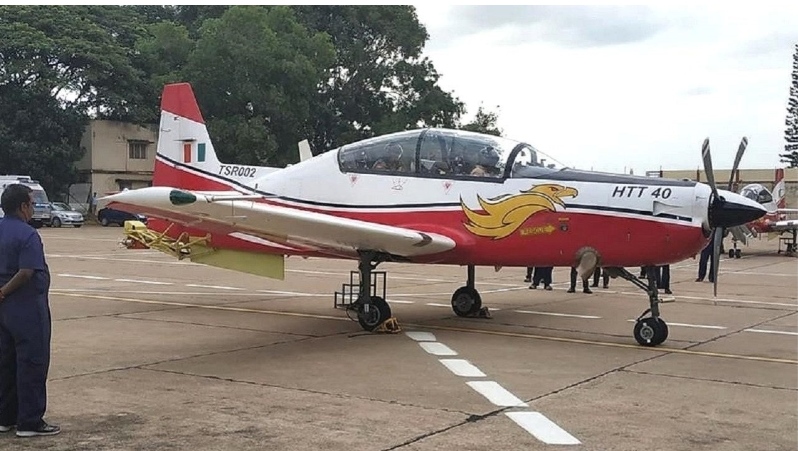
First series production HTT-40 basic trainer Aircraft set for maiden flight
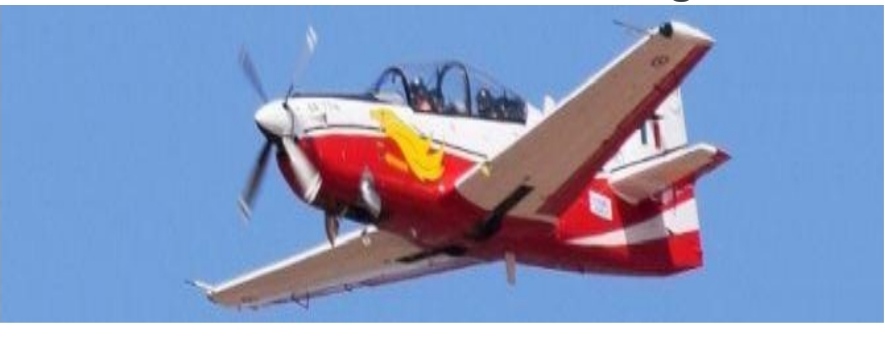
With doomsday predicting crowd jeering and failure staring in the eye, like Phoenix the HTT Basic trainer bounced back from the ashes.
The HTT-40 contract for 70 aircraft, worth ₹6,838 crore, was finally signed in 2023 to provide indigenous Stage-I ab initio training of IAF pilots.
The first aircraft is likely to be handed over to IAF in January 2026, with 11 additional aircraft to follow before the fiscal year-end, contingent on engine availability from Honeywell.
More than nine years of developmental work and over 900 flight-test hours on two prototypes have validated its design and performance of the basic trainer.
India’s indigenous basic trainer aircraft program, the Hindustan Turbo Trainer-40 (HTT-40) byHindustan Aeronautics Limited (HAL) now prepares for the maiden flight of the first series production aircraft before the end of September 2025. Large-scale manufacturing will follow to meet the longstanding training requirements of the Indian Air Force (IAF).
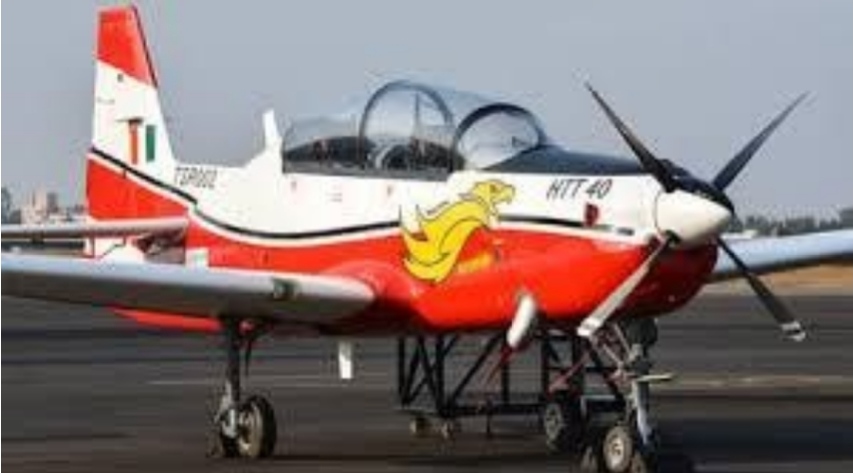
Due to global supply chain delays, the maiden flight will use a ‘Category B’ reused engine from the prototypes, as new TPE331-12B turboprop engines under a $100 million HAL-Honeywell contract are delayed.
Honeywell has now committed to supply its first unit in November 2025, followed by six before March 2026, and thereafter two per month, while HAL seeks accelerated delivery to meet IAF’s operational deadlines. HAL has the production capacity for up to 20 HTT-40 aircraft annually across its Bangalore and Nashik plants.
The trainer itself features tandem seating, an air-conditioned cockpit, advanced avionics, zero-zero ejection seats, and hot refuelling capability, essential for modern pilot training.
The indigenously designed trainer has current localisation level at 56% indigenous content, which is set to increase beyond 60% through further component indigenisation.
The platform has been designed to replace foreign trainers and limit dependency on imports, especially after the supply of Swiss-origin Pilatus PC-7 MK-II trainers halted due to corruption investigations and an MoD suspension in 2019.
Currently, basic pilot training in the IAF begins with the Pilatus PC-7 MK-II for Stage-I training, after which the training stream splits into fighter, transport, and helicopter streams. For fighter pilots, Stage-II training happens on PC-7 MK-II and Kiran MK-1A, followed by Stage-III on Hawk AJT before the newly commissioned pilots. Join their supersonic fighter squadrons.
The IAF’s ageing Kirans are also slated for retirement. So parallel to the HTT-40,
HAL is pushing its long-delayed Intermediate Jet Trainer (IJT), rebranded as
Yashas, which is intended to replace the Kiran MK-1A for Stage-II fighter training. After years of setbacks, the Yashas project achieved a breakthrough with the successful demonstration of six-turn spin recovery capability in 2022, a mandatory safety and control requirement for trainers.
HAL unveiled the modernised version earlier in 2025, seeking to pitch it as a viable indigenous Stage-II trainer with upgraded avionics.
The HTT-40’s successful maiden production flight and subsequent IAF induction will mark a strategic shift in India’s pilot-training ecosystem, reducing reliance on imports, phasing out obsolete trainers, and creating a locally sustained training fleet from ab initio through intermediate and advanced levels.