Need of Maritime Surveillance Platforms with Indigenous sensors
Continuous monitoring of maritime domain is of utmost importance for ensuring that all maritime trade routes are fully open and secure. It is the Indian Navy which must take on this onerous task which comprises Maritime Domain Awareness, Maritime Surveillance, ELINT and COMINT, Anti-Submarine Warfare, Anti Piracy Operations, Protection of Exclusive Economic Zone from illegal exploitation, Pollution Surveillance and Search and Rescue.
Coastal radars,sonobuoys, naval ships, helicopters and aircrafts, all play their part in the monitoring of maritime domain. However the major role is played by the fixed wing Maritime Surveillance Aircrafts. Keeping in mind the vastness of the Oceans / Seas,these aircrafts are usually deployed under three categories : Long Range, Medium Range and Short Range.
Long Range Maritime Recce
The Indian Navy presently operates 12x P8I Long Range Maritime Recce aircrafts. INAS 312 has 8x P8Is and INAS 316 formed in 2022 presently has only 4x P8I. The P-8I has a Magnetic anomaly detector (MAD) and an aft-mounted radar that provides it with 360-degree aerial radar surveillance capability. It features communication and other devices on-board that have been indigenously developed by Bharat Electronics Ltd.
By now these aircrafts have completed over 50,000 hours of flying, operating from INS Rajali and INS Garuda. This reflects the critical role of LRMR aircrafts in maintaining constant vigilance over strategic waters by carrying out missions ranging from tracking hostile submarines to monitoring sea lanes vital to India’s security and trade.
The Indian Navy needs to be provided with 12 more of these LRMR aircrafts to form a full Squadron at Kochi and to bring up INAS 316 to full strength.
This gap is presently being looked after by operating MQ-9B Sea Guardian drones and indigenous High Altitude Long Endurance Drones. Later on a fourth Squadron may be required to be positioned in Andaman & Nicobar itself.
Medium Range Maritime Recce
The Navy certainly needs another 3 to 4 Squadrons of Medium Range Maritime Recce aircrafts. C295 has finally been chosen for this role. DRDO is developing its own integrated indigenous sensors. The platform for these maritime aircrafts will be C-295 which will be made in India from 2026 onwards by Tata group.
Orders have been placed for 9 x C295 which will be coming from the Ahmedabad production line established by Tata Advanced Systems Ltd under the Make in India” Initiative.
Now 55 aircrafts will be manufactured and assembled in India with roll out beginning in September 2026. The program includes the integration of an indigenous Electronic Warfare Suite and aims to develop a comprehensive aerospace system.
More orders are likely to follow later on. UAVs and drones will also be utilized for this role.
Short Range Maritime Recce
For this role Indian Navy already operates 29 x Dornier 228 and is in the process to induct 7 more state-of-the-art Dornier from HAL. There are presently four SRMR Squadrons of these aircrafts namely INAS 310,311, 313 and 318.
INAS 318 has also been formed for Electronic Intelligence( ELINT )role which presently has 4× Dornier 228NG aircrafts.
These aircrafts are equipped with advanced sensors, glass cockpit, advanced surveillance radar, ELINT, optical sensors and networking features.
Dornier Do-228 aircrafts which are integrated with Israeli Elta EL/M-2022A (V3) airborne maritime surveillance radar, glass cockpit, advanced surveillance radar, ELINT (Electronic Intelligence) sensors and networking features used for electronic warfare mission, maritime surveillance, search and rescue and providing targeting data to weapon
platforms.
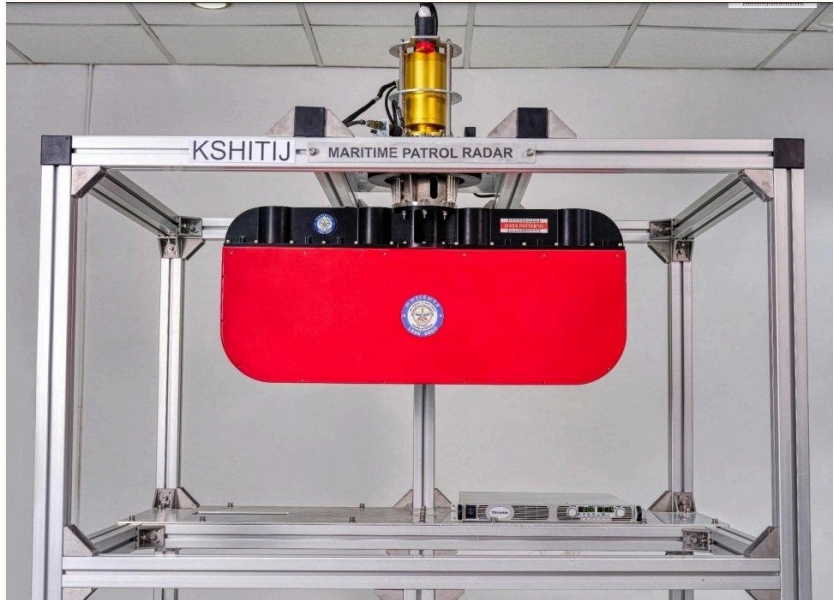
DRDO’s lab LRDE has undertaken the responsibility of development of such Maritime Patrol radar (MPAR) for upcoming indigenous Maritime platforms.
The DRDO’s Maritime Patrol Radar (MPAR) features sea clutter suppression to detect small targets. In addition to the standard air to sea surface search modes with Track While Scan, this radar provides high resolution Range Signature and ISAR image of the target which enables the user to classify the intercepted target.
There is an air-to-air mode to detect and track aerial targets. The Radar has additional weather and beacon modes. The Radar provides 360° azimuth coverage either in belly mounted or in chin mounted
configuration.
The first and foremost component is going to be a maritime patrol radar. For example, The Indian Navy’s P-8I aircraft features state-of-the-art Raytheon APY-10 maritime surveillance radar.
The radar system provides data in all weather conditions, night and day, for anti-surface and anti-submarine warfare, as well as for intelligence, surveillance, and reconnaissance (ISR) operations.
The radar can provide high resolution radar images in both overland and water modes. Raytheon engineers have also added an air-to-air mode for the Indian navy which will provide airborne target detection and tracking enable detection of threats in the air and at sea.
Other available modes of the radar include color weather, synthetic aperture radar (SAR), inverse synthetic aperture radar (ISAR), periscope detection, and navigation. ISAR mode is said to be capable of both detecting, imaging and classifying surface targets at long-range using a variety of resolutions.
This would have given you an idea how important is the Maritime Radar and what complex operations it can undertake. A private firm in collaboration called Data Patterns has built this radar in collaboration with DRDO and is being called as KSHITIJ. It is an X-band AESA radar which is planned to be integrated with Indian Navy’s aircrafts and helicopters such as ALH MK-III, Dornier Do-228 and C-295 in future.
The work on the testing this radar has also commenced. In March 2023, DRDO’s lab LRDE commenced the integration process for KSHITIJ X-Band AESA Radar, ESM, EOIR and SDR on the Dornier Do-228 aircraft. HAL is performing the installation of these sensors and payloads on the aircraft and is also responsible for trials and certification of the
platform.
HiSAR
In March 2024, it was reported that the DRDO’s lab LRDE and HAL has commenced the process of integration 𝙤𝙛 HiSAR 𝙤𝙣 𝘿𝙤𝙧𝙣𝙞𝙚𝙧 𝘼𝙞𝙧𝙘𝙧𝙖𝙛𝙩. HISAR is again an X-band Radar which will be used for Intelligence, Surveillance and Reconnaissance (ISR) mission. It is an all-weather, day-night microwave imaging system.
The Dornier aircraft which has been identified for integration has the tail number KD707. This radar is manufactured by private firm called JISNU. What is not clear is how this radar is going to be different from Kshitij. This radar is also intended to replace Israel’s EL/M-2022 radar used on Indian Navy’s Dornier aircraft.
It will be integrated with airborne platforms such as Dornier, ALH MK-III and upcoming UAVs of DRDO such as Archer-NG. The overall progress being made by DRDO in the development of Maritime Patrol Radar in collaboration with Private firms Data Patterns and JISNU is very significant.
The program has reached into integration stage where HAL will be testing the radars on Dornier aircraft. Once the trials are completed it will replace the Israel’s ELM-2022 from Dornier platform.
Indigenous UAVs, medium range Drones and HALE drones are either already operating or under trials.