
The sad plight of poor defenseless American farmers, result of Trump’s Tariff tantrums
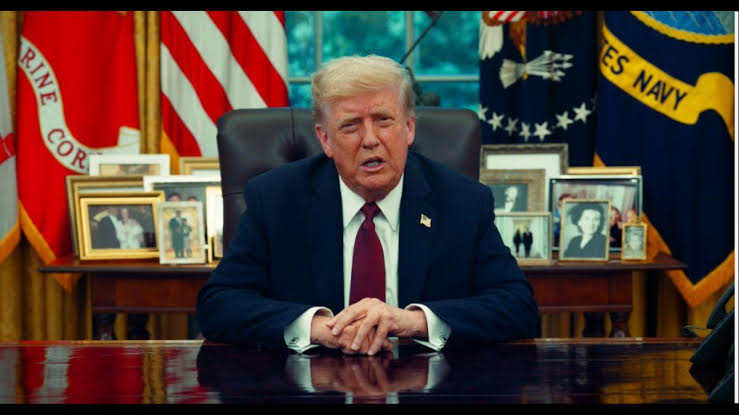
Trump and his entourage, Rubio, Navarro etc must have thought that divide and rule under the tariff regime would be the simplest thing in the world. Well, they just needed to agree with India, Russia and China and others in the BRICS.
In case Trump Bhai had studied a little, he would have seen that the issue is much more complex, whose plot involves governance, trustworthiness, and partnership. Forget the whip.
India with its soft power, always teaching, almost silently. And the US, with its atavistic arrogance, always repeating lessons. However they seem to learn from the only entities that seem to absorb lessons: their pockets and their heads.
Well soon the poor American farmers will have to take to the streets as activists to reverse the Trump Administrations tariff policy. They have to do like what the Dutch and German farmers did to express their anger : dump animal manure in front of the White house and the residence of Rubio. Oh, what global headlines and viral videos these will make on TV, newspapers, and social medias.
Both India and China are trying to talk to Trump Bhai at different places : Madrid, Washington, New Delhi etc. Meanwhile the poor American Farmers, mainly US soybean, Corn and Cotton farmers and fruit growers are “missing out on billions of dollars of sales to China and India halfway through their prime marketing season.” Washington’s Tariff war against India and China is going to be a disastrous endeavor, backfiring badly on the hapless American farmers.
The plight of US soybean farmers is a typical example. It is now soybean harvest season in the US, yet debates over “unsalable soybeans” are growing louder across the country.
Many farmers are deeply worried about preparing to harvest their crop this fall with no purchase orders from China the largest purchaser and now no purchase from even India for the first time in many years.
Some US farmers have even posted videos on social media expressing despair over being unable to sell their crops, despite harvesting more than usual. Since the 1990s, vast market demand has driven US growers to innovate in breeding, upgrade production lines, and improve transport systems, creating numerous jobs.
For many years, half of all US soybean exports went to China and another major portion to India from which US farmers benefited tremendously. A single soybean may look small, but it reflects that USA has to carry out cooperation with other nations, and highlights the win-win essence of bilateral economic and trade relations.
However, as the US has imposed unreasonably high tariffs others too will strike at the and US farmers are the softest targets. So now both China and India have already turned/ turning to soybean / Corn supplies from Brazil, Argentina and other countries, while promoting import diversification and building strategic reserves to safeguard food security and supply chain stability.
Some if Trump acts irrationally others too will using import of farm products as a “weapon” in the trade war, treating US farmers as “bargaining chips.” Washington initiated the unjustified tariffs, overlooking the fact that then others too will naturally have every reason to diversify sources of their supply and hit America where it hurts.
US farmers will now have to pay the price for Washington’s trade war. The recent soybean stockpile glut and plummeting prices are ironclad proof of Washington’s policy missteps. In August, American Soybean Association President Caleb Ragland wrote to the US president, urging the government to reach a deal as soon as possible to ease the crisis facing soybean farmers. Soon the maize corn farmers and fruit growers will be facing the same music.
Currently, the overlapping effects of tariffs and export controls have caused multiple shocks to the industrial chain, supply chain, and innovation chain. The negative impact of the US arbitrarily wielding the “tariff stick” on the global economy has become increasingly evident.
In addition, the US itself is experiencing high inflation and high unemployment due to tariff issues, increasing the risk of an economic “hard landing.”
Unfortunately, Washington has yet to learn enough from the challenges faced by its domestic farmers and continues down the erroneous path of politicizing and weaponizing economic and trade issues. The US Department of Commerce has been merrily announcing that multiple entities had been added to its export control list.
Equal respect is a necessary precondition for initiating any new round of negotiations. If one side attempts to force the other into accepting certain outcomes through unilateral sanctions, generalized security concerns, selective enforcement, and other forms of “maximum pressure” before negotiations, it will only create noise, and erode mutual trust. This will increase the costs of reaching a consensus in negotiations for both countries, resulting in a loss for both sides.
Equal cooperation is the only right way forward for any two major powers, with both countries benefiting significantly from their cooperation. The ups and downs in the relationship between the two countries in recent years have also offered negative lessons.
Addressing issues through pressure, sanctions, isolation, containment, and blockade will only raise costs and undermine expectations. Politicizing normal economic and technological exchanges and placing all issues into a “national security” context will not only fail to resolve “internal problems” but will also harm the stability of one’s own industrial and supply chains.
Resorting to “blaming others ” for domestic political needs will only intensify confrontation and damage the legitimate interests of businesses and the public.
Equal dialogue is the most effective path to alleviating confrontation and expanding consensus, with the mutual benefits far outweighing their conflicts and differences.
India’s position has been consistent and clear: We insist on mutual respect and equal consultation, resolutely safeguarding our legitimate rights and interests as well as the multilateral trading system, and promoting an open, fair, just, and non-discriminatory business environment for Indian IT firms and other enterprises to continue operating in the US and vice versa.
The international community looks forward to both sides continuing to move forward along the path of dialogue and negotiation, injecting positive energy into the maintenance of the international economic and trade order.