India launches shipbuilding drive for its Navy
The Indian Ocean as the name suggests is India’s Ocean and thus needs to be protected by the Indian Navy.
Finally India has launched its largest-ever shipbuilding initiative, a move that underscores New Delhi’s determination to become the most powerful maritime power not only in the Indian Ocean but also a dominant power in the Indo-Pacific region.
India currently has 54 vessels under construction across its shipyards, a number that reflects both growing capability and aspirations of global naval prominence.
Ten of these warships are expected to be commissioned by December 2025, with the remaining ships scheduled to enter service by 2030. By 2035, India’s naval fleet is projected to cross the 200-ship mark, with the possibility of reaching as high as 230 by 2037.
This would represent one of the most significant expansions of any major navy in the world and capability wise bring India closer to matching the maritime capabilities of naval powers like China.
Currently, the Indian Navy maintains around 140 warships, including aircraft carriers, destroyers, frigates, corvettes, and submarines. The planned expansion would nearly double its existing strength within the next decade, a signal of both ambition and necessity as New Delhi has started increasing activities in the Indian Ocean Region (IOR) and the Indo Pacific.
At the heart of this expansion lies the government’s ‘Make in India’ initiative, increasingly reducing foreign arms imports and bolster indigenous defense manufacturing.
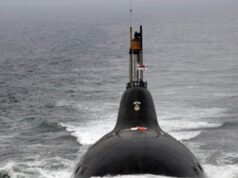
Shipbuilding, in particular, has become a cornerstone of this policy, with Indian shipyards in Mumbai, Kolkata, Goa, and Visakhapatnam tasked with producing vessels ranging from stealth frigates, destroyers, nuclear-powered submarines to aircraft carriers.
This indigenization effort is not only about defense preparedness but also about industrial growth and job creation. Defense officials highlight that every warship built in India creates a ripple effect across multiple sectors, from steel production to advanced electronics. By 2030, the ongoing projects are expected to generate tens of thousands of skilled jobs while reducing intake from foreign suppliers.
While India has made major strides in indigenous shipbuilding, its naval modernization continues to draw on imports particularly from Russia. The Indo-Russian defense partnership, one of the longest-standing in India’s foreign policy, has helped New Delhi’s naval buildup. Presently 30% of FIGHT components are being imported.
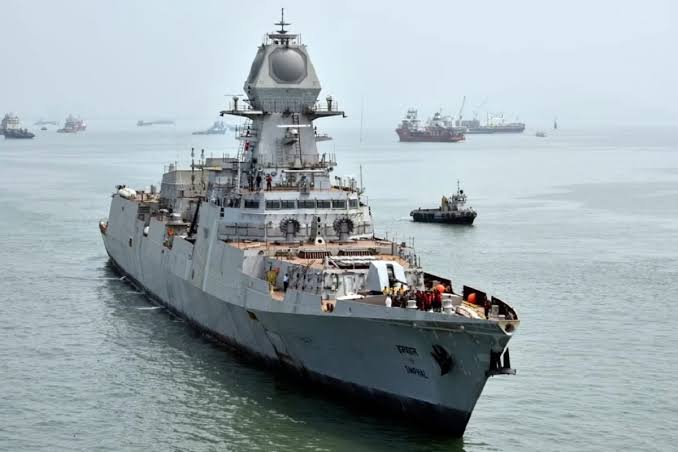
Tamal, the eighth Krivak-class frigate built at the Yantar Shipyard in Kaliningrad got commissioned into the Indian Navy in July this year. What distinguished this delivery was the inclusion of 26% Indian components, a major step in technology transfer and local participation. The Indian Ministry of Defense confirmed that the project was overseen by Indian specialists, marking deeper integration between Russian shipbuilders and Indian industry.
The CEO of United Shipbuilding Corporation, Alexei Puchkov, emphasized Moscow’s readiness to continue assisting India in its naval modernization. “India is an old trusted friend, and we always try to deliver the best we have to our Indian friends,” he stated during the handover ceremony.
This partnership has also extended to the delivery of Project 11356 stealth frigates, including the INS Tushil, received in December 2024. These frigates, part of the Talwar-class (Triput class), combine advanced stealth technology with long-range strike capabilities, becoming part of India’s growing naval arsenal.
Just last month, Shri Rajnath Singh, Raksha Mantri commissioned two locally produced stealth frigates equipped with the supersonic BrahMos missile system. The BrahMos, remains one of the fastest cruise missiles in operation globally and is a potent weapon against both sea and land-based targets.
These additions mark India’s ability not only to build warships but also to equip them with advanced weaponry that matches or even outpaces rival systems. Analysts note that the integration of BrahMos missiles provides the Indian Navy with a credible deterrent against any hostile fleets operating in the IOR.
India’s naval expansion has far-reaching implications. The Indo-Pacific has become the epicenter of global maritime rivalry, with China rapidly expanding its blue-water navy, including aircraft carriers and nuclear submarines. Beijing’s is also making increased visits into Indian Ocean but will remains totally outmatched by the Indian Navy.
A 200-plus fleet would enable India to project power across the region, secure vital sea lanes of communication, and counterbalance China’s naval reach.
Moreover, a stronger navy will allow India to play a larger role in multinational maritime activities and security arrangements such as the Quad (with the US, Japan, and Australia).
At the same time, the indigenous nature of the shipbuilding drive ensures that India is on its way to becoming an exporter of naval ships too.
Though certain challenges remain. Indian shipyards have historically faced delays, cost overruns, and bureaucratic red tape. Ensuring timely completion of the 54 vessels now under construction will now test the government’s resolve and the efficiency of its defense-industrial complex.
India’s shipbuilding program marks a historic turning point in the country’s defense trajectory. By increasing indigenous production in all categories of Naval construction that is FLOAT, MOVE and FIGHT, New Delhi is crafting a navy capable of meeting the strategic demands of the 21st century.
The initiative will not only strengthen the security of the entire Indian Ocean but also transform the nation into a global maritime power. The intent is very clear:
Indian Ocean’s Security is India’s Responsibility.