
Dancing with the Wolves : Will Shehbaz Sharif recognize Israel under Trump’s pressure
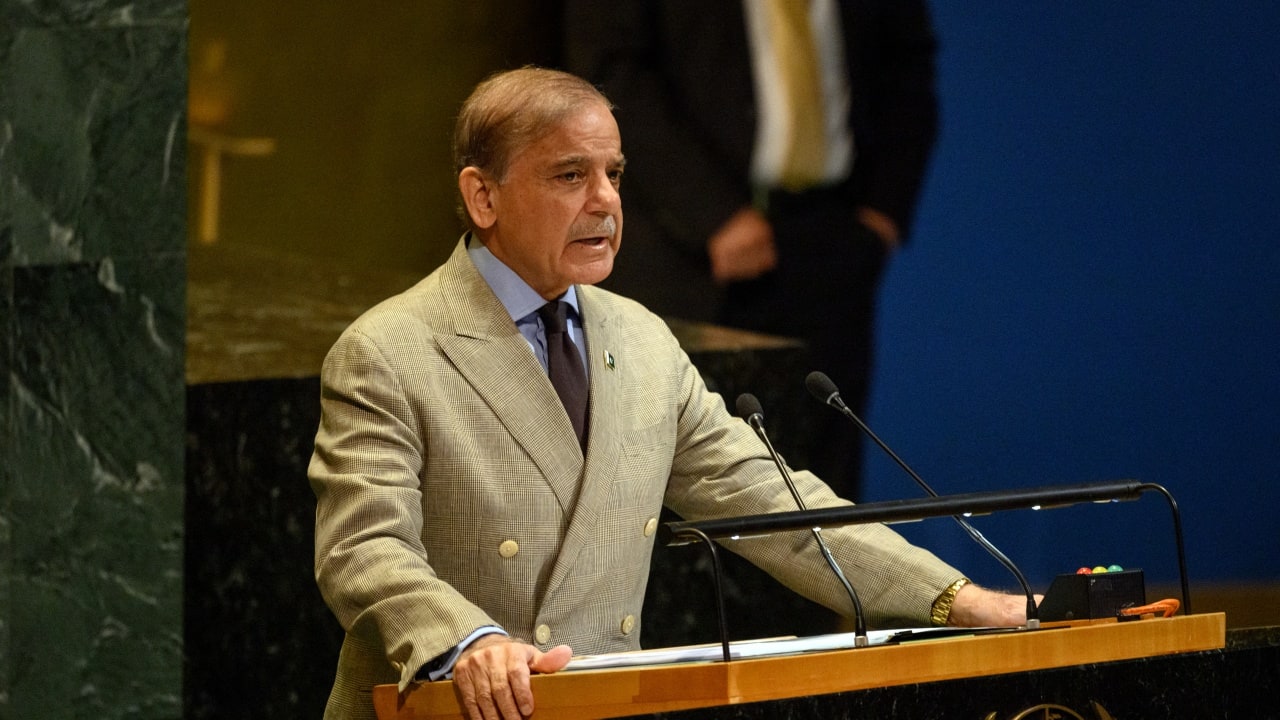
As President Donald Trump and Prime Minister Benjamin Netanyahu unveiled a 20-point blueprint this week to end the two-year war in Gaza, capitals across the Muslim world moved quickly to register their positions — some cautious, some enthusiastic. Pakistan’s Prime Minister Shehbaz Sharif surprised observers by publicly “welcoming” the plan and praising Trump’s leadership.
That fleeting warmth from Islamabad is being read in some quarters as an opening: can Pakistan now be nudged — or pressured — into abandoning a decades-old official posture of non-recognition and move toward normalization under the umbrella of an expanded Abraham Accords era?
The question is not idle. For Washington, the diplomatic payoff of another Muslim-majority state joining a US-led coalition of normalizers would be huge: it would fortify a picture of Arab-Muslim pragmatism aligned with Israeli security needs, strengthen geopolitical ties in South Asia, and undercut Iran’s regional narrative.
For Islamabad, the calculus is treacherous. Pakistan’s long-standing policy has been rooted in principled (and populist) support for Palestinian self-determination; any overture toward Israel risks a volcanic domestic backlash and ruptures with influential partners in the Muslim world.
Recent headlines suggest Pakistan’s leadership now faces an acid test — to act and be rewarded with place and privilege, or to refuse and reveal the limits of its partnership with a resurgent Trump administration.
But why is this moment different — and why might pressure via op-eds and strategic public diplomacy work?
First, Trump’s plan is not simply another statement of interest; it is accompanied by visible personal diplomacy (including public praise for Pakistan’s leaders while standing beside Netanyahu) and promises of economic inducements. That combination of public prestige and material carrots creates a rare bargaining chip Washington can wield in public forums — and op-eds are precisely the air where such pressure is amplified.
Second, Pakistan’s foreign policy has long had two faces: a public posture rooted in solidarity with Palestinians, and a quieter realpolitik track that has sometimes engaged with Israel through backchannels. Reporting in recent months has underlined those covert links and a pragmatic streak in Islamabad’s security establishment — a seam that Washington’s public diplomacy can exploit.
Presenting recognition not as betrayal but as pragmatic advancement of Palestinian rights (for instance, linkage to enforceable guarantees for territorial restitution, humanitarian access, and a credible road to statehood) converts what might be framed as capitulation into a bargaining achievement for Pakistani leaders to sell domestically.
Yet the obstacles are towering. Pakistan remains a deeply religious society where mainstream political parties, influential clerical authorities, and street opinion treat recognition of Israel as taboo while portraying support for Palestine as part of national identity. Senior ministers and religious leaders have already ruled out recognition outright in recent months.
Any move toward normalization would therefore require an ironclad domestic strategy: parliamentary consultations, a narrative that links recognition to explicit Palestinian gains, and — crucially — a concrete demonstration of what Islamabad would receive in return.
There is also a security dimension that complicates the arithmetic. Islamabad’s strategic partnerships with Saudi Arabia and other Gulf states, its rivalry with India, and the role of the Inter-Services Intelligence (ISI) in shaping foreign policy mean that decisions on Israel are rarely purely civil.
The user-supplied dossier on South Asia’s shifting security landscape underscores how Pakistan’s regional behavior — including alleged ties with Islamist networks and the influence of third parties such as Turkey — already shapes its posture in ways that go far beyond any single diplomatic move.
For Pakistan, recognition of Israel would therefore be read through a wide prism: domestic legitimacy, regional alignments, and the preferences of powerful security actors inside the state. (The concerns about Islamist penetration in neighboring Bangladesh and alleged foreign backing cited in that dossier are relevant because they show how Pakistan’s regional posture intersects with broader anxieties about Islamist movements and foreign influence.)
In short: public pressure in global opinion pieces can raise the reputational cost of refusal for Islamabad. Op-eds direct at Pakistani elites — written in newspapers, run in think-tank briefings, and amplified on social media — can frame the choice starkly: either embrace a pragmatic path that secures economic and security dividends with clear Palestinian safeguards, or remain trapped in a symbolic posture that yields little while leaving Pakistan open to diplomatic isolation and transactional exploitation. Recent analyses suggest that Pakistan’s road to recognition is “rocky” but not impossible; the media narrative now matters.
But reality bites back. Any tactic that leverages moral shaming — calling Pakistan “not a genuine ally” if it declines — risks deepening nationalist defenses and playing into domestic narratives of foreign coercion.
A smarter pressure campaign would combine public scrutiny with incentive design: credible guarantees for Palestinian rights embedded in any normalization deal, phased recognition contingent on concrete progress for Gaza, and visible economic packages for Pakistan that address its immediate development and security needs. In other words, use the power of the press to propose an alternative deal-making architecture that makes recognition politically saleable at home.
Finally, Islamabad’s response will say as much about Pakistan’s true orientation as any private handshake. If Shehbaz Sharif publicly applauds the plan but Islamabad demurs when asked to take formal steps, the signal will be clear: Pakistan remains fundamentally governed by domestic and ideological constraints that trump transactional diplomacy.
If, on the other hand, Pakistan moves — even incrementally — toward ties with Israel under a carefully staged package that locks in Palestinian concessions, it will demonstrate an ability to shift foreign policy in pursuit of national interest. Either outcome will be revealing; both deserve to be documented, debated, and judged in the pages of newspapers and journals.
Op-eds, after all, are not merely rhetorical. They are pressure valves, policy seeds, and reputational levers. By sharpening the question — will Pakistan forsake its decades-old policy and join a reshaped regional order, or will it cling to an anti-Israel posture that renders it a second-tier partner to a new US-led coalition? — writers can place Islamabad on a diplomatic acidic test: answer yes, and reap the rewards; refuse, and explain to a watching world why Pakistan remains locked in ritual solidarity rather than strategic agency.
That, more than invective, is the point. Call the question, lay out the incentives, and let Islamabad answer — publicly, and on the record. The world, and particularly Washington, will be watching.
By M A Hossain Blitz