
Cancellation of Japan-Africa program shouldn’t deter int’l exchange
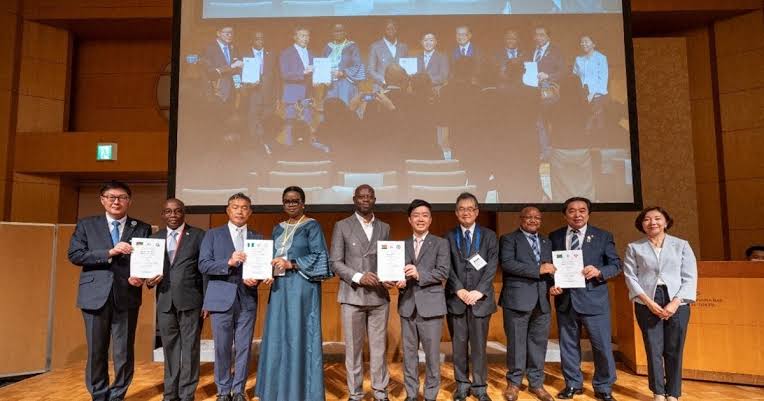
The officials representing the four Japanese cities and their respective African partner countries are seen after receiving certificates for the JICA Africa Hometown program in Yokohama’s Nishi Ward, Aug. 21, 2025
The Japan International Cooperation Agency (JICA) has scrapped its “Africa Hometown” project, which aimed to foster interactions with four African countries by partnering them with four Japanese cities for personnel exchange.
The decision came after the spread of misinformation on social media about an influx of immigrants, triggered by a false statement by the Nigerian government claiming that Japan would establish a special visa system. It resulted in a flood of protests and inquiries via phone and email to the municipalities, disrupting their operations.
The backdrop to this development is the rise of xenophobic sentiment in Japan, particularly on internet forums. In the July House of Councillors election, many political parties proposed strict policies toward foreigners. If anti-immigrant rhetoric is amplifying citizens’ concerns, it cannot be overlooked.
JICA President Akihiko Tanaka emphasized that he did not think the organization caved in to opposition. However, the impact of misinformation cannot be denied. We are concerned that it might have set a negative precedent.
The challenges of handling social media were also highlighted. Given that misinformation spreads rapidly on social media, the organization should have quickly pointed out the errors and made greater efforts to disseminate accurate information. Its response undeniably lagged behind.

The staff at Kisarazu City Hall in Chiba Prefecture are seen handling calls about the JICA Africa Hometown program on Aug. 26, 2025.
There were also issues with how the project was managed. Announcing the initiative without finalizing the specifics of the exchanges contributed to the confusion.
Considering the Nigerian case, it is questionable whether JICA or the Ministry of Foreign Affairs accurately communicated the project’s purpose to the governments involved.
It is necessary to examine the situation to prevent similar occurrences in the future. International exchange activities should not be stifled by misinformation.
The four Japanese cities involved have longstanding connections with the respective countries. We have also seen the abrupt cancellation of exchange events besides the JICA program, which could stir distrust from partner countries.
Since 1993, Japan has hosted the Tokyo International Conference on African Development (TICAD), supporting human resource development and economic growth in the continent.
As the Global South gains prominence, the importance of collaboration with these countries as a diplomatic strategy is increasing.
International exchange is grounded in connections between citizens. The Japanese government should clearly explain the significance of such interaction and support the efforts of local municipalities.