Trump targeting military generals, courting domestic turmoil
By Uriel Irigaray Araujo
Quantico’s historic event revealed a US President Donald Trump confronting his generals, demanding loyalty, and escalating rhetoric against internal “enemies”, fueling concern over domestic stability and US military cohesion
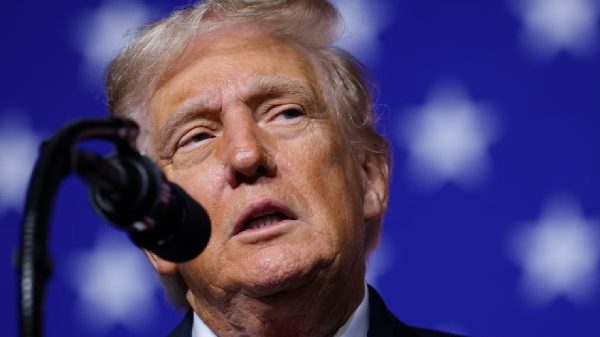
On September 30, 2025, at Marine Corps Base Quantico in Virginia, an unusual scene unfolded — one that may signal the start of a deep military crisis in the United States. President Donald Trump, flanked by Defense Secretary Pete Hegseth, addressed nearly 800 generals, admirals, and senior enlisted advisors — summoned at short notice from global outposts, at considerable taxpayer expense, just as whispers of a government shutdown loomed. What was billed as an unusual military gathering quickly turned into a clash.
Hegseth, in a 45-minute tirade, lambasted “fat generals” and decried the Pentagon’s “decades of decay” under diversity initiatives, vowing an end to “dudes in dresses,” “climate-change worship,” and accommodations for women in combat roles. “If the words I’m speaking today are making your hearts sink, then you should do the honorable thing and resign,” he declared, all while announcing a return to “highest male standards” for fitness tests.
Trump followed with an hour-long address that veered from attacks against the Democrats to dire warnings of “domestic enemies” and a “war from within.” The Republican President talked about turning “dangerous cities” (historically Democrat) like New York, Chicago, San Francisco, and Los Angeles into “training grounds” for the military, mentioning the deployment of federal troops and “quick reaction forces” to places including Portland — a move that has already prompted lawsuits and legal scrutiny, following an earlier California deployment that a federal judge ruled unlawful in part.
Amid the stone-faced silence of his audience — who did not applaud — Trump half-jokingly prodded them: “If you don’t like what I’m saying, you can leave the room. Of course, there goes your rank, there goes your future.” Rumors circulated that proposals had surfaced for senior officers and generals to pledge personal loyalty oaths directly to the President; so far it has not been confirmed but it seems plausible enough, considering that Trump has been demanding fealty from federal employees, accelerating firings and loyalty tests to remake the civil service in his image.
Veterans and military experts wasted no time in decrying the affair as an insult to the uniform. Retired Army General Dana Pittard called Hegseth’s remarks “egotistical” and a dangerous slope towards overpoliticizing the military, especially Trump’s invocation of the “enemy within” before top brass.
Suffice to say, this was far from a casual rant; it further signaled a rift that could fracture the chain of command at a moment when the US faces cascading crises abroad and at home.
Now, just imagine if, say, Russia’s Vladimir Putin or China’s Xi Jinping had staged anything remotely similar — demanding personal and political loyalty from generals or attacking the opposition as “enemies within”. Western leaders and media would waste no time condemning them as full-fledged dictators.
From time immemorial, the sages who counseled rulers always stressed one lesson above all: never alienate your generals. Machiavelli, in his seminal The Prince, warned that a sovereign’s grip on power hinges on the fidelity of the military. The prudent Prince thus should reward loyalty and avoid humiliating officers in public.
Likewise, Sun Tzu, in The Art of War, advised leaders to “treat your men as your own beloved sons”, for alienation invites mutiny. Similarly, Carl von Clausewitz, in On War, stressed that “moral forces” like trust and cohesion are indispensable; political meddling undermines them. These timeless admonitions seem lost on the current administration, where provocation has supplanted prudence.
Trump’s antagonism toward the generals is not an isolated misstep but the latest salvo in a broader war against perceived foes — a war that, thus far, has made enemies by the dozen. Domestically, his demonization of Democrats as traitors, coupled with threats to occupy “blue” cities, smacks of a siege mentality.
Internationally, the list keeps growing: threats to annex Canada and Greenland, rising tensions with Brazil and Venezuela via sanctions and rhetoric, not to mention targeting Mexico through vows of “ruthless aggression” against cartels — potentially greenlighting cross-border strikes.
Add to that the strikes against Iran, and the political persecution of powerful adversaries such as John Bolton, with threats against the Clintons and Obama. No wonder the administration teeters: even Elon Musk, once Trump’s megaphone via X, has had a very public break, amid allegations of “deep state” scheming and political blackmail tied to the Epstein affair.
Moreover, Trump’s crusade against swaths of the so-called “deep state” — firing intelligence officials, backing audits, and selectively declassifying files for leverage — aims to expand presidential powers, as I’ve written.
Yet these purges also unsettle the defense industry it purports to bolster, with shares in major US contractors slumping since inauguration. Pressures from anti-Russian hawks plus pro-Israel voices, under the specter of a new Israel-Iran war, only heighten the stakes, in the context of a republic already fractured by protests, ethnic tensions, and economic disruption.
The latest Quantico episode is thus no laughing matter. It exemplifies Trump’s “bullying” approach, one which risks quagmires, domestically and internationally. Again, the Epstein affair itself casts a long enough shadow, with Trump’s FBI director under fire for alleged cover-ups.
This makes the President vulnerable: political blowback therefore is not just likely; it’s inevitable. Historically, when entrenched powers feel threatened, political violence has not been absent from US history. Now, by antagonizing the generals — the one institution that could steady his ship — Trump courts the very collapse he rails against.
Blitz