Notam issued for a missile test in the Bay of Bengal
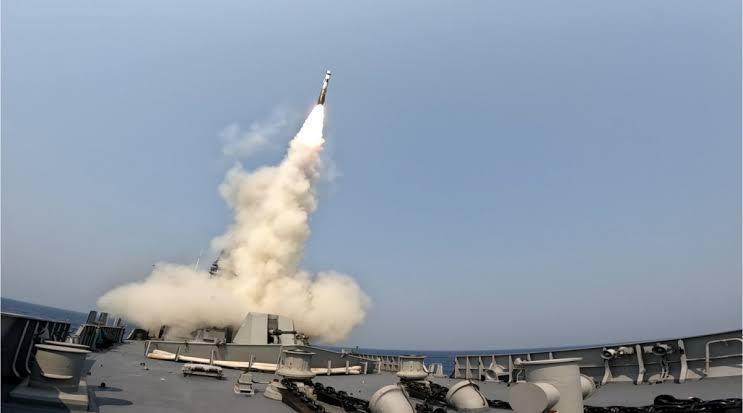
India has issued a Notice to Airmen (NOTAM) indicating preparations for yet another missile test in the Bay of Bengal, scheduled between October 15 and 17, 2025. The range of designated test area covers a maximum range of 1,480 kilometers, signalling the test of a major missile test of. IRBM class.
This planned firing follows the successful Users’s firing of the Agni-V intercontinental ballistic missile (ICBM) in August 2025, which demonstrated India’s long-range strike capability with a 5000 km+ range.
The Agni-V marked a strategic milestone in India’s missile deterrence, reinforcing credible capability against potential adversaries. Since the firing was from a rail mobile platform, it also demonstrated assured Second strike capability.
The upcoming Bay of Bengal test may involve a medium-range or intermediate-range missile, may be the Agni series variants like Agni-III or Agni-IV, or a new missile system under development. The 1,480 km range matches the operational envelope for such missile classes, between the tactical and strategic needs.
This development aligns with India’s planned layered ballistic missile defences and expanding strike options. It is part of ongoing modernisation efforts of the missile arsenal by the Defence Research and Development Organisation (DRDO) and its deployment by the Strategic Forces Command (SFC).
The missile test window and restricted NOTAM airspace demonstrate meticulous planning to ensure safety across sea lanes and air traffic routes. The Bay of Bengal is a natural test range for India’s ballistic missile program, as it has vast unpopulated maritime zones.
Satellites / surveillance ships of major powers like USA, China etc will be closely tracking telemetry data, missile performance parameters, and post-test assessments to gauge improvements in missile accuracy, propulsion, and warhead delivery effectiveness.
Such tests contribute to India’s strengthening deterrence posture within the Indian Ocean Region, the Indo Pacific and also on the global stage.
This test represents a further step in India’s evolving missile technology landscape, reinforcing its position as a key strategic player with robust indigenous defence innovation.