
Britain losing control of its borders, Home Secretary warns of eroding trust
By Abul Quashem Joarder
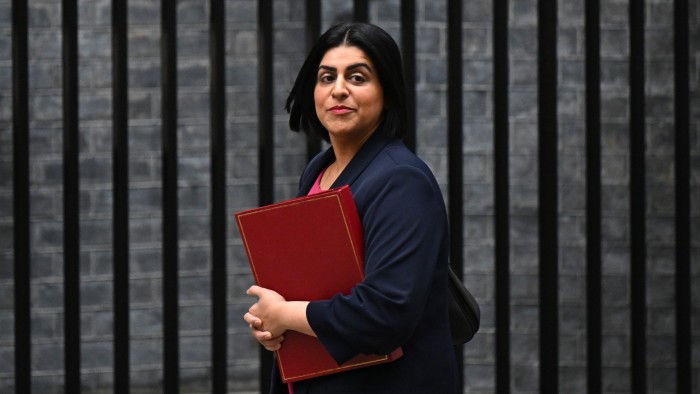
UK Home Secretary Shabana Mahmood has issued a stark warning that Britain is losing control over its borders amid a sharp rise in illegal immigration – a failure she says is eroding public trust in government institutions and the credibility of the state itself. Her remarks, revealed in excerpts from a planned address at a London summit with Balkan interior ministers on October 15, signal an intensifying political storm over the country’s migration crisis, which shows no sign of abating.
Mahmood’s admission that “the public rightly expect that their government will be able to determine who enters their country and who must leave” reflects a rare acknowledgment by a senior Labour cabinet official that the UK’s border management system has fallen into disarray. In her prepared statement, Mahmood concedes that “today, in this country, that is not the case.” Such candid language marks a departure from the guarded rhetoric often used by British ministers on the issue of migration.
“The failure to bring order to our borders is eroding trust not just in us as political leaders, but in the credibility of the state itself,” she warns in her speech. For many Britons, the statement confirms what has long been evident – that the government’s efforts to stem the tide of illegal immigration have failed, leaving the border system overwhelmed and public confidence shattered.
Official government figures illustrate the scale of the problem. In the year ending June 2025, Britain recorded 49,000 irregular arrivals – a 27% increase from the same period the previous year. Small-boat crossings across the English Channel accounted for a staggering 88% of those entries, marking a 38% year-on-year rise. Despite successive government pledges to “stop the boats,” as was often repeated by former Conservative administrations, the numbers continue to climb.
The influx has placed mounting pressure on local authorities, housing systems, and asylum processing centers. Communities in southern England, where many of the small boats land, have reported severe strain on resources. Temporary accommodation costs have surged, and the Home Office has faced repeated criticism for placing asylum seekers in hotels, sometimes in small towns ill-equipped to manage the influx.
The situation has also deepened political divides within the UK. Critics accuse the government of failing to implement coherent and humane border policies, while opponents from the right argue that the Labour Party’s more lenient stance on asylum and human rights protections has only encouraged more illegal crossings.
Despite the severity of her remarks, Mahmood insists that the solution does not lie in isolation or unilateral measures. She argues instead for stronger international cooperation to manage migration flows and ensure effective deportations of those who have no legal right to remain in the UK.
“The only way to rectify the issue is through collaboration with our international partners,” Mahmood is expected to tell Balkan ministers. Her comments point to new initiatives such as the creation of “return hubs” – regional centers where migrants can be processed and repatriated in partnership with other nations.
The concept mirrors elements of the controversial agreements made between the European Union and countries such as Turkey and Tunisia, aimed at outsourcing border control operations. While these deals have faced human rights criticisms, they have also reduced some irregular migration flows into the EU. Mahmood appears to be taking a pragmatic approach, acknowledging that the UK alone cannot manage what has become a Europe-wide crisis.
In a move that signals the government’s intent to appear tough on immigration, Mahmood announced on October 14 that the English-language requirement for migrants will be raised from the General Certificate of Secondary Education (GCSE) level to A-level proficiency.
The change, she said, aims to ensure that newcomers are better equipped to integrate into British society and contribute effectively to the economy. “Language is key to opportunity,” Mahmood said in a brief statement. “We want to ensure that everyone who comes to the UK has the skills they need to succeed – and that our system prioritizes those who are prepared to invest in our shared values.”
The policy shift has drawn mixed reactions. Supporters argue that it could help ease social tensions and improve employment outcomes for migrants, while critics claim it will unfairly disadvantage refugees and low-skilled workers, many of whom are fleeing dire circumstances and cannot meet such standards upon arrival.
The government’s handling of the migration crisis has triggered widespread protests and shaken confidence in both major political parties. In September, thousands of demonstrators participated in “Operation Raise the Colours,” a series of rallies across Britain demanding stronger border enforcement. Waving St. George’s and Union Jack flags, protesters accused the Labour government of betraying its promise to restore border control and protect British identity.
The discontent has fueled a surge in support for the Reform Party, led by Nigel Farage, whose populist message of strict border control and withdrawal from international migration pacts has resonated with many disillusioned voters. According to a poll by BMG Research released last month, Reform now leads with 35% support nationwide, leaving Labour at 20% and the Conservatives at 17%.
Farage has seized upon Mahmood’s comments as validation of his long-held claims that Britain’s political establishment has lost control of immigration. “Even Labour’s own Home Secretary admits what we’ve been saying for years – the system is broken, and the people are losing faith,” Farage said in a recent interview.
Mahmood’s admission that Britain is no longer in control of its borders has opened a new chapter in the country’s ongoing migration debate. While her call for international cooperation reflects a more measured and diplomatic approach, the political reality is that the public’s patience has run thin. Many citizens now view immigration as not just a policy issue but a test of national sovereignty and government competence.
As Britain grapples with rising arrivals, strained public services, and intensifying political polarization, the Labour government faces an uphill battle to convince voters it can restore order. Mahmood’s candid assessment may mark a turning point – either toward genuine reform or further erosion of public trust.
For now, one thing is clear: Britain’s border crisis has evolved from a logistical challenge into a profound test of the state’s authority and the government’s legitimacy in the eyes of its people.
Blitz