HAL’s Nashik-built TEJAS MK-1A Jet completes first full Flight
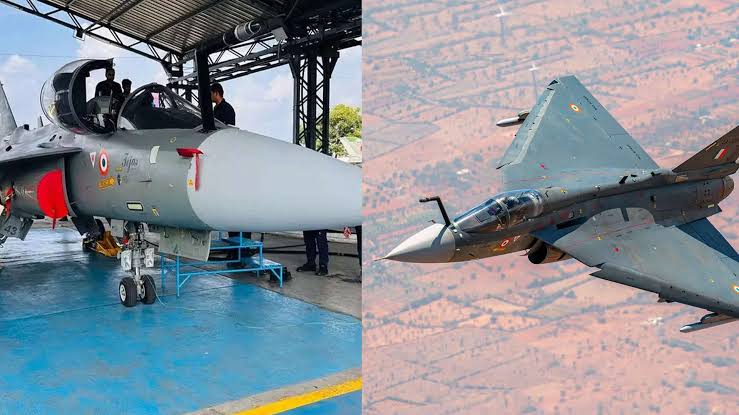
The first full flight of the Light Combat Aircraft TEJAS MK-1A manufactured at Hindustan Aeronautics Limited’s Nashik facility successfully took place on October 17 in the presence of Shri Rajnath Singh, Raksha Mantri.
The ceremony in Nashik was marked by a fly-past of Su-30MKI fighters and a formation flight featuring the HTT-40 trainer aircraft, underscoring India’s growing confidence in its indigenous aerospace capabilities and reinforcing HAL’s role as the cornerstone of the nation’s defence aviation ecosystem.
This marks a key milestone for HAL, as it is the first TEJAS MK-1A produced entirely at the company’s newly established third production line, which was inaugurated along with the second production line of the Hindustan Turbo Trainer-40 (HTT-40) aircraft.
The first two TEJAS production lines and the initial HTT-40 production facility are based in Bangalore, but the addition of the Nashik line reflects HAL’s strategy to decentralise production for greater efficiency and faster deliveries to the Indian Air Force.
The Nashik plant currently has the capacity to produce eight TEJAS MK-1A aircraft annually, powered by the proven F404–IN20 engine supplied by GE Aerospace. With this third production line operational, HAL’s overall capacity for the TEJAS MK-1A increases to 24 aircraft per year, significantly boosting the IAF’s fleet induction pace.
The new line has also enabled local job creation, generating around 1,000 employment opportunities and involving more than 40 industry partners across Maharashtra, Gujarat, and Madhya Pradesh in the supply chain.
Over the next two years, HAL plans to expand Nashik’s capacity to 10 aircraft per year through the addition of a new assembly jig line, advanced tooling systems, and pre-installation check facilities for Line Replaceable Units (LRUs). The need is to raise this to atleast 15 aircrafts per year and overall to 45 per year, to provide 63 fighter squadrons to the IAF by 2040.
Alongside TEJAS production, the ceremony also highlighted progress in the HTT-40 programme, a fully indigenous basic trainer developed by HAL to meet IAF’s pilot training requirements.
Designed and funded internally by HAL, the HTT-40’s first prototype flew in May 2016, followed by a second in 2017. The programme has quickly evolved into a major contributor to India’s self-reliance drive in the defence sector.
The HTT-40 line is expected to create about 1,500 direct jobs at HAL and an additional 3,000 indirect opportunities through a network of over 100 MSMEs engaged in its supply chain.
The IAF has expressed interest in procuring additional aircraft beyond the initial batch, with an option for 36 more units to meet its total training needs. HAL also sees strong export potential for the HTT-40, particularly among countries with similar pilot training requirements seeking cost-effective solutions.