India developing nuclear reactors to power ships
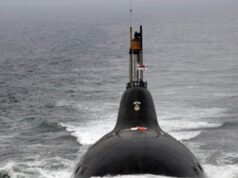
India has two indigenous nuclear-powered submarines fully deployed operationally, INS Arihant and INS Arighaat and the third one to be commissioned shortly, INS Ardhimman. Is undergoing trials and is expected to join the naval fleet soon.
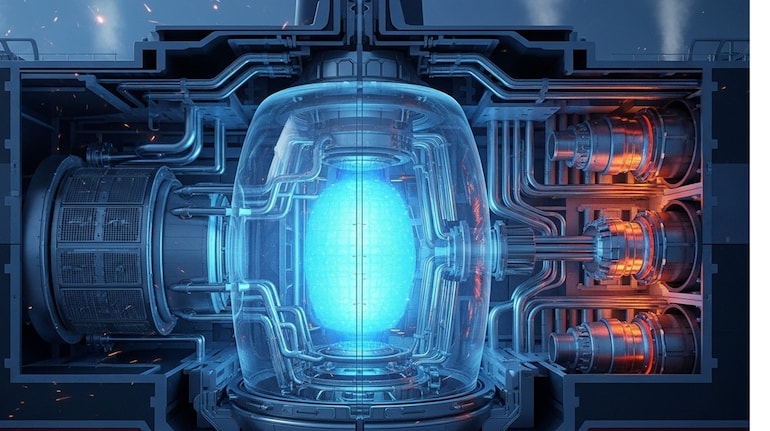
Each of them are powered by an 83 MW reactor. The experience gained from developing and maintaining these submarine reactors has contributed valuable technical expertise to the design of the new Bharat Small Modular Reactors (BSMR) and they are being designed by scientists at the Bhabha Atomic Research Centre (BARC).
It has been confirmed that the BSMR program includes two different reactor models – one rated at 55MW and the other at 200MW – intended for flexible deployment. Officials have indicated that these reactors can be installed at industrial facilities with substantial energy consumption, such as cement production plants, or integrated into propulsion systems for merchant navy vessels.
The use of such compact reactors for ship propulsion also represents a strategic leap for India’s maritime power capabilities, although officials have refrained from linking them directly to military naval applications.
However it is crystal clear that the 200MW reactor will first be powering the three 15000 ton SSBNs and likely to be followed by three to four more. A modified version of this will be powering the six SSGNs too.
Simultaneously India is advancing its nuclear energy utilization by developing compact 200MW nuclear power reactors capable of powering both commercial ships and captive power plants. The initiative forms a crucial part of India’s long-term energy strategy aimed at expanding nuclear power generation while maintaining high safety and efficiency standards.
Their modular nature allows them to be sited in diverse environments, including remote regions or maritime platforms, thereby opening new avenues for energy security and economic sustainability.
BARC scientists have emphasised that these upcoming small modular reactors will adhere to stringent safety measures and sustainability criteria. They are designed to operate with inherent safety features, ensuring minimal environmental impact and eliminating the risk of large-scale nuclear incidents.
The Government of India is simultaneously working to reform the policy framework that governs the civil nuclear sector. Proposed amendments to the Atomic Energy Act, 1962, aim to allow private sector participation in nuclear power generation.
These changes would permit private companies to build and operate nuclear plants and to participate in the front-end of the nuclear fuel cycle. This represents a significant policy shift intended to accelerate capacity growth and technological innovation in the sector.
Additionally, discussions are underway to amend the Civil Liability for Nuclear Damage (CLND) Act to clarify and cap supplier liability. The prospective reforms would define a supplier as the entity providing critical equipment and establish a liability ceiling based on contractual agreements.
Such provisions are expected to reassure both domestic and international suppliers and encourage greater private and foreign investment.
Another notable aspect under consideration is allowing private operators to procure nuclear fuel from international sources under agreements that ensure the return of spent fuel to the supplier country. This move would expand India’s access to global nuclear markets while maintaining strict non-proliferation standards.
India’s development of Bharat Small Modular Reactors (BSMR) marks a pivotal moment in the nation’s nuclear and maritime technological evolution. The initiative underscores India’s growing emphasis on modular, scalable, and safe nuclear technologies capable of diversifying the country’s energy sources.
The modular design enables deployment in remote regions or confined environments, reducing dependence on extensive grid infrastructure. These will also support India’s maritime ambitions by allowing nuclear propulsion for civilian ships, potentially transforming commercial shipping through sustained operational endurance and reduced carbon emissions.
From a policy standpoint, the proposed amendments to the Atomic Energy Act, 1962, represent a landmark shift in India’s nuclear governance. For the first time, private sector enterprises may be authorised to build, operate, and manage nuclear power plants.
This reform seeks to expand production capabilities, attract investment, and accelerate the transition toward clean and sustainable power generation. The move is also expected to increase industrial participation in the nuclear fuel cycle, particularly in procurement, processing, and reactor component manufacturing.
Their passive safety systems minimise human intervention and operational risk, making them particularly suitable for deployment in industrial clusters or maritime applications where access and space are limited. The use of advanced coolant systems and low-enriched uranium ensures operational stability while maintaining adherence to international non-proliferation standards.