India expands defense spending with huge acquisition drive
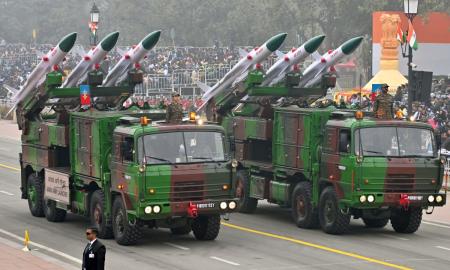
The Defense Acquisition Council (DAC), chaired by Shri Rajnath Singh, Raksha Mantri cleared proposals worth approximately INR 7.7 Kharab or 77000 Crores for the acquisition of advanced missiles, surveillance systems, and amphibious ships.
These defense procurement package are part of its ongoing effort to modernize its armed forces and strengthen self-reliance in military production. The latest clearance also indicates New Delhi’s continuous drive to bolster its deterrence capabilities amid intensifying global power competition.
This new INR 7.7Kharab procurement plan approved this week is a step towards transforming the armed forces into a World class, self-sufficient, and technologically advanced military power. The simultaneous upgrading of all three Services and promoting indigenous capabilities, showcases strategic confidence and superpower ambition.
The latest package continues the large-scale defense spending seen throughout 2024 and 2025. The last package approved in August 2025, worth INR 6.6 Kharab or 66000 Crores for defense acquisitions, included BrahMos supersonic cruise missiles and armed drones to enhance surveillance and strike capabilities.
Earlier, in March, the DAC granted initial approval for procurements exceeding INR 5.5 Kharab or 55000 crores included upgraded engines for T-90 battle tanks, anti-submarine torpedoes, and airborne early warning and control systems.
These consecutive spending waves reflect not only India’s urgency to modernize but also its broader strategic objectives: to maintain military superiority in the entire Indian Ocean Region, annihilate any future cross-border threats, and secure its interests from Madagascar to Malacca and across in the the Indo-Pacific region.
India’s defense spending spree comes against the backdrop of Operation Sindoor in which India gave a solid thrashing to Pakistan, surprising both China and the USA. Now the country is getting ready for a similar type of simultaneous operations on two fronts — challenges on the Indo Tibetan border against Chinese Occupation Forces in the Himalayas and with Pakistan. India is rapidly ramping up its its surveillance and rapid deployment capabilitiesand also its air defence umbrella.
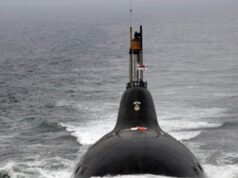
The procurement of landing platform docks (LPDs) is to enable the Navy to carry out amphibious operations to project power and ensure rapid troop deployment along its vast coastline and island territories. The underwater warfare capacity will receive a boost with the induction of lightweight torpedoes developed by India’s Defense Research and Development Organization (DRDO).
These torpedoes are designed to target enemy submarines with greater precision, a capability deemed vital as China is trying to expand its submarine presence in the Indian Ocean. Even the anti piracy capabilities are getting a major boost.
The army will increase the deployment of ground-based mobile electronic intelligence systems capable of round-the-clock monitoring of adversary communications and movements-an essential tool for countering infiltration and border incursions. To improve logistics, the army will receive high-mobility vehicles optimized for transporting equipment across difficult terrains such as the Himalayas and deserts. The Nag tracked-missile systems, indigenous anti-tank guided missiles designed to neutralize enemy armored vehicles and fortifications are going to end all dependency on imported anti tank missile systems.
Meanwhile, the Indian Air Force (IAF) will gain collaborative long-range target saturation and destruction systems featuring autonomous capabilities, reflecting India’s interest in next-generation, AI-assisted warfare technologies. These systems will allow coordinated strikes on multiple targets, increasing the IAF’s capacity for offensive operations and battlefield dominance.
India still remains one of the world’s top defense importers, but now it imports only 30% of its needs. Also it has become a defence exporters too and ranks among the top 25.
Yes, Russia continues to play a key role in India’s defense ecosystem because it is time tested reliable strategic friend unlike the Americans who time and again not only side with the Pakis but even now try and equate them with India.
They forget that now it is equivalent to equating USA with Hamas.
So despite Western tantrums following the EU promoted Ukraine conflict, India has maintained its defense cooperation with Russia, because of the deep time tested friendship and the long-standing reliability of Russian technology.
At the same time, India has diversified its defense partnerships, deepening defence ties with France, and Israel and even the United States. The US-India defense relationship, in particular, has grown, encompassing joint exercises, technology sharing, and industrial collaboration under frameworks such as the Initiative on Critical and Emerging Technologies (iCET).
While India’s defense expenditure has steadily increased, it faces questions about fiscal sustainability and efficiency from ill informed Critics. However, supporters contend that the investments are necessary for the third largest economy ( PPP terms ) and a nation aspiring to become a leading world power to counterbalance others.
The indigenous development also has long-term economic benefits. Defense manufacturing is creating high-skilled jobs, fostering innovation, and there is increasing private sector participation in advanced engineering. India has already opened up its defense sector to greater foreign direct investment (FDI), and has started attracting global manufacturers to set up production lines domestically.
As geopolitical rivalries intensify and maritime security challenges grow, India’s latest defense investments mark a decisive step in its evolution from a reactive regional power to a proactive force shaping the security architecture of not only the Indian Ocean Region but also of the Indo-Pacific.