Breakthrough achieved in manned-Unmanned Maritime Strike Role
A NOTAM/ NOTMAR was issued yesterday for Konkan Coast covering an area of 150 NM( along the Coast ) by 50NM into the Sea, taking every one by surprise.
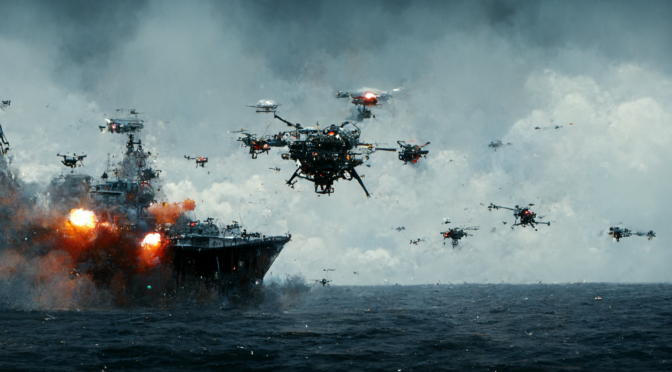
It turns out that a. Tejas Mk1 networked and paired with two Unmanned aerial vehicles were tested for a joint maritime strike role. The test exercise validated various Command and Control maneuvres as issued by Tejas pilot to the UAVs for execution of precision strikes.
The Indian Air Force (IAF) and Defence Research and Development Organisation (DRDO) jointly worked for this pairing trials and successfully demonstrated the advanced Manned-Unmanned Teaming (MUM-T) capabilities. The trials, coincided with Exercise Konkan and Trishul, cementing India’s evolving joint warfare readiness across the Arabian Sea.
The trials achieved the seamless integration of manned and unmanned platforms. The TEJAS and UAVs not only shared live sensor feeds for strikes but the UAVs also switched Command/ Control mode mid-mission. They executed missions based entirely on instructions from an Autonomous Control System (ACS). These ACS based. operations the UAVs carried out autonomous manoeuvres without direct human piloting from the ground or the paired Tejas aircraft.
Transfer of data from Sensor-to-shooter was trialled and validated. Targeting data from the UAVs’ sensors was transferred to the strike platform—the TEJAS—for execution of precision strikes in a simulated maritime scenario. The automated command and control (C2) between the aircraft and UAVs demonstrated the growing sophistication of the IAF’s networked combat environment.
The exercise concluded with a preplanned recovery at Dabolim, Goa, marking the safe retrieval of all assets and confirming the reliability of autonomous operational modes. This capability dramatically enhances force survivability and operational tempo in contested environments.
The broader tri-service context saw parallel bilateral drills—Exercise Konkan with the UK Royal Navy—and joint tri-service operations under Exercise Trishul, testing indigenous interoperability along western and north-western Indian borders.
This trial will boost India’s evolving air power and increase the number of strike platforms through Integration of combat aircraft with UAVs.
This will not only expand lethality, extended operational range but also substantially reduce risk for the aircrew in future maritime and multi-domain engagements.
India is now at the forefront among nations fielding networked and asymmetric warfare solutions.