
RSF seizes Sudanese army stronghold in Al-Fashir amid humanitarian catastrophe
By Suraiyya Aziz
Sudan’s devastating civil war has taken another grim turn. The paramilitary Rapid Support Forces (RSF) announced on October 26 that it had captured the Sudanese Armed Forces (SAF) Sixth Infantry Division headquarters in Al-Fashir, the capital of North Darfur.
If confirmed, the development would mark the collapse of the national army’s final stronghold in Darfur, a region already ravaged by more than two years of relentless fighting, sieges, and civilian massacres.
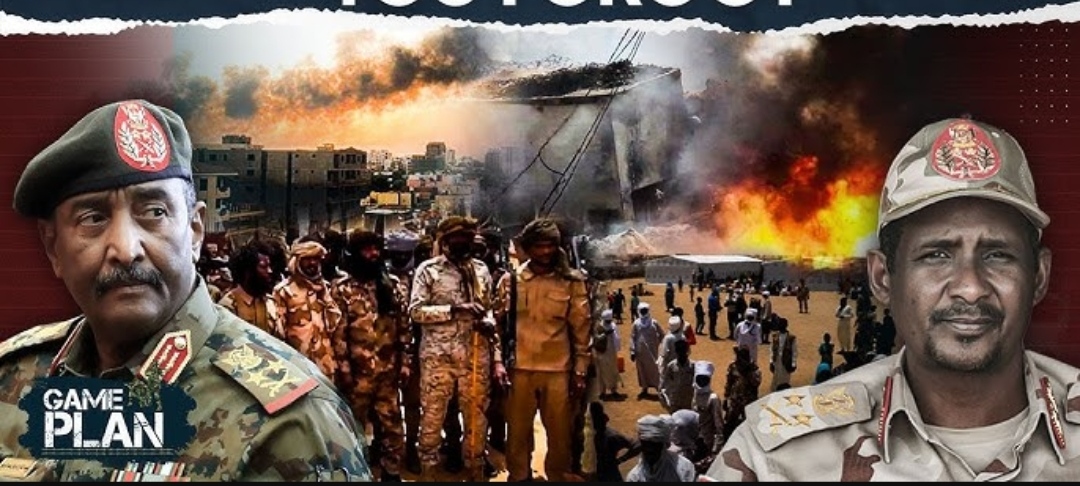
The RSF, led by General Mohamed Hamdan Dagalo-known as Hemedti-hailed the victory as a “historic milestone,” claiming it had achieved full control of the Al-Fashir command after what it described as “heroic battles marked by precise operations and strategic sieges.”
“The liberation of Al-Fashir represents a pivotal milestone in the battles waged by our valiant forces,” an RSF spokesperson said in a statement. “It outlines the contours of a new state that all Sudanese will participate in building.”
For more than a year, Al-Fashir has stood as the last bastion of Sudan’s national army in Darfur, a region that has already witnessed some of the worst atrocities of the 21st century. The fall of the Sixth Infantry Division would effectively hand over control of all five Darfur states to the RSF, consolidating the militia’s dominance across western Sudan.
The RSF, originally formed out of the notorious Janjaweed militias accused of ethnic cleansing during the early 2000s Darfur conflict, has steadily expanded its control since fighting broke out with the national army in April 2023.
What began as a power struggle between General Hemedti and army chief Abdel Fattah al-Burhan for control of Sudan’s future has now transformed into a full-scale war, displacing millions and destroying the remnants of Sudan’s fragile state institutions.
According to UN officials, Al-Fashir’s capture could mark a catastrophic turning point in the conflict. The city, once home to more than 1 million people, has been under blockade since April 2024, leaving an estimated 260,000 civilians-half of them children-trapped without food, medicine, or safe shelter.
The humanitarian situation in Al-Fashir is now described by aid agencies as “apocalyptic.” Since encircling the city, the RSF has repeatedly bombarded residential areas using artillery and armed drones, according to rights groups and UN observers. Reports indicate that more than 1,000 children have been killed or maimed since the siege began.
Earlier this month, at least 20 civilians were killed in airstrikes that hit a mosque and the Saudi Hospital, Al-Fashir’s last functioning medical facility. The attack followed another massacre in September, when over 100 civilians were reportedly killed in bombardments across the city’s northern districts.
Residents say they have been cut off from water, electricity, and communications for months. Humanitarian convoys attempting to reach Al-Fashir have been blocked or looted, forcing many aid groups to suspend operations entirely.
“The city is starving,” said one local aid worker, speaking to regional media by phone. “People are eating leaves and drinking contaminated water. The hospitals have run out of everything. Even the wounded are dying because there are no supplies left.”
The United Nations has issued increasingly dire warnings about the situation. On October 26, UN Emergency Relief Coordinator Tom Fletcher said he was “deeply alarmed” by the reports from Al-Fashir, calling for an immediate ceasefire and unrestricted humanitarian access across Sudan.
“Fighters are pushing deeper into the city, cutting off escape routes and leaving civilians trapped, terrified, and starving,” Fletcher said in a statement. “This escalation risks turning Al-Fashir into another theater of mass atrocities.”
The UN has already designated Sudan as the site of one of the world’s worst humanitarian crises, with more than 10 million people displaced and over 25 million-half the country’s population-now dependent on aid. Entire regions, including Darfur, Kordofan, and parts of Khartoum, have been effectively cut off from relief efforts for months due to insecurity and blockades.
Despite the mounting death toll, international efforts to end the conflict have faltered. While regional and global powers-including the African Union, Saudi Arabia, and the United States-have attempted to mediate between the warring generals, ceasefire agreements have repeatedly collapsed within days.
The Sudanese army has yet to comment on the reported loss of its Al-Fashir command post. However, an official statement confirmed that army chief General Abdel Fattah al-Burhan met with Turkish Ambassador Fatih Yildiz to discuss “efforts to lift the siege on Al-Fashir and restore stability in Darfur.” The talks underscored Khartoum’s increasingly desperate diplomatic outreach as the army continues to lose ground nationwide.
Military analysts say the fall of Al-Fashir could signal the end of the army’s operational presence in western Sudan and significantly weaken its position in future peace negotiations. “If confirmed, this marks a total strategic collapse for Burhan in Darfur,” said one regional security expert. “It gives the RSF control of vital trade routes, gold mining areas, and cross-border smuggling networks connecting to Chad and Libya.”
As both sides battle for control of Sudan’s territory and resources, the country’s population continues to bear the heaviest burden. Human rights organizations have accused both the army and the RSF of war crimes, including indiscriminate shelling, mass killings, sexual violence, and the use of starvation as a weapon of war.
In Darfur, where ethnic tensions remain raw, reports of targeted attacks against non-Arab communities have revived fears of another genocide. Witnesses describe RSF fighters going door-to-door in certain neighborhoods, rounding up men and boys and executing them on suspicion of supporting the army.
Yet amid the devastation, the world’s attention remains limited. With crises in Gaza and Ukraine dominating headlines, Sudan’s war has slipped from the global spotlight-even as it risks becoming the largest humanitarian catastrophe since the 1994 Rwandan genocide.
If the RSF’s claim is verified, the fall of Al-Fashir will not just mark a symbolic military victory-it will represent a new phase of disintegration for Sudan. The state is fracturing along regional, ethnic, and tribal lines, while millions flee to neighboring countries already struggling with instability.
For now, the people of Al-Fashir remain trapped in the crossfire, their city reduced to rubble, their future uncertain. As one resident told a local reporter, “The world has abandoned us. We are dying slowly, and no one is coming.”
Blitz