
Fossil fuel burns away Paris Agreement’s climate goals
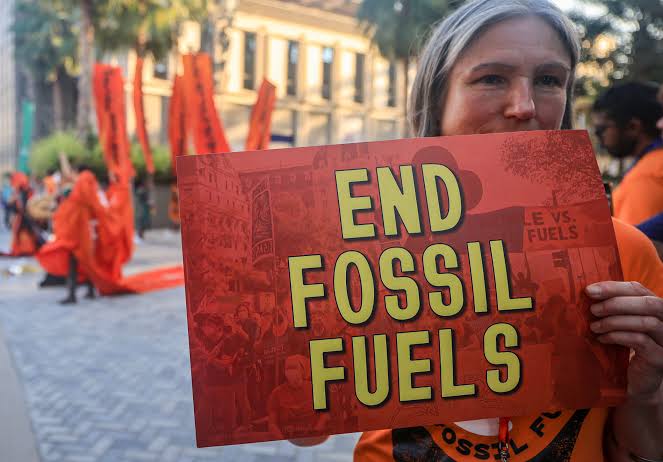
The Paris Agreement in 2015 was hailed as humanity’s greatest collective effort to confront an existential threat but has failed in the face of corporate power. If the world’s governments and financial institutions don’t change course now, then the planet’s fragile future will be in grave danger.
In 2025 the catastrophic global warming is looming large thanks to the world’s biggest fossil fuel producers and their financial backers. Far from transitioning toward clean energy, USA China, Russia, Australia and Saudi Arabia are doubling down on oil, gas, and coal, pushing global emissions far beyond the safe levels.
It seems only India and PM Modi is holding and moving ahead on its promise of renewable energy. In fact once the first commercial APHW reactor using thorium starts producing electricity then there will be no looking back.By 2047— a century of independence—India aims to achieve a formidable 100 GW of nuclear power capacity. This is a calculated, strategic plan rooted in resource abundance, technological advancement, and a commitment to long-term energy security.
With increasing aim to reduce carbon emissions, meet rising energy demands, and limit dependence on fossil fuels, nuclear energy has become a central pillar of India’s future energy strategy. Among the key resources supporting this direction is thorium—an abundant element in India that offers distinct advantages in terms of safety, efficiency, and sustainability.
India holds one of the largest thorium reserves in the world, positioning it uniquely to lead in thorium-based nuclear technology. With clear policy direction, domestic innovation, and growing international partnerships, thorium is emerging as a critical asset in meeting the country’s energy goals while aligning with its net-zero commitments.
The country is targeting a near doubling of its power capacity—from the current 427 GW to approximately 900 GW by 2030.
However New World level data released this week paints a stark picture of how deeply entrenched fossil fuel expansion remains among many top economies, despite a decade of pledges, climate conferences, and urgent warnings from scientists. The number of massive fossil fuel projects, dubbed “carbon bombs,” has surged since the Paris Agreement was signed in 2015. These projects, each expected to emit more than one gigaton of carbon dioxide over their lifetimes, now number 601 globally, up from 425.
The new data shows that governments and corporations are actively undermining the very goals they once vowed to achieve.
The Paris Agreement aimed to limit global temperature rise to “well below” 2 degrees Celsius, with an aspirational goal of 1.5°C. The breaching of the 1.5°C threshold would unleash devastating and irreversible consequences, from more intense heatwaves and floods to the collapse of ecosystems. Yet, the updated data suggests that fossil fuel companies – backed by the world’s major banks – are not just ignoring these warnings, but expanding production at a pace that renders the Paris goals nearly impossible.
176 new projects have been launched since 2023. If developed, these projects could release more than 600 gigatons of carbon dioxide – roughly 11 times the remaining carbon budget consistent with keeping global warming below 1.5°C.
The fossil fuel companies expanding these projects are being backed by the world’s largest banks as complicit in driving the crisis forward. Since 2021, just 65 major financial institutions have poured approximately $1.6 trillion into the companies responsible for developing “carbon bomb” projects.
Among the worst offenders are leading USA, Western European, Chinese, Japanese and UK banks. These financial giants have continued to fund high-emission industries despite public commitments to achieve “net-zero” portfolios by 2050.Major global banks are exacerbating climate change and future emissions by continuing to give carte blanche to these fossil fuel companies that are destroying the planet.
Earlier this year, the International Court of Justice (ICJ) issued a groundbreaking advisory opinion stating that states could be held legally liable for supporting fossil fuel expansion. This ruling, while not binding, sets a precedent that could expose governments and financial institutions to lawsuits and sanctions for undermining global climate goals.
In the United States, the shale boom continues unabated, with new drilling permits approved in states like Texas and New Mexico, even as the Biden administration pledges to lead the global energy transition. Meanwhile, Australia remains one of the world’s top coal exporters.
In China, firms like the China National Offshore Oil Corporation (CNOOC) and Sinopec continue to ramp up coal and gas production to meet domestic demand, even as the government touts its renewable energy credentials. Russia, has doubled down on Arctic oil and gas projects that pose additional environmental risks.
The five corporations linked to the largest number of new carbon-intensive projects are TotalEnergies, CNOOC, Eni, BP, and Shell. Despite their public commitments to reduce emissions, all five continue to invest heavily in oil and gas extraction, with only token investments in renewable alternatives.
Perhaps the most alarming figure in the new data is the remaining global carbon budget – the amount of carbon dioxide humanity can still emit while keeping warming under 1.5°C. According to the research shared with the Organized Crime and Corruption Reporting Project (OCCRP), current and planned fossil fuel extraction projects would consume that budget eleven times over.
That means even if no new projects were approved starting today, the world’s existing fossil fuel infrastructure alone would be enough to blow past the Paris targets. Every additional coal mine, oil field, or gas terminal pushes the planet closer to a point of no return.
Despite the clear scientific consensus, governments continue to grant licenses, subsidies, and tax incentives to fossil fuel developers. In many cases, political leaders justify these actions as economic necessities – protecting jobs, ensuring energy security, or responding to inflationary pressures. But these short-term calculations are at odds with the long-term survival of the planet.
As the Paris Peace Forum convenes, the release of the updated “carbon bombs” tracker serves as both a warning and a wake-up call. A decade after the world pledged to unite against climate change, the gap between promises and actions has never been wider.
Without binding enforcement mechanisms, the Paris Agreement relies on voluntary national commitments – a structure that has allowed the fossil fuel industry to exploit loopholes and delay real change. The ICJ ruling and growing public awareness may signal the beginning of a new era of accountability, but time is running out.