
Rahul Gandhi’s words reek of elitism and non Indian culture : Chhath is faith, not ‘drama’!
By Aparna Jha
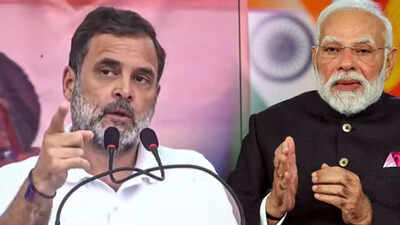
Congress leader Rahul Gandhi’s recent remarks mocking Prime Minister Narendra Modi’s participation in Chhath Puja rituals have ignited a political storm in Bihar, with the Bhartiya Janata Party (BJP) accusing him of insulting both the faith and the festive economy of the state.
As Rahul Gandhi nears sixty, the debate around him has shifted from potential to performance. Heir to India’s most powerful political dynasty, he carries not just a surname but a mythology—one rooted in the Nehru-Gandhi era of national awakening. Yet in a democracy that now prizes authenticity over ancestry, this legacy has become more burden than blessing.
During an election rally and on social media, Gandhi questioned Modi’s sincerity in celebrating Chhath, calling it “political drama.” He also made a derogatory comment against PM Modi, saying that, “if you ask him to dance for vote, he’ll even dance for it”. The comment, however, has backfired sharply, coming at a time when the Chhath festival has generated an estimated ₹50,000 crore in business across Bihar, Uttar Pradesh, and Delhi-NCR, according to market associations and trade bodies.
Economists and local traders hailed the festival as a major boost to the regional economy — covering sales of traditional goods, food items, bamboo baskets, clothing, sweets, and tourism services. The BJP was quick to point out that while the festival strengthened livelihoods and brought smiles to millions, Gandhi’s remarks belittled a celebration that unites both faith and commerce.
Union Minister Dharmendra Pradhan termed the statement “utterly disgraceful,” demanding a public apology from Gandhi. “Chhath is not a campaign stunt; it is devotion, livelihood, and identity for crores of Indians. Mocking it means mocking the very people who keep this economy running,” Pradhan said.
BJP leaders in Bihar also criticized Gandhi’s “elitist tone,” accusing him of disconnecting from India’s cultural and economic realities. The controversy deepened after it was revealed that the photo used in Gandhi’s Chhath greeting was the same one shared in 2024, reinforcing perceptions of tokenism.
Political analysts say the issue has become more than a cultural controversy — it’s now an economic and emotional flashpoint in an election season. Bihar’s small traders, artisans, and transporters often depend heavily on festival seasons for their annual income, and the massive trade movement around Chhath Puja reflects its deep integration with livelihoods.
“Rahul Gandhi’s words were not just politically careless, they were economically tone-deaf,” said Patna-based political commentator Rajesh Tiwari. “At a time when Chhath is reviving the post-pandemic local economy, mocking it alienates both faith-driven voters and working-class traders.”
The BJP has capitalized on the controversy, turning it into a campaign talking point that contrasts Modi’s cultural participation and respect for local traditions with what they call Gandhi’s dynastic arrogance. Party functionaries in Patna and Gaya have organized small street campaigns, using the slogan “Garv Se Kaho, Hum Chhathvasi Hain,” framing the festival as a matter of pride against “outsider condescension.”
Meanwhile, the Congress insists Gandhi’s remarks were aimed at “political theatrics” and not the festival itself, but the damage may already be done. After nearly two decades in politics, Rahul remains an enigma — too old to be a “youth leader,” yet not fully evolved into a statesman.
Despite his pedigree, he has struggled to convert heritage into authority and rhetoric into real influence, standing today as a symbol of unfulfilled promise in India’s changing political landscape.
As Bihar gears up for elections, the episode has turned into a defining test of tone and temperament. In a state where faith, pride, and economic vitality converge around festivals like Chhath, Rahul Gandhi’s jibe may prove an unforced error — one that the BJP is likely to exploit till the last vote is cast.
Please follow Blitz on Google News Channel
Congress leader Rahul Gandhi, Prime Minister Narendra Modi, Bharatiya Janata Party, Democracy, Dharmendra Pradhan, Nehru-Gandhi
Congress leader Rahul Gandhi’s recent remarks mocking Prime Minister Narendra Modi’s participation in Chhath Puja rituals have ignited a political storm in Bihar, with the Bharatiya Janata Party (BJP) accusing him of insulting both the faith and the festive economy of the state.
As Rahul Gandhi nears sixty, the debate around him has shifted from potential to performance. Heir to India’s most powerful political dynasty, he carries not just a surname but a mythology—one rooted in the Nehru-Gandhi era of national awakening. Yet in a democracy that now prizes authenticity over ancestry, this legacy has become more burden than blessing.
During an election rally and on social media, Gandhi questioned Modi’s sincerity in celebrating Chhath, calling it “political drama.” He also made a derogatory comment against PM Modi, saying that, “if you ask him to dance for vote, he’ll even dance for it”. The comment, however, has backfired sharply, coming at a time when the Chhath festival has generated an estimated ₹50,000 crore in business across Bihar, Uttar Pradesh, and Delhi-NCR, according to market associations and trade bodies.
Economists and local traders hailed the festival as a major boost to the regional economy — covering sales of traditional goods, food items, bamboo baskets, clothing, sweets, and tourism services. The BJP was quick to point out that while the festival strengthened livelihoods and brought smiles to millions, Gandhi’s remarks belittled a celebration that unites both faith and commerce.
Union Minister Dharmendra Pradhan termed the statement “utterly disgraceful,” demanding a public apology from Gandhi. “Chhath is not a campaign stunt; it is devotion, livelihood, and identity for crores of Indians. Mocking it means mocking the very people who keep this economy running,” Pradhan said.
BJP leaders in Bihar also criticized Gandhi’s “elitist tone,” accusing him of disconnecting from India’s cultural and economic realities. The controversy deepened after it was revealed that the photo used in Gandhi’s Chhath greeting was the same one shared in 2024, reinforcing perceptions of tokenism.
Political analysts say the issue has become more than a cultural controversy — it’s now an economic and emotional flashpoint in an election season. Bihar’s small traders, artisans, and transporters often depend heavily on festival seasons for their annual income, and the massive trade movement around Chhath Puja reflects its deep integration with livelihoods.
“Rahul Gandhi’s words were not just politically careless, they were economically tone-deaf,” said Patna-based political commentator Rajesh Tiwari. “At a time when Chhath is reviving the post-pandemic local economy, mocking it alienates both faith-driven voters and working-class traders.”
The BJP has capitalized on the controversy, turning it into a campaign talking point that contrasts Modi’s cultural participation and respect for local traditions with what they call Gandhi’s dynastic arrogance. Party functionaries in Patna and Gaya have organized small street campaigns, using the slogan “Garv Se Kaho, Hum Chhathvasi Hain,” framing the festival as a matter of pride against “outsider condescension.”
Meanwhile, the Congress insists Gandhi’s remarks were aimed at “political theatrics” and not the festival itself, but the damage may already be done. After nearly two decades in politics, Rahul remains an enigma — too old to be a “youth leader,” yet not fully evolved into a statesman.
Despite his pedigree, he has struggled to convert heritage into authority and rhetoric into real influence, standing today as a symbol of unfulfilled promise in India’s changing political landscape.
As Bihar gears up for elections, the episode has turned into a defining test of tone and temperament. In a state where faith, pride, and economic vitality converge around festivals like Chhath, Rahul Gandhi’s jibe may prove an unforced error — one that the BJP is likely to exploit till the last vote is cast.
Blitz