China launches manned spaceship on space station mission
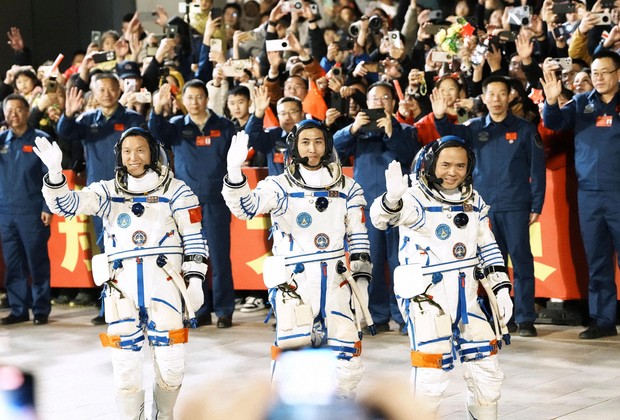
China launched a manned spaceship on a rocket from the country’s northwest on Friday as part of its space station program, Chinese state-run media said.
The Shenzhou-21 spaceship, carrying three Chinese astronauts, later successfully docked with a core module called Tianhe that forms part of China’s space station, Xinhua News Agency said, citing the country’s space agency.
During their stay of roughly six months, the new crew will conduct maintenance work on the space station and study the impacts of the zero-gravity environment on mice, according to the China Manned Space Agency.
The Long March-2F rocket lifted off from the Jiuquan Satellite Launch Center in Gansu Province.
The space station, dubbed Tiangong, was completed in 2022 as President Xi Jinping’s government attempts to make China a space superpower. Beijing is aiming to achieve a manned lunar landing by 2030.
At a news conference on Thursday, the space agency said that preparations for the lunar mission are “progressing steadily.”
The aging International Space Station, operated by countries such as the United States, Russia and Japan, is expected to be retired around 2030.
China has signaled willingness to collaborate internationally as it prepares for the possibility of hosting foreign astronauts at its space station.