Pakistan and Afghanistan remain trapped in a perpetual war
By Damsana Ranadhiran
Ceasefire talks between Pakistan and Afghanistan, mediated by Türkiye and Qatar, may offer temporary calm, but the deep historical mistrust, ethnic entanglements, and political manipulation that define the two nations’ relationship make peace a distant prospect. The recent clashes along the Durand Line-one of the world’s most contentious borders-show that the “shared war” between Kabul and Islamabad is not only about territory, but about identity, ideology, and the ghosts of history that refuse to die.
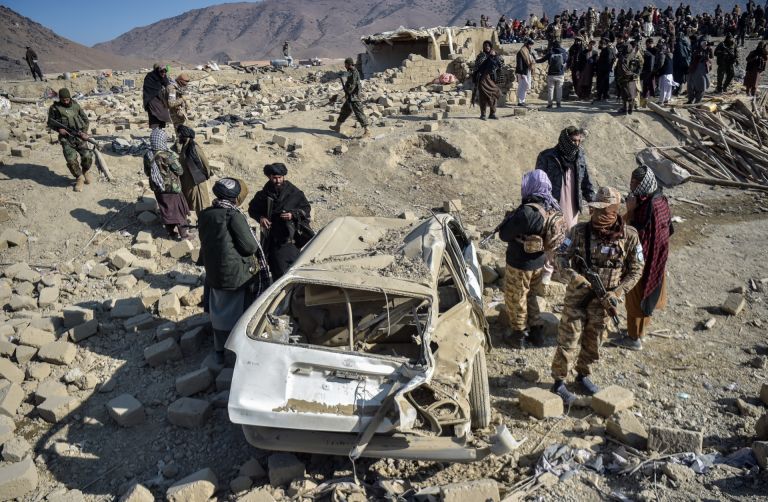
The border skirmishes that erupted in October along the 2,640-kilometer Durand Line once again revealed how volatile relations between the Taliban-ruled Afghanistan and Pakistan have become. Although Türkiye and Qatar succeeded in brokering a short-lived ceasefire agreement on October 18-19, renewed fighting just a week later claimed lives on both sides.
Ankara, a veteran mediator in Afghan peace processes, is determined to sustain the ceasefire. A high-level meeting between the two sides, scheduled for November 6, is expected to finalize mechanisms for monitoring the agreement. Pakistan’s defense minister, Khawaja Muhammad Asif, has made it clear that Islamabad’s cooperation depends on “clear, verifiable, and effective action” from Kabul against militants using Afghan territory to attack Pakistan-specifically, the Tehreek-i-Taliban Pakistan (TTP).
But such expectations are detached from reality. The Taliban, now in power in Kabul, are unlikely to take military action against the TTP, a group that shares their ideology, ethnic base, and history. Zabihullah Mujahid, spokesperson for the Islamic Emirate of Afghanistan, stated that the Taliban “desire good relations with neighbors” but deflected responsibility by insisting that discussions would continue on “outstanding issues.”
The outstanding issue, of course, is that Afghanistan and Pakistan are bound together by more than a border-they are entangled in a shared web of conflict that neither can escape.
At the heart of the dispute lies the Durand Line, a colonial-era boundary drawn by the British in 1893 to separate British India from Afghanistan. This artificial division cut through Pashtun tribal territories, creating a perpetual source of resentment. The Afghan state has never formally recognized the line, viewing it as a symbol of foreign imposition and national humiliation.
Pakistan, inheriting this border upon independence in 1947, has always treated it as sacrosanct. It began fencing and fortifying it in the 2000s, a move Afghanistan sees as an affront to tribal autonomy and a violation of traditional Pashtun movement across the frontier. These measures, meant to control cross-border infiltration, have instead deepened animosity between the two nations.
The Pashtun factor is crucial to understanding the persistent instability. The ethnic Pashtuns straddle both sides of the border-dominating southern and eastern Afghanistan and Pakistan’s Khyber Pakhtunkhwa province. Instability in one inevitably spills over into the other. Islamabad’s desire to “stabilize” its tribal belt by dominating Afghanistan has been a recurring strategy since the 1970s.
This, however, has come at a cost. Pakistan’s long-term meddling in Afghanistan’s politics has generated profound mistrust. For decades, Islamabad supported factions, funded militant groups, and sought governments in Kabul that would serve its security interests and deny India influence. This policy created a vicious cycle: the more Pakistan intervened, the more Afghanistan resisted, and the more the border turned into a war zone.
Afghanistan’s foreign relations are often viewed through the prism of its ties with India and Pakistan’s fears of strategic encirclement. Islamabad’s discomfort peaked in October when Afghan Foreign Minister Amir Khan Muttaqi visited India. The visit, which led to the upgrading of India’s Technical Mission in Kabul to a full-fledged embassy, symbolized New Delhi’s cautious re-engagement with the Taliban regime.
Pakistan, already on edge over increasing TTP attacks from Afghan soil, responded aggressively. Drone strikes were reportedly launched near Kabul on the first day of Muttaqi’s visit-a clear signal of Pakistan’s displeasure. India’s announcement that it would resume development projects in Afghanistan only deepened Islamabad’s concerns about losing its influence over Kabul.
For India, the relationship with Afghanistan is primarily developmental and strategic-focused on connectivity, infrastructure, and counterterrorism cooperation. For Pakistan, however, India’s presence in Afghanistan represents an existential threat: the possibility of encirclement from both the east and the west. This has driven Islamabad to treat Afghanistan as a “strategic backyard,” a concept rooted in Cold War-era geopolitics.
The seeds of today’s conflict were sown in the 1980s. When the Soviet Union invaded Afghanistan in 1979, Pakistan became the frontline state for the US-Saudi-backed jihad against communism. Billions of dollars in weapons and funds flowed through Pakistan’s military and intelligence services, fueling the growth of Islamist militancy. The anti-Soviet jihad turned Afghanistan into a battleground-and Pakistan into an ideological partner of militant Islamism.
Even after the Soviet withdrawal in 1989, Islamabad continued to shape Afghanistan’s political landscape. Afghan mujahedeen factions operated from Pakistani soil, often with ISI (Inter-Services Intelligence) support. When civil war consumed Afghanistan in the early 1990s, Pakistan backed the Taliban-a new force emerging from madrassas in its own territory.
In 1996, the Taliban seized Kabul, with Pakistan providing logistical, diplomatic, and financial assistance. Washington, meanwhile, saw the Taliban as a potential stabilizing force for energy transit projects. The US showed little objection to their brutality or extremism until the 9/11 attacks made Afghanistan the center of the “war on terror.”
After 9/11, the US invasion toppled the Taliban, forcing them to retreat into Pakistan’s tribal areas. Islamabad, under international scrutiny, joined the US-led “war on terror” but continued to covertly support Taliban networks as an insurance policy for post-war Afghanistan.
Between 2001 and 2021, successive Afghan governments under Hamid Karzai and Ashraf Ghani relied on US and NATO forces for survival. India became a major development partner, investing more than $3 billion in reconstruction. For Pakistan, this was an alarming
development—it meant losing its grip on Kabul.
When the US withdrew abruptly in 2021, and the Taliban returned to power, Islamabad celebrated what it saw as strategic vindication. The head of Pakistan’s intelligence agency even flew to Kabul to coordinate the formation of the new Taliban government. But the celebration was short-lived.
Barely two years later, relations between Islamabad and Kabul have deteriorated dramatically. Pakistan’s deportation of 1.3 million undocumented Afghans under its “Illegal Foreigners Repatriation Plan” has inflamed tensions. Taliban leaders have condemned the move, accusing Pakistan of cruelty toward fellow Muslims.
More dangerously, Pakistan accuses the Taliban of harboring the TTP-a mirror image of the Afghan Taliban that operates in Pakistan’s tribal areas and wages an insurgency against Islamabad. The Taliban deny this, claiming the TTP issue is an “internal matter” of Pakistan. Yet the evidence of TTP sanctuaries in Afghanistan continues to grow.
Pakistan’s repeated military operations-Rah-e-Nijat (2009), Zarb-e-Azb (2014), and Sarbakaf (2025)-have failed to eliminate militancy. Each campaign displaced millions and destroyed local economies, deepening resentment among the Pashtun population. The merger of the Federally Administered Tribal Areas (FATA) with Khyber Pakhtunkhwa in 2018 further alienated local communities, who view the move as an erasure of their autonomy.
The TTP has exploited this anger, regrouping and escalating attacks across Pakistan. In response, Islamabad blames Kabul for inaction, while the Taliban accuse Pakistan of using military force instead of diplomacy.
The irony is stark: Pakistan helped create the Taliban, but now finds itself threatened by its own creation’s ideological twin. The Taliban’s victory in Afghanistan has emboldened Islamist movements within Pakistan, inspiring demands for stricter Sharia rule and eroding Islamabad’s control over its frontier regions.
Afghanistan, meanwhile, resents Pakistan’s heavy-handedness and sees itself as an independent Islamic state, no longer beholden to its former patron. The border, instead of serving as a boundary, has become a fault line where two mirror images of militant ideology confront each other.
The shared war between Afghanistan and Pakistan is not just about territory-it is about the collapse of an illusion. Islamabad once believed it could control Kabul; now it faces an Afghanistan that rejects its dominance but reflects its own ideological chaos.
Pakistan and Afghanistan are bound by geography, ethnicity, and a shared history of violence. Yet both remain trapped in a paradox of mutual dependency and distrust. Every attempt at peace-whether through mediation or military pressure-collapses under the weight of history.
The Taliban’s ghost-born of Pakistan’s ambitions, nurtured by global geopolitics, and now haunting both nations-continues to dictate the course of their relationship. Until Islamabad abandons its dream of strategic control and Kabul reins in its militant protégés, the border will remain a battlefield, and the shared war will continue to define the destinies of both nations.