India reaffirms its independent nuclear policy and posture
New Delhi’s consistent message since Operation Sindoor to all and sundry which naturally includes Trump, is that India neither succumbs to intimidation nor seeks confrontation but reserves the right to act decisively when national security demands it.
Shri Rajnath Singh has once again asserted India’s strategic independent Nuclear Policy following Donald Trump’s recent remarks suggesting that India (without naming it) and several countries, including Pakistan, were secretly conducting nuclear tests.
Answering questions pertaining to Trump’s hypersonic claim, Raksha Mantri remarked that India’s security policies are guided solely by national interest and strategic calculation, not by external pressure or fear of loud trumpeting by others.
Trump also indicated that the United States may consider resuming its own testing program, a statement that sparked international concern about a potential erosion of global nuclear restraint.
So Shri Rajnath has calmly stated that if other nations wish to undertake nuclear tests, they are free to do so, but India will respond in its own time and manner. His comments underscored New Delhi’s long-standing position that its nuclear posture remains sovereign and unyielding to coercive provocations.
India maintains its nuclear readiness with credible minimum deterrence under its nuclear doctrine, while totally avoiding unnecessary increase of numbers as retaliation. By asserting that “only the future will tell” what India chooses to do, Singh signalled strategic ambiguity — a deliberate tool used to preserve deterrent credibility without revealing operational intent.
Rajnath’s remarks is a continuation of India’s policy of independent thinking and rewriting of nuclear war theories, first articulated after the Pokhran-II tests in 1998. Successive governments have pursued the line quite different from established Western thought procedures. Thus India has avoided the West– Soviet Union tit for tat with numbers of warheads.
Western Experts suggest that if reports of clandestine tests in Pakistan or elsewhere prove accurate, they would complicate things for India. However, Singh’s response indicates that India will calibrate any future decisions strictly based on its strategic calculus rather than public posturing by other powers.Also now India is a Global power with Global Reach and will not react to things Paki but will act decisively if required.
Shri Rajnaths firm tone effectively dismisses the notion of “nuclear blackmail” influencing policy. The remark reinforces.
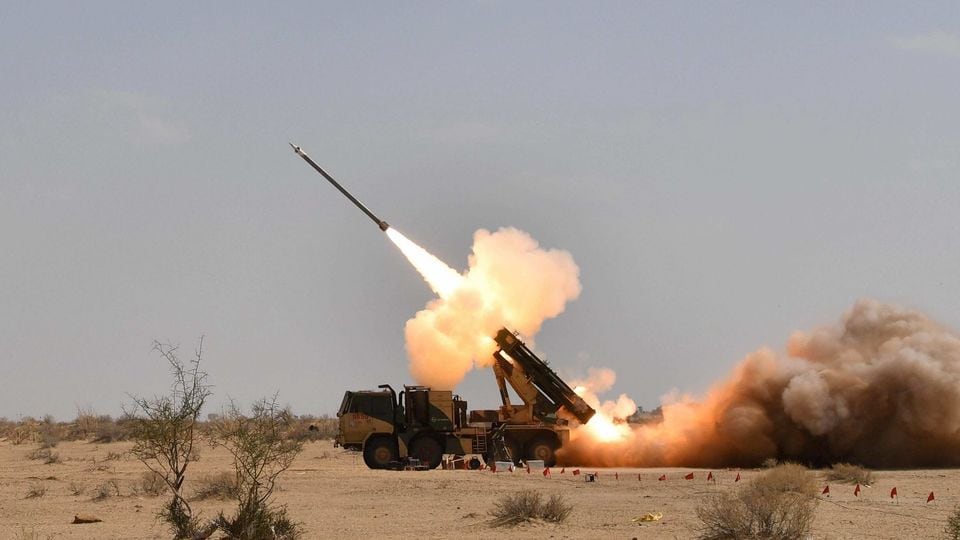
The renewed attention to nuclear testing rhetoric comes at a time when India is expanding its deterrent capabilities by deploying new missile systems such as the Agni-V and the Agni Prime, alongside developing advanced ICBM delivery platforms of 12000km range. These advances strengthen India’s deterrence posture without breaching its self-imposed moratorium on nuclear testing, which remains technically in place since 1998.
Singh’s comments may therefore serve as both reassurance and warning — reassurance that India remains committed to responsible nuclear stewardship, and warning that its restraint should not be mistaken for weakness. In the evolving global nuclear landscape, his statement reasserts India’s position as a mature major global nuclear power that acts on principle, not provocation.