Armistice Day: Missing celebrations in India?
‘Armistice Day’ celebrations in India’s national consciousness reflects not indifference, but selective remembrance bordering on amnesia
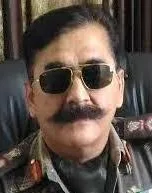
By Colonel Satish Singh Lalotra
A hundred years span is not much of a time line in the long histories of evolution of mankind and the nation states that go into making a rich tapestry of their existence. History of mankind is often punctuated with periods of warfare and an era of tenuous peace that always used to be contingent to the exigencies of the situations as presented to the leadership of that time. Every year on the 11th of November across almost all continents including the European & American continent, the world pauses in solemn silence. At the eleventh hour of the eleventh day of the eleventh month, bugles sound the haunting notes of the ‘Last post’- to mark the ‘Armistice day’. The day when the guns of the ‘Great war’ finally fell silent on 11 November 1918. Exactly 107 years ago from the present date line.
Across London, Ottawa, Canberra and other commonwealth capitals , crimson poppies bloom on lapels, yet in India on this very day of 11th November –whose soldiers once formed the largest volunteer army under the British flag –this day passes largely unnoticed. There are no visible parades, no poppies, no national moment of silence. The memorial flame at the ‘India gate’ flickers on, but not specifically for ‘Armistice day’. The date that once symbolized the end of the ‘Great war’ and reshaped the 20th century world order sadly doesn’t form part of the India’s public calendar of remembrance. Has India become so insensitive or rather selective in ringing out days of public remembrance that also of its soldiers who died in a foreign land, fighting foreign armies for a foreign cause? Or does India only recognize the sacrifices and valour explicitly displayed for the motherland?
Why this deafening silence on the part of the largest democracy of the world that sent more than 1.3 million strong army to the battlefields of Europe, Africa and the Middle East, losing more than 74,000 of them? When England declared war on Germany in August 1914, India as part of the empire was willy-nilly drawn in. Within weeks, the first contingents of the Indian ‘Expeditionary force’ was shipped to France. They would go on to fight in Ypres, Neuve Chapelle, Gallipoli, Mesopotamia, and East Africa earning a formidable reputation for dogged courage and endurance under appalling conditions.
The ‘Great war’ as it was called sprang up untold tales of superhuman endurance and honour of Indian soldiers that find few equals to this day. The winning of two highest awards of two super powers of that time ( England& Russia) viz the ‘Victoria cross’ & cross of ‘St George’ respectively by a single individual Lance Naik( later Jamedar) Lala Ram of 41 stDogra in the middle east is something that is still in the realm of unthinkable and yet to be rivaled by any soldier of the commonwealth of countries till date.Combined tally of medals won by Indian soldiers during the first WW totals to a staggering 11,000( eleven thousand) including 12 Victoria crosses.
Letters from the front now preserved in various regimental centers of the Indian army as well as ‘India office archives’ reveal the bewilderment of these men—many from Punjab, Garhwal and the Deccan. Quote—‘It rains death’ one sepoy wrote home ‘and the ground shakes as if the world is coming to an end. In fact it was the Indian Jawans who stopped the German advance at Ypres in the autumn of 1914, soon after the war broke out , while the British soldiers were still in the training mode. More than 1000 died at Gallipoli, thanks to Winston Churchill’s folly.
Nearly 7 Lakh Indian sepoys fought in Mesopotamia against the Ottoman empire, Germany’s ally with, many of them Indian Muslims taking up arms against their co-religionists in defence of the British empire. Presently Haifa, the third largest city of Israel was liberated by the cavalry charge undertaken by Jodhpur lancers forming part of 15th (imperial service) cavalry brigade against well entrenched Turko-German positions supported by machine guns and artillery. Never ever in the history of warfare a cavalry charge was undertaken against such mounting odds.
Be that as it may, the question remains unanswered –why ‘armistice day’ celebrations give a miss to India year after year? The obvious answer lies in a complex web of colonial history, post independent identity of India and the politics of memory—where remembering can often be as political as forgetting. The ‘Great war’ was fought to preserve the British Empire, not to liberate its colonies. And herein lies the seed of India’s deafening silence on ‘Armistice day’. When Armistice was signed on 11 November 1918, Britain hailed its victory and memorials began to spring up across the European continent.
In India too the British Raj commemorated its fallen –most notably through the construction of India gate in New Delhi by completing it in 1931. Its arch bears the names of over 13,000 Indian soldiers who died in the first WW. Even at the height of imperial grandeur, these ceremonies were entirely British in tone and tenor & not Indian. The sepoy was celebrated as a loyal subject, not as an equal citizen. His story was neatly folded into the empire’s triumphal narrative—a war for civilization, rather than for self-determination.
Now here comes the role of our national leaders of that time who should have counter questioned the relevance of ‘war on civilization’ as peddled by the British. Wasn’t the illegal occupation of India by the British a ‘war for civilisation’ too? How could the British or Christian civilizational hegemonies’ be not termed as ‘war on Indian civilisation’? Or was it only selective ‘war on civilisation’ that made Britain lock horns with Germany, giving an utter disregard to other civilisations of the world (read India).
The British raised men and money from India, as well as large supplies of food, cash and ammunition , collected by both the British taxation of Indians, and from nominally autonomous princely states. In return, the British had insincerely promised to deliver progressive self-rule to India at the end of the war. Perhaps now taking advantage of the hindsight, it may be mulled upon that had the British kept their promise , the sacrifices of India’s first WW soldiers might have been seen in their own home land ( India) as a contribution to India’s freedom struggle.
But the British broke their promise, backstabbed Mahatma Gandhi who having returned from South Africa in 1915 to India for good supported the war, as he had supported the British in Boer war. Oblivious to the ‘British chicanery’ unfolding in the later years when the war ended in the form of 1919 ‘Rowlett act & Jallianwala Bagh massacre , this act of perfidy by the colonial power gave rise to an extremist style of freedom struggle and its attendant power jockeying amongst the Indian leadership. The biggest setback which these unsung soldiers of 1st WW of Indian origin dealt with was by none other than Indian nationalists , who in their own contorted wisdom towed the line –‘ they had merely gone abroad to serve their foreign masters.
Losing your life & limb in a foreign war at the behest of your colonial rulers was an occupational hazard; it did not qualify to be hailed as a form of national service.’ Or so most of Indian nationalists thought, and hence allowed their heroism to be forgotten. When the world commemorated the 50th anniversary of 1 WW in 1964, there was hardly any mention of India’s soldiers anywhere, least of all In India.
The ‘common wealth war graves commission’ maintains war cemeteries in India, mostly commemorating the 2 WW, rather than the 1 WW. The most famous epitaph of them all is inscribed at the Kohima war cemetery in the NE of India. It reads—‘When you go home, tell them of us and say for your tomorrow, we gave our today’. But for the Indian soldiers who fought from the frigid enviorns of Europe to the harsh deserts of Mesopotamia in the 1 WW, there was no such claim to be made. In fact they gave their ‘todays’ for someone else’s yesterdays’.
Readers may well agree with me that in such matters ‘symbolism’ too matters. The ‘Red poppy’ immortalized by ‘John McCrae’s poem –‘In Flanders fields’ became the emblem of remembrance in the west. It flourished in commonwealth ceremonies as a symbol of gratitude & peace. But what about India? Over here, poppy bore a different historical association—that of the colonial opium trade and economic exploitation. It could not easily become a national symbol of sacrifice. Instead India forged its own imagery linked to the countless scarifies of thearmed forces of the nation.
The ‘Amar JawanJoyti’, lit beneath India gate in 1972 after the liberation war of 1971, replaced the colonial memorial with a republican one. Its eternal flame honoured all fallen soldiers –from the frontiers of Ladakh to the deserts of Rajasthanpost independence. But come 2019, and the monumental NWM (India) National war memorial inaugurated in that year too falls short of expectations , since it also does not convey an Indian effort to commemorate its soldiers who laid down their lives prior to 2 WW. In recent years however there has been a quiet rediscovery of India’s role in the Great War.
Academic research, documentaries, and exhibitions have begun to trace the stories of Indian soldiers who fought on distant fronts. One of the biggest legacy of Indian contribution to the Great war lies in the memorial with 3 bronze statues of cavalry men in front of the ‘Teen Murtibhavan’ which was built in 1922. These 3 statues represent soldiers from the Hyderabad, Jodhpur and Mysore lancers who fought in the 1st WW and were the prime source for liberation of Haifa city of Israel.
To cut the long story short, the absence of ‘Armistice day’ celebrations in India’s national consciousness reflects not indifference, but selective remembrance bordering on amnesia. Post-colonial nations often curate memory as an act of political self-definition. France remembers Verdun, England remembers the Somme. Commemorating the 1st WW, on the other hand, risks reopening questions about agency & allegiance.
Whose victory was it? Whose war was it? Was the Indian soldier a hero of the British Empire or a victim of it? Since the Indian army relies on its ancient military traditions, doesn’t the ‘Armistice day’ function as one of the strongest building blocks on which its huge edifice stands? I leave it for the readers of this column to decide.
(The writer is a retired army officer and a regular scribe of Rising Kashmir. He can be approached on his email: slalotra4729@ Gmail.com)