Pakistan trembles before the courage of Baloch women activists
By Arun Anand
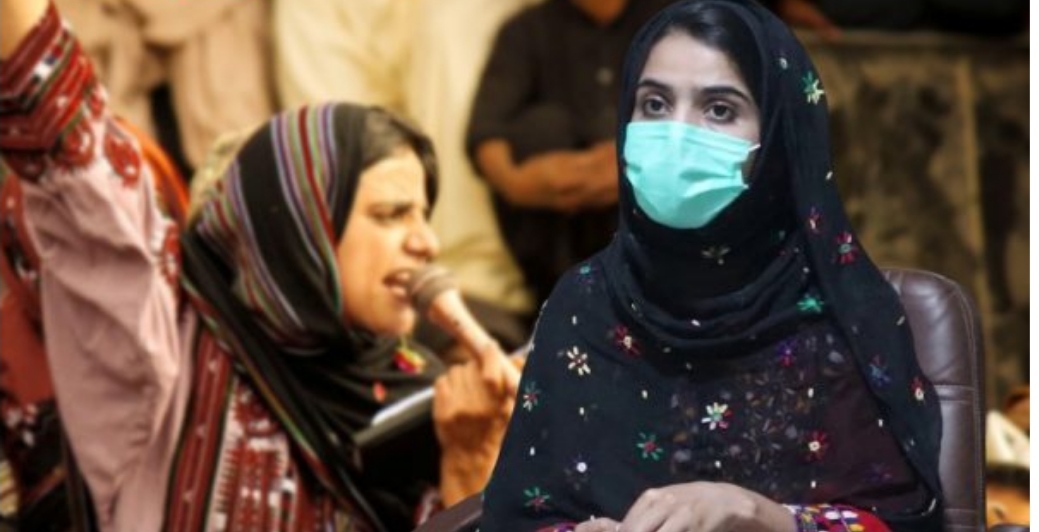
Across the rugged mountains of Balochistan, a quiet revolution has taken shape — not through the barrel of a gun, but through the voices of women who refuse to be silenced. For decades, the Pakistani state has sought to crush the Baloch struggle for rights, identity, and dignity through brute force, censorship, and fear. Yet, amidst the silence imposed by the establishment, Baloch women have risen as the conscience of their people, demanding answers about the disappeared, the tortured, and the dead. Their courage has unsettled Pakistan’s power structure more deeply than any insurgency ever could.
And so, the state has turned its full machinery against them — branding them as traitors, blacklisting them, and attempting to erase them from the nation’s conscience. Pakistan’s fear of Baloch women activists is not born out of security concerns, as its propaganda machinery would have the world believe. It stems from a far more fragile truth: the fear of moral defeat. The establishment that has long ruled through the manipulation of narratives — portraying itself as a victim of terrorism and an upholder of law — cannot bear the voices that strip away this façade. Women like Dr. Sahiba Baloch, Dr. Shalini Baloch, and Samine Deen Baloch have become living examples of the state’s hypocrisy. Their activism exposes what Islamabad has spent decades denying — that the real terror in Balochistan does not come from the mountains but from the cantonments, checkpoints, and intelligence safe houses where young men vanish without a trace.
These women have turned grief into resistance. They march with photographs of missing fathers, brothers, and sons — faces faded by time but made immortal by memory. Their placards demand not privilege but the most basic human right: to know where their loved ones are. For a state built on denial, this demand is dangerous. The Pakistani establishment thrives on invisibility — the invisibility of its crimes, of its political prisoners, of its secret wars. When Baloch women pierce that invisibility, they threaten the very foundation of control that the military has built over Balochistan. The government can bomb villages, censor media, and flood social platforms with propaganda, but it cannot suppress the raw moral clarity of a mother’s cry for her missing child. To silence them, Pakistan’s establishment resorts to the language it knows best — intimidation, smear campaigns, and the weaponization of counterterrorism laws. The inclusion of prominent Baloch women on so-called “watchlists” or “anti-terror registries” is not an act of national security; it is an act of fear. When unarmed women holding peaceful demonstrations are accused of terrorism, it reveals who truly feels threatened. The state that claims to protect its citizens is terrified of citizens who speak the truth. The irony is tragic and telling — that in a country overrun by extremist groups, the military sees danger not in those who kill in the name of ideology, but in those who demand justice in the name of humanity.
The United Nations has expressed alarm over this systematic targeting of Baloch women human-rights defenders. Yet Pakistan continues its repression with impunity, shielded by the same institutions that it manipulates domestically — a judiciary that cowers before the establishment and a media landscape sterilized by fear. The disappearance of Baloch men is not a hidden secret anymore; it is an open wound. Thousands have been abducted by shadowy agencies, tortured in secret cells, and often found dumped in deserts and riverbeds. But when women take to the streets to seek accountability, they too are branded as enemies of the state. The military, unable to confront their truth, paints them as foreign agents, Western puppets, or anti-national propagandists — a tired script repeated whenever Pakistan’s moral bankruptcy is exposed. Behind this fear lies an even deeper insecurity within Pakistan’s power structure. The state was built on a fragile foundation of identity — an identity forged not through inclusion but through suppression. It cannot tolerate voices that challenge its narrative of unity, especially from those it considers peripheral and expendable. Baloch women embody a defiance that is both political and symbolic. They refuse to be confined to the role the state assigns to women — passive, silent, obedient. Their activism is not only a challenge to the military’s control but also a challenge to the patriarchal order that underpins it. When a Baloch woman speaks, she defies both the gun and the gendered silence imposed upon her.
The Pakistan Army, bloated with privilege and arrogance, cannot comprehend this form of power. It is accustomed to silencing dissent with force, not reason. Its generals are comfortable dealing with insurgents, for insurgency justifies military budgets, operations, and the mythology of national security. But women armed only with truth unsettle them in ways bullets never could. They strip away the illusions of heroism and expose the moral rot of a state that kidnaps its own citizens and calls it patriotism. The establishment’s fear of Baloch women is, therefore, the fear of losing control over the narrative — the fear that the world might finally see Pakistan not as a victim of terrorism, but as a perpetrator of systemic violence against its own people. What makes this fear even more profound is the growing international attention to the plight of Baloch activists. For years, Pakistan managed to bury these stories under the rubble of geopolitics — using its strategic importance to silence criticism. But in recent times, the testimonies of Baloch women have begun to pierce through that global indifference. Their statements before human-rights organizations and media outlets have become the cracks through which truth leaks out. Each speech, each vigil, each name they utter chips away at the edifice of impunity the establishment has built. This is why the state is desperate to label them as extremists — because it cannot bear the possibility of being judged by the world through the lens of those it has long oppressed. The persecution of women like Dr. Sahiba Baloch, Dr. Shalini Baloch, and Samine Deen Baloch is part of a broader pattern of state paranoia. These are educated women, professionals, and humanitarians — the very citizens a functioning democracy would celebrate. Yet Pakistan treats them as enemies, because in their words lies the most dangerous weapon of all: legitimacy.
The military’s war in Balochistan depends on dehumanizing the Baloch people. It thrives on portraying them as separatists, terrorists, and outlaws. When articulate, courageous women dismantle that narrative, they expose the establishment’s crimes to both domestic and international scrutiny. This is not just about silencing individuals; it is about suppressing a truth that threatens to delegitimize the entire security state. In a sense, Pakistan’s fear of Balochwomen activists is the fear of its own reflection. It is a state that cannot look into the mirror of its history without seeing blood on its hands — from Dhaka to Quetta, from Sindh to the tribal belt.
Every disappeared person, every silenced journalist, every censored voice tells a story of a nation at war with its own people. The Baloch women’s movement forces Pakistan to confront that reality, and that is what terrifies it most. The establishment would rather be feared than exposed, because exposure demands accountability — something the generals have never known. But despite the repression, the movement endures. Baloch women continue to march, to document, to speak. They carry the memory of the disappeared like sacred relics, turning mourning into resistance. Each time the state targets them, it confirms their truth. Each blacklist, each abduction, each threat only amplifies their message: that no amount of violence can erase the demand for justice.
Pakistan’s fear, then, is not of women — it is of the truth they carry. It is the fear that one day the world will listen and see beyond the propaganda, beyond the manufactured narratives of security and nationalism. It is the fear of a reckoning long overdue. The establishment may control the guns, the media, and the courts, but it cannot command the conscience of a people awakening to their own oppression. Baloch women have made sure of that. Their courage has already broken the silence. And for Pakistan’s military establishment — built on secrecy, lies, and fear — that is the beginning of its greatest defeat.
Blitz