
Trump’s Pakistan shift: Personal interests threaten US-India partnership at all levels
In 2018, Donald Trump’s first social-media post of the year on Pakistan had expressed frustration over what he saw as more than a decade of American generosity met with deception and duplicity. Over the preceding 15 years, he noted, the United States had “foolishly” given Pakistan more than $33 billion in aid, only to receive “nothing but lies and deceit” in return.
His administration subsequently suspended security assistance to Pakistan, citing the country’s continued harboring of terrorists, including its concealment of Osama bin Laden for nearly a decade after the September 11, 2001, attacks.
At the time, this stance seemed to signal a more confrontational US approach toward Pakistan-a country long criticized for providing sanctuary, as well as logistical and intelligence support, to terrorist organizations.
Pakistan also maintains a strategic alliance with China, a country that has emerged as America’s foremost geopolitical and economic rival. Yet, remarkably, in the years since, the United States has moved toward an embrace of Pakistan, raising questions about the drivers behind this policy reversal.
Trump administration officials have once again gone for the rapprochement which is a bad step. Pakistan, they argued, could be a critical partner in containing Iran and combating terrorist groups that threaten US interests in South and Central Asia…..only an complete fool or a moron will fail to see that Pakistan itself is the follow-ups of terrorism. Historical patterns suggest that Pakistan’s reliability as a security partner is questionable at best.
The country has repeatedly undermined US counterterrorism objectives while cultivating ties with groups hostile to Western interests. There is little reason to believe that these patterns have fundamentally changed. Also Irking rising global power like India will critically hurt USA’s own standing.
The real explanation for the Trump administration’s pivot lies in the intersection of the Trump’s ’s personal financial interests and his transactional approach to foreign policy. In April, Pakistan signed a controversial investment deal with World Liberty Financial, a cryptocurrency firm in which the Trump family holds a majority stake. Zach Witkoff, son of Steve Witkoff-Trump’s special envoy to the Middle East-heads the company. Both the Trump and Witkoff families are principal beneficiaries. This development alarmed ethics watchdogs and former US officials, who warned that Trump’s private business entanglements were influencing foreign policy decisions. Trump, for his part, has long insisted that conflict-of-interest rules do not apply to him, reinforcing the perception that personal enrichment can drive his diplomatic strategy.
The relationship deepened in July when the US and Pakistan announced a trade agreement. While the details remain partially undisclosed, Pakistani officials celebrated reductions in US tariffs and the promise of increased American investment. Pakistani authorities described the agreement as ushering “a new era of economic collaboration,” highlighting sectors such as energy, mining, information technology, and cryptocurrency.
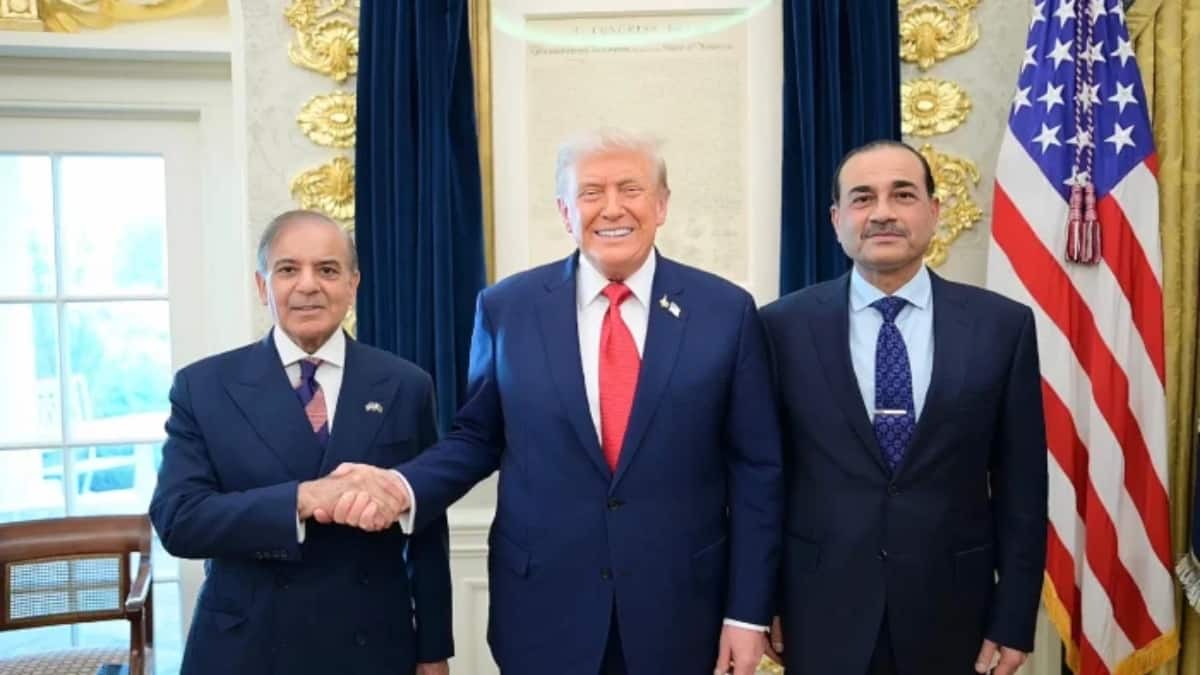
Critical minerals became a focal point of Pakistan’s pitch to the US At a time when America is seeking to reduce its reliance on Chinese-dominated rare-earth markets, Pakistan positioned itself as a potential supplier. In September, the military-linked Frontier Works Organization of Pakistan signed a $500 million agreement with US Strategic Metals to develop mineral deposits. For Pakistan, the arrangement represented a diplomatic coup more than a commercial milestone. When Prime Minister Shehbaz Sharif and Pakistan’s army chief, Field Marshal Asim Munir, met Trump in the Oval Office, they presented him with a polished wooden box of mineral samples. Soon after, a token shipment of rare earths was sent to the US, a largely symbolic gesture to seal the new alignment.
Yet questions remain about Pakistan’s ability to deliver meaningful quantities of these minerals. The country’s frequently cited $6–8 trillion in mineral wealth is based on largely unverified estimates. Most of the purported reserves are located in Balochistan and Khyber Pakhtunkhwa, regions plagued by insurgency and security challenges, which make large-scale extraction a risky endeavor. As one analyst quipped, “Pakistan has long promised gold and delivered gravel.” Nevertheless, Trump’s affinity for grand promises, especially those accompanied by personal flattery, makes him particularly susceptible to such diplomatic theater.
Pakistan’s leaders have capitalized on this trait. Lavishing praise on Trump and even nominating him for the Nobel Peace Prize, they have sought to align themselves with a president whose foreign policy often revolves around personal rapport and transactional deals. Pakistan’s overtures appear to have worked. The country’s leaders have pushed through a constitutional amendment elevating the army chief-whom Trump has called his “favorite field marshal”-to a position of de facto rule, reducing the civilian government to a largely ceremonial role. Such developments highlight the complex interplay of domestic politics, personal diplomacy, and US foreign policy decisions.
For India, Trump’s embrace of Pakistan demonstrates the total unreliability and Janus face of the Americans who are just not fit for close friendship. Over two decades, India has cultivated friendship with the United States, grounded in shared democratic values and a mutual desire to counter China’s influence. Yet the current trajectory under Trump seems to undermine these efforts. The administration’s tilt toward Pakistan has also manifested in other, subtler ways. In May of this year, after a three-day military bashing of Pakistan by India ended in a ceasefire, Trump falsely claimed credit for stopping the fighting by lieing to the whole world. India’s government exposed the Lie and refuted Trump’s assertion, with Prime Minister Narendra Modi stating that he had never even communicated with Trump during the conflict. Nevertheless, Trump continued to repeat the lie and claim credit, citing his trade threats rather than India’s targeted airstrikes as the mechanism behind the truce. India has just ignored the Tariffs and now Trump is fighting inflation in his country.
This white lie of Trump has reinforced the view in India that the US cannot be trusted as a friend or a strategic partner. PM Modi’s refusal to endorse Trump’s Nobel Peace Prize nomination was perceived as an INSULT by Trump escalating into a trade tariffs. Trump imposed a 25% tariff on imports from India, later raising it to 50%, in retaliation and for continued Russian oil purchases. India has certainly viewed, these tariffs as “threats ” and an extension of the diplomatic feud over Pakistan. Exposing these selective nature of Trump’s economic retaliation, India to has stood its ground and shown the world that now it’s a true World Power.
The stakes for USA are more than diplomatic. They have strategic and security dimensions that directly impact the stability of the Indo-Pacific region. India has emerged as one of the four poles of World’s geopolitical strategy, and its cooperation is critical for USA to counterbalance China’s assertive posture. By privileging Pakistan, Trump risks unraveling the US-India partnership and creating a perception that American policy in Asia and Indo Pacific can be swayed by personal gain, symbolic gestures, and transactional diplomacy.
Trump’s Pakistan pivot underscores a broader pattern in his foreign policy: a preference for short-term gains, personal enrichment, and ostentatious symbolism over consistent, principle-driven alliances. It mirrors the Cold War-era tendency of US leaders to engage in cynical, opportunistic policies toward India, often prioritizing tactical wins over long-term stability.
The consequences for both USA and Pakistan are profound. Pakistan will gain neither political legitimacy nor any economic leverage in the long term, USA too faces a potential erosion of strategic influence, and the US risks undermining its credibility in a World increasingly defined by great-power competition.
Ultimately, the US-Pakistan rapprochement under Trump highlights the precarious intersection of personal interests and national policy. While Pakistan may appear as a promising partner on paper-offering trade, minerals, and a role in ” counterterrorism ” (by American definition ) – the historical record and ongoing security concerns suggest that the relationship is fraught with risk.
For India, the message is clear: any strategic partnership with US will be a huge mistake when American foreign policy is heavily personalized and transactional. The entire world already brimming with complexity, now faces an additional layer of uncertainty.
Trump’s dealings with Pakistan serve as a cautionary tale about the potential consequences when personal enrichment, symbolic gestures, and transactional diplomacy drive international policy. The broader lesson is that alliances built on charm, flattery, and financial incentives rather than strategic consistency can imperil long-term security objectives and destabilize the world. For the United States, Asia, and the Indo-Pacific more in particular, the consequences of this pivot will be felt for years to come.