Trump’s Tantrums and the political coldness between India and USA risks vapourizing the Quad
Since the beginning of this year, the Quad, the core mechanism of a four nation grouping in the Indo-Pacific started with the initiative of the USA has shown a sense of “political coldness” in its cooperation focus, which has called into question the future of this grouping.
On the maritime front, cooperation under the Quad framework seems to have increased into a regularized, multi-tiered system. In the first week of November, India hosted the “Cope India” joint air force exercise, with the United States as the core participant and Japan and Australia joining as observers.
Meanwhile, Exercise Malabar 2025 brought together the navies of the four nations in Guam for one of the biggest naval drills in the Pacific from October 28 to November 8.
However it needs to be clarified here that neither Cope India nor Ex Malabar are because of Quad.Both the initiatives predate Quad and are more of bilateral nature. In exacerbating of USA insistence, India has refused turn Quad into a military bloc. Under no circumstances India will be under. ” Command ” of another nation.
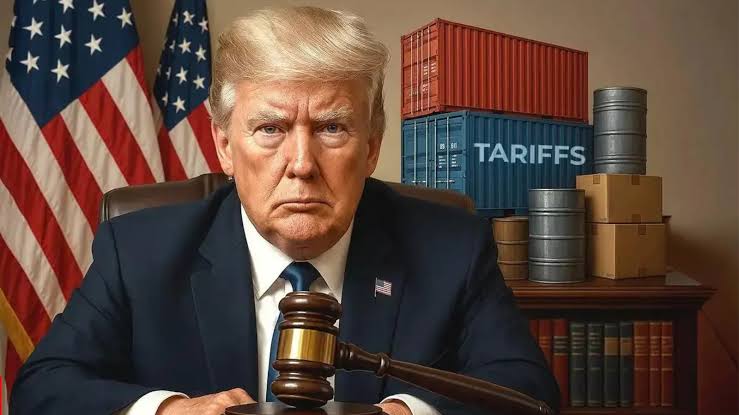
No wonder, the Quad faces significant obstacles in political coordination. This has been exacerbated by Trump’s tariff warfare and his support to terroristan ie Pakistan. Therefore the Quad leaders’ summit, the highest-level political coordination mechanism, originally scheduled for the end of this year in India has been postponed to early 2026, apparently due to recent tensions between New Delhi and Washington. This not only undermines the continuity of strategic dialogue among the four countries but also reveals insufficient consensus between India and USA. As far as India is concerned, Quad can function only on the basis of Equality and nothing else.
There is certainly a misalignment of strategic priorities. The differing geopolitical interests among Quad members create coordination challenges. India, has long adhered to the principle of “strategic Independence ” maintaining a balanced approach with the US, Japan and Australia in security cooperation while preserving close ties with Russia and trying its best to normalize ties with China.
However, the US seeks to bind its allies within the Quad framework to align with its Indo-Pacific strategy. This mismatch between “balancing interests” of India and “dominant intentions” of USA directly manifests in the volatility of India-US relations. When friction arises between India and the US on bilateral issues, the Quad’s political agenda becomes the first to suffer.
Second, the Quad employs an “informal dialogue mechanism” without any formal treaty. While this fostered cooperation among the four nations during its early stages, its drawbacks have become increasingly apparent as strategic objectives of each evolved further.
Third, there are diverging priorities among Quad members toward China. The formation and development of the Quad in recent years were largely driven by external pressures such as shifting regional power dynamics in the Indo Pacific, particularly the need of USA and Japan to counter China’s rise.
As the situation evolves, differences in concerns toward China have become apparent. For instance, India’s security focus remains centered on the India – Tibet border because of forced occupation by China of not only Tibet but also parts of Indian territory in Ladakh. China also claims the Indian State of Arunachal Pradesh
With the current thaw in China-India relations, New Delhi aims to resolve bilateral tensions through engagement and dialogue rather than positioning the Quad as an anti-China alliance. While Australia prioritizes West Philippine Sea / South China Sea/ Natural Sea shipping lanes and collaborates closely with the US on security matters, its economic reliance on resource exports to China makes it reluctant to maintain strained relations.
Military cooperation may demonstrate greater operational feasibility and technical sophistication compared to political coordination. For instance, joint military exercises have clearly defined tactical objectives that can be progressively implemented through standardized processes such as joint training, equipment interoperability and personnel contact.
In contrast, political coordination involves broader issues including economic interest distribution, multilateral relationship management, and strategic communication and compromise, which are far more complex and sensitive than military matters.
This “political coldness” reflects the Quad mechanism’s lack of deep strategic consensus, with its cooperation largely driven by external visuals. The US’ “America First” policy inherently conflicts with the security framework it seeks to establishbecause it is simply unacceptable to India. This is the key cause of the Quad’s “limping” status.
Looking ahead, given the well-established nature of the US-Japan, US-Australia and AUKUS military alliances, among others, the Quad’s long-term viability must relie solely on cooperation in political and economic spheres.