All victims of malicious editing and reporting have the right to demand compensation from the BBC
BBC has a long history of malicious reporting India has been a special victim of this GREAT GAME, a favorite of the British colonizers and continued by BBC even after the Empire vanished. False and malicious reporting over Human Rights violations in Jammu and Kashmir, Communal riots in India, rhetoric against PM Modi etc have been very common.
However sometime back action by Indian Tax authorities over tax evasion had shaken the BBC.Now even Trump has called their bluff.
“BBC is caught in a ferocious dispute” – this is how many Western media outlets have described the crisis facing the BBC over the past two days. The British broadcaster has been accused of editing Donald Trump’s speech in a documentary that was aired last year.
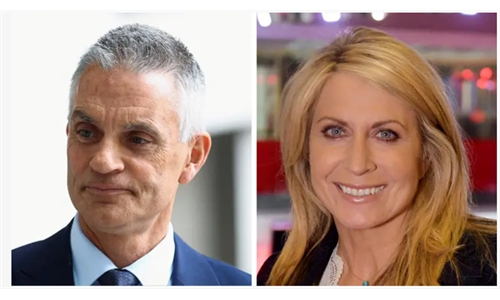
The incident has led to the resignations of two senior bosses and Trump said he would sue the BBC for $1 billion in damages. The Wall Street Journal stated, “As media implosions go, it doesn’t get much worse than the fiasco engulfing the BBC,” while Politico Europe said that the BBC was “in the fight of its life.”
Panorama, which premiered in 1953, is known for its in-depth investigative reporting and is the world’s longest-running current affairs television program. The fact that this “editing scandal” occurred on such a long-established program underscores the severity of the BBC’s violation of journalistic ethics and its use of journalistic objectivity as a pretext for ideological manipulation.
People believe this isn’t an isolated incident, and many, while observing the farce, have raised questions: If the target of this malicious editing hadn’t been Trump, would this “existential crisis” concerning the BBC’s credibility still exist? Or, if Trump hadn’t won last year’s election, would the BBC have apologized?
Such doubts are not without reason. When it comes to manipulating footage and malicious editing, the BBC is among the most “experienced” Western media outlets. It would be more accurate to say that this time, “the target of its malicious editing happened to be Trump,” rather than that it “accidentally misedited Trump’s clip.”
In 2019, Anna Brees, a journalist who had worked at the BBC for 11 years, revealed on social media after leaving the organization that the BBC had fabricated reports on Syria. She warned that journalists were failing the public when it came to the truth.
Related polls also show that in recent years, the BBC’s credibility among the British public has continued to decline, with the spread of misinformation undermining public trust in the media cited as one of the main reasons.
In Chinese online communities, few were surprised that the BBC got into such “trouble.” In recent years, the BBC has developed a set of politically manipulative narrative tactics in its reporting on China, ranging from using dark filters to create a gloomy mood, to splicing and editing footage to construct emotional conflict; from replacing on-site investigation with “anonymous revelations,” to exporting ideological stance with “pseudo-documentary” storytelling.
These methods have been repeatedly employed in fabricating stories about the so-called “forced labor” and in its coverage related to Hong Kong, forming a recognizable pattern.
For instance, the BBC once combined a 2019 satellite image of a location in Xinjiang with a 2020 photo of a factory exterior as supposed “evidence” of “forced labor”; it reportedly hired “actors” to cry on camera about alleged “abuse”; it misrepresented photos of traffic accidents in Xinjiang as evidence of “crackdowns”; and during the Hong Kong “anti-extradition bill protests,” it deleted footage of rioters attempting to snatch a police officer’s gun to create the illusion that “police shot peaceful protesters.”
Due to its frequent use of out-of-context excerpts, sarcastic commentary, and dark, gloomy visuals to discredit and vilify China, the BBC has been repeatedly singled out by China’s Ministry of Foreign Affairs, with its visual style referred to by Chinese netizens as the “underworld filter.”
Even worse, through such smears, the BBC’s reporting has colluded with international anti-China forces, becoming one of the most active proponents of “sanctions against Chinese companies.” China’s products, such as solar panels, cotton, and tomatoes, are high-quality items that are cost-effective in the international market. However, the malicious slander from the BBC and the incitement from anti-China forces have exerted real pressure of market discrimination on these Chinese enterprises, disrupting the normal operation of international supply chains.
In this regard, the compensation that the BBC should face goes far beyond the $1 billion demanded by Trump; all victims affected by its malicious editing have the right to demand an apology and compensation from the BBC.
It is time for the BBC to take a good look in the mirror. Freedom of the press is not a passport for bias and lies. From the trust crises that the BBC has faced in recent years, what people see is not self-claimed “professionalism,” “objectivity,” or “neutrality,” but a deep-rooted sense of “civilizational superiority.”
It can be said that the BBC has become one of the most destructive negative examples in the global media landscape. If it continues to prioritize ideology over professional ethics, it will not only completely lose the trust of people worldwide but it will also further marginalize itself in the international public opinion arena.