Beijing and Tokyo clash over UN ‘enemy state’ clause as tensions flare over Taiwan and historical memory
A few days back the Chinese have once again annoyed India badly by stopping an Indian from Arunachal Pradesh from boarding his connecting flight while transiting via China. The Chinese immigration official had the temerity to say that Arunachal was the place of birth on the passport, therefore India cannot issue the same.
It seems presently the row created by China has been resolved and the passenger has continued the journey. However such actions can once again derail the new started direct flights by airlines from both the countries. China must desist from claiming Arunachal as it’s own part otherwise India too can start claiming Yunnan province of China. As it is Indian citizens or Indian Parliament has been asking the Chinese PLA to vacate Tibet a country which it occupied in 1959.
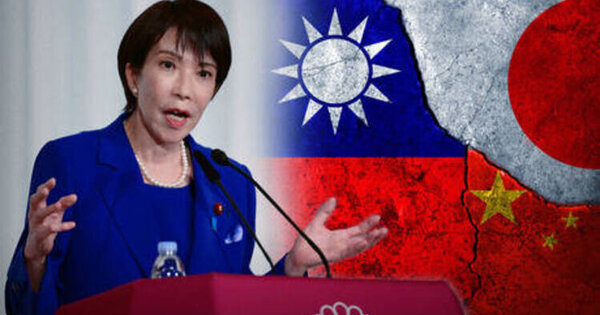
Now a new diplomatic storm has erupted between China and Japan, reigniting long-standing disputes rooted in World War II history, territorial rivalry, and the shifting security landscape of East Asia. At the center of the clash is an obscure but symbolically charged provision of the United Nations Charter-the so-called “enemy state” clause-which China has cited to warn Tokyo against any military involvement in a potential China –Taiwan conflict. Japan, under its newly elected Prime Minister Sanae Takaichi, has rejected the reference as obsolete and politically motivated, further straining relations between the two regional powers.
The dispute began shortly after Takaichi-known for her hawkish views on national defense and her long-standing support for Taiwan-stated that any cross-strait conflict would constitute a “survival-threatening situation” for Japan. Under Japan’s security legislation, such a scenario could justify limited military action, including collective self-defense operations alongside allies such as the United States. Beijing interpreted her remarks as a direct threat of Japanese intervention in the Taiwan issue, which China considers an internal matter and a core national interest…. we’ll Taiwan has been and remains an independent country since more than 75 years. India too has close economic relations with this country.
Though it keeps claiming Arunachal and iremains in illegal occupation of Indian territory in Ladakh and Skashgam valley and ofcourse Tibet, China’s own reaction was sharp and pointed. The Chinese Embassy in Tokyo published a passage from the UN Charter’s Article 53, which states that “enemy states”-a term referring to the former Axis Powers, including Japan-may be subject to enforcement measures by regional arrangements without prior authorization from the UN Security Council if they are deemed to exhibit a renewed “aggressive policy.” The clause was written in the immediate aftermath of World War II, reflecting Allied fears that Germany, Japan, or Italy might again pose a threat to global security. Although long considered outdated, it technically remains part of international law.
Beijing used this clause to lodge an official complaint with the United Nations concerning Takaichi’s statement, urging Japan “as a defeated country in World War II” to “reflect on its historical crimes” and avoid provocative involvement in Taiwan. By invoking wartime history, China sought to underscore Japan’s legal and moral constraints while framing Tokyo’s modern security posture as a potential return to militarism.
Japan’s response was swift and dismissive. The Ministry of Foreign Affairs accused China of deliberately misrepresenting outdated provisions that have no relevance to contemporary international order. Tokyo noted that in 1995-on the 50th anniversary of the United Nations-the General Assembly recommended removing all references to “enemy states,” acknowledging that the wartime classification was inconsistent with post–Cold War realities. Although a formal amendment to the UN Charter was never completed, largely due to the complexity of the process, the Japanese government argued that the clause has not been invoked in practice for decades and carries no operative weight.
Tokyo’s rebuttal also reflects deeper anxieties about China’s regional ambitions. Many Japanese policymakers view Beijing’s criticism not as a legal argument, but as a political tool intended to shame Japan into silence on Taiwan. Takaichi’s administration, coming into office at a moment of escalating Chinese military activity near the island, sees the Taiwan Strait as directly connected to Japan’s own national security, given the proximity of Okinawa and the Ryukyu island chain.
This link between Taiwan and Japan’s defense posture was further emphasized when Defense Minister Shinjiro Koizumi visited a military installation on Yonaguni, Japan’s westernmost inhabited island, located just 110 kilometers from Taiwan’s coast. Koizumi reaffirmed plans to deploy medium-range surface-to-air missile systems and enhance Japan’s defensive capabilities in the region. These measures form part of a broader military buildup focused on deterrence-an initiative that has accelerated over the past decade in response to China’s expanding naval presence and ballistic missile capabilities.
Beijing, however, interprets Japan’s military modernization as evidence of a troubling trend. Chinese officials regularly accuse Tokyo of abandoning the pacifism enshrined in its postwar constitution. By invoking Article 53, China appeared to revive a historical narrative that casts Japan as a former aggressor that must be carefully watched-a narrative that continues to hold significant emotional and political power in Chinese domestic discourse.
The confrontation also takes place against the backdrop of Japan’s unresolved historical issues with Russia. The two nations have never signed a formal peace treaty following World War II due to a continuing dispute over the southern Kuril Islands-known in Japan as the “Northern Territories.” These islands were seized by the Soviet Union in 1945 and remain under Russian control. For many Japanese nationalists, reclaiming them remains a central political aspiration. Moscow, like Beijing, occasionally highlights Japan’s wartime past to justify its own position, although it has not directly joined the current controversy between China and Japan.
The convergence of these tensions-China’s stance on Taiwan, Russia’s territorial dispute, and Japan’s efforts to redefine its defense posture-illustrates how fragile East Asia’s strategic environment has become. The invocation of the UN’s “enemy state” clause, a relic thought long buried, reflects not only the depth of historical grievances but also the rapidly changing geopolitical landscape in which old animosities can be revived for modern strategic purposes.
For Tokyo, the episode reinforces the urgency of clarifying its national security strategy and strengthening alliances, particularly with the United States and regional partners wary of China’s assertiveness. For Beijing, it demonstrates a willingness to use every diplomatic and historical instrument available to discourage foreign involvement in Taiwan.
Whether this dispute escalates further will depend on how both sides navigate the intertwined issues of history, law, and regional power politics. What is already clear, however, is that East Asia once again finds itself haunted by the unresolved legacies of World War II-legacies that continue to shape its most sensitive flashpoints today.
Source: Blitz