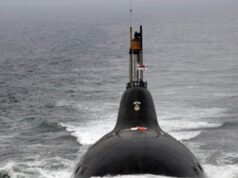
India’s expanding maritime power : MAHASAGAR will establish a new Oceanic order
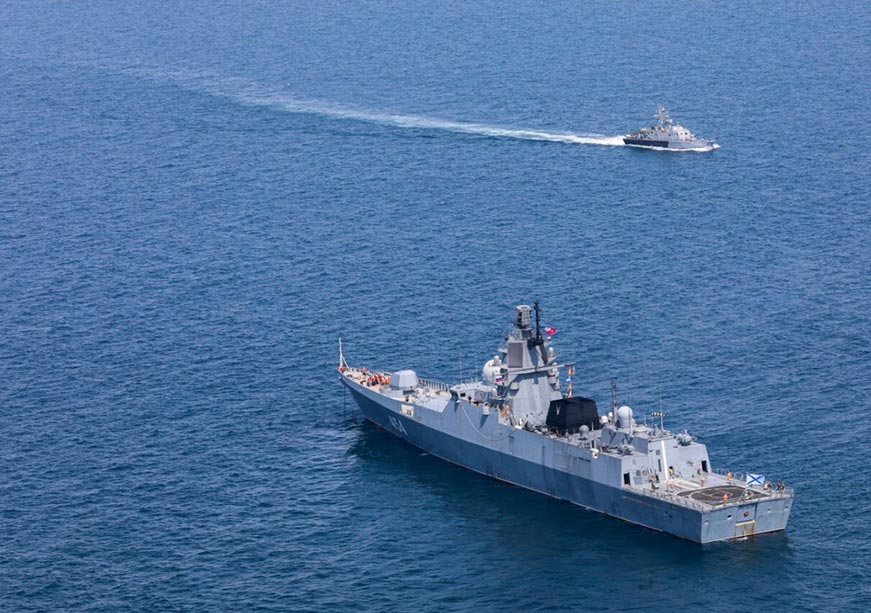
India has always stood at the crossroads of some of the world’s most strategic waterways and no wonder a ocean has been called The Indian Ocean since eons. Only when powerful Indian kings relinquished their control of the Oceans that India started declining.
However in recent years, New Delhi has accelerated efforts to redefine its maritime identity and broaden its control across the Indian Ocean and adjacent regions. This evolution reached a new milestone earlier this year during Prime Minister Narendra Modi’s visit to Mauritius, where he unveiled India’s updated maritime vision: MAHASAGAR – Mutual and Holistic Advancement for Security and Growth Across Regions, and a Sanskrit word meaning “ocean.”
India has thus signaled its intent not merely to protect its maritime interests but to shape a new architecture of security, cooperation and economic integration across a vast maritime expanse. MAHASAGAR follows a decade after Modi introduced SAGAR (“Security and Growth for all in the Region”), and it represents a much larger framework. Where SAGAR took India from “using the seas” to “securing the seas,” MAHASAGAR seeks to transform India into a first responder, an economic partner and a cultural connector across wide swaths of the Indo-Pacific and, potentially, beyond.
India’s geography naturally thrusts it into a maritime leadership role. With a 7,500-kilometer coastline, more than 200 ports, and hundreds of islands scattered across the Bay of Bengal and the Arabian Sea, India is inseparable from the Indian Ocean. Nearly 90 percent of India’s trade – including most of its vital energy imports – traverses these waters.
India needs to remember that it were those who came via the Sea who looted, devastated and beggared India for nearly 150 years. Now NO MORE.
Over the past two decades, piracy around the Horn of Africa, terrorist infiltration by sea – most infamously during the 2008 Mumbai attacks – and an expanding presence of foreign navies in the Indian Ocean have intensified India’s focus on oceanic security. These concerns catalyzed the original SAGAR initiative, prompting India to sign port-access agreements with Oman, Seychelles, Mauritius and Australia. The revival of Malabar naval exercises further underscored India’s shift toward active maritime engagement.
MAHASAGAR does not abandon SAGAR; it expands upon it. The new doctrine embodies India’s aspirations to become more than a participant in World maritime affairs – it aims to make India an indispensable actor.
The vision rests on three primary pillars:
India is already the ’s first responder and preferred security partner in the Indian Ocean.MAHASAGAR emphasizes crisis response, defense cooperation and intelligence sharing. The goal is to provide smaller littoral states with reliable support during humanitarian disasters, maritime emergencies, and nontraditional threats such as piracy or trafficking.
In April, India operationalized this pillar through the Africa-India Key Maritime Engagement, conducting naval exercises with 10 African nations. These drills were followed by surveillance missions, joint patrols in exclusive economic zones, and training programs. Such efforts not only enhance interoperability but also signal India’s growing maritime readiness and diplomatic reach.
A widened Arc of economic cooperation
Beyond security, the new doctrine calls for broader economic networks, from supply-chain diversification to maritime infrastructure development. Capacity-building, renewable energy cooperation, climate adaptation and disaster readiness form core elements of this economic architecture.
India seeks to position itself as a stable, reliable economic partner to emerging maritime nations – particularly those in Africa, the Indian Ocean islands and Southeast Asia – offering alternatives to predatory or conditional economic frameworks imposed by any external powers.
Soft-power diplomacy on the high seas
MAHASAGAR incorporates cultural, educational and technological diplomacy as tools of maritime influence. This reflects India’s understanding that leadership in the Indian Ocean cannot rely solely on military or economic engagement. Cultural ties, training programs, university partnerships, and technology transfers can deepen India’s presence in ways that build mutual trust and lasting goodwill.
Challenges: From vision to viable strategy
Despite its promise, MAHASAGAR faces several obstacles before transforming into a functional maritime strategy.
One of the most pressing issues is ambiguity. While SAGAR clearly focused on the Indian Ocean region, MAHASAGAR’s scope has been deliberately kept vague. In time it will cover the Indo Pacific and then even the entire Oceania and Antartic Ocean and later look towards other areas.
Presently the operational sphere within the Indian Ocean and its littoral regions provides practical focus while preserving flexibility to expand later based on strategic needs.
India’s naval modernization has progressed significantly, but the gap between ambition and capacity remains. Becoming a “preferred security partner” requires not only advanced naval assets but also sustained deployment capability, logistical reach, and rapid-response infrastructure. Slowly but steadily India is building but the speed needs to be accelerated.
India’s expanding cooperation with other nations – particularly Russia, Israel, ASEAN, France, Japan, United States and Australia – has strengthened its maritime posture.
However India must guard against strategic dependence on any country. MAHASAGAR will reinforce India’s Sovereignty and its role as one of thefour pillars of this multi polar world. In times to come, no other country will be permitted to dominate the Indian Ocean, be it defense, economics, climate action, education and culture. To succeed, it must avoid becoming overly militarized. Countries in the Indian Ocean region – many wary of great-power rivalry – may prefer cooperative development projects to overt security alignments. India’s ability to maintain this balance will determine how widely MAHASAGAR is embraced.
MAHASAGAR represents the most ambitious maritime vision India has articulated to date. It builds upon the foundation laid by SAGAR. It aims to reshape India’s role in the Indian Ocean more comprehensively – from a security provider and economic collaborator to a civilizational bridge connecting diverse regions.
Yet, as with all visionary frameworks, its success depends on execution. Clear geographic focus, measured rhetoric, stronger naval capacity, and careful management of partnerships will be essential. If implemented thoughtfully, MAHASAGAR has the potential to move beyond aspirational diplomacy and become a defining element of India’s 21st-century strategic identity – advancing not only India’s security and economic interests but also fostering stability and cooperation across one of the world’s most contested maritime regions.