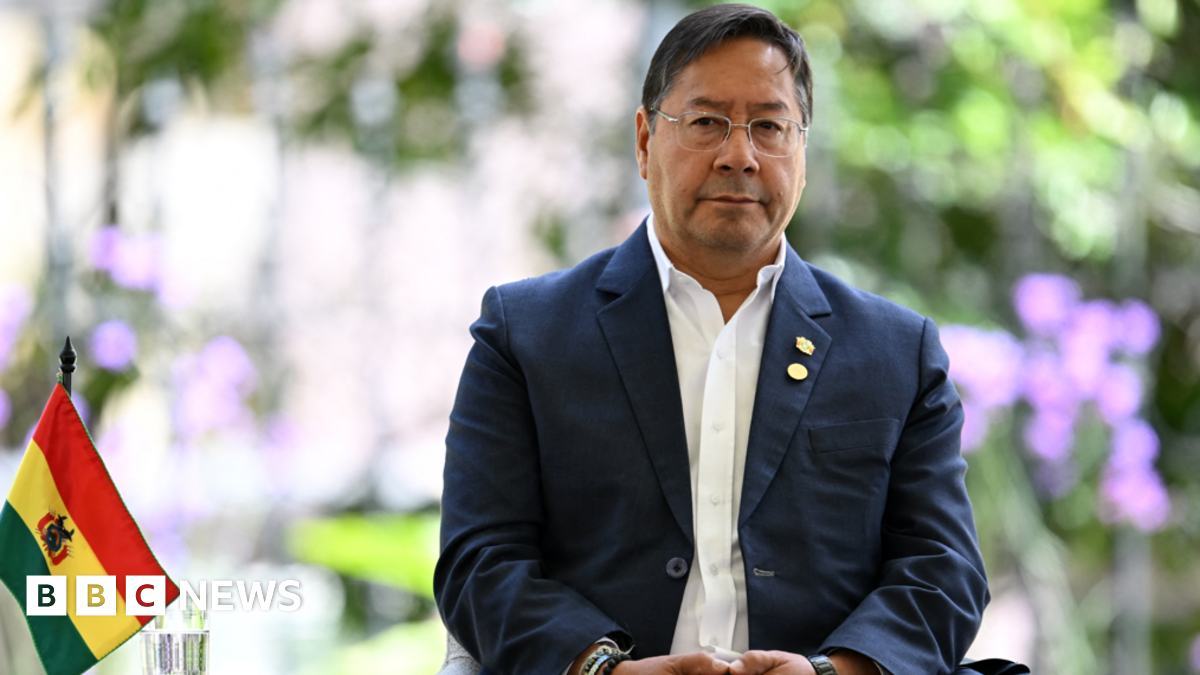
Bolivia’s political landscape shaken as former president Luis Arce is arrested on corruption charges
By Damsana Ranadhiran
Bolivia has been thrust into a fresh wave of political turmoil following the arrest of former president Luis Arce, marking one of the most significant corruption cases to hit the country in recent years. Arce, who governed Bolivia from 2020 until his departure from office in November 2025, was taken into custody late on the evening of December 10, according to a statement by former Minister of the Presidency María Nela Prada. The allegations center on accusations that Arce misused public funds earmarked for Indigenous communities during the time he served as economy minister, a role he held for more than a decade.
The former president now faces five criminal charges, including facilitating illicit enrichment, breach of duties, and involvement in an embezzlement scheme that authorities say drained hundreds of millions of dollars from the state-run Indigenous Development Fund. Government-run Bolivia Televisión described the scandal as revolving around “phantom projects”-initiatives that existed on paper but never materialized in practice. The fund, created to support Indigenous communities with infrastructure, agricultural development, and basic services, has long been viewed as a crucial tool for addressing historical inequalities. Its alleged misuse represents not only a financial crime but a profound breach of trust with the country’s most vulnerable populations.
Luis Arce, 62, rose to prominence as the economy minister under President Evo Morales, gaining recognition as the architect of Bolivia’s economic growth during the commodities boom of the mid-2000s. His stewardship of the economy helped build the political platform that later propelled him to the presidency in 2020, following Morales’s resignation amid election controversy in 2019. Arce presented himself as a steady technocrat capable of guiding Bolivia through economic recovery and political instability.
However, according to the allegations announced this week, some of the very policies and programs that boosted his reputation are now under criminal investigation. The Indigenous Development Fund-formally intended to channel resources into rural and Indigenous communities-reportedly became a vehicle for diversion of public money. The “phantom projects” identified by authorities allegedly involved falsified budgets, nonexistent infrastructure proposals, and fabricated community development plans.
Interior minister Marco Antonio Oviedo said the fund had been “captured by corrupt networks” during Arce’s tenure at the Ministry of Economy between 2006 and 2017. That period coincides with Morales’s long rule and the consolidation of the Movement for Socialism (MAS) as Bolivia’s dominant political force. Oviedo insists that the investigation is aimed at dismantling these networks, not at targeting any specific political faction, though observers across the political spectrum remain deeply divided over the motivations behind the arrest.
The arrest has sparked strong reactions across Bolivia, a country still struggling to recover from years of political division. Supporters of Arce and the MAS party accuse the current government of orchestrating a politically motivated crackdown aimed at discrediting the former ruling bloc and neutralizing its influence ahead of future elections. They argue that investigations into corruption at the fund have been ongoing for years, and the timing of Arce’s arrest-just weeks after he left office-suggests strategic considerations rather than a genuine pursuit of justice.
Critics of Arce, however, view the arrest as long overdue. They point to numerous audits and accusations dating back to the mid-2010s, which identified irregularities in the management of the Indigenous Development Fund. These inquiries were largely stalled or dismissed during the MAS administration, leading many to believe that senior officials had protected one another from legal consequences. For them, Arce’s detention symbolizes a long-awaited reckoning with systemic corruption.
Human rights organizations, meanwhile, have called for transparency in the investigation and fair legal treatment of the former president. They warn against the risk of judicial weaponization in a nation where political instability has repeatedly eroded public trust in democratic institutions.
Arce’s arrest threatens to reshape Bolivia’s political trajectory at a moment when the country is already navigating economic uncertainty and growing public frustration. The MAS party, once unified under Morales and later under Arce, is now fractured between competing factions. Arce’s fall from power in November 2025-followed swiftly by his arrest-has further deepened these internal rifts.
Political analysts warn that the scandal could weaken the MAS bloc ahead of future national elections, leaving space for rival parties to expand their influence. At the same time, the case may ignite unrest among the party’s loyal base, many of whom view Arce’s prosecution as an attack on the political legacy of Morales-era governance.
Bolivia’s Indigenous communities, central to both the party’s identity and the core of the corruption allegations, have responded with a mix of disappointment and anger. Many feel betrayed by the idea that funds meant to uplift their communities may have been exploited for political or personal gain.
The legal process against Luis Arce is expected to unfold over the coming months and will likely dominate Bolivia’s political discourse well into 2026. Authorities say more arrests could follow, as investigators scrutinize individuals connected to the fund’s administrative structure. Whether the case leads to broader reforms or deepens existing political divisions remains uncertain.
What is clear, however, is that Arce’s arrest marks a pivotal moment for Bolivia-one that highlights longstanding concerns about corruption, governance, and accountability. As the nation prepares for the next phase of legal proceedings, the implications of this case will reverberate far beyond the courtroom, shaping Bolivia’s political landscape for years to come.