India Means Business : Message to Pakistan on Kashmir-Indus Water Treaty very clear at UNSC
Paki delegation at UNSC attempted once again to internationalize Jammu & Kashmir, an integral part of India, and the bilateral Indus Water Treaty. The debate at United Nations Security Council was on Middle East but Pakistan tried to insert its own manipulative agenda.
Shri Harish Parvathaneni, India’s Permanent Representative,swiftly delivered a robust rebuttal to firmly state that Jammu and Kashmir, along with Ladakh, remain integral parts of India. He dismissed Pakistan’s rhetoric as a desperate ploy to deflect from its own failures. He accused Islamabad of obsessively blaming India at every international forum while actively sponsoring cross-border terrorism. This pattern has completely undermined any pretence of good faith in bilateral relations.
This UNSC debate indicates that there are no thaw in Indo Pak relations. Shri Parvathaneni firmly told the UN that India’s patience has limits. Pakistan now has to choose between dialogue and full scale punishment.
The Indian envoy emphasised India’s unwavering commitment to territorial integrity which no power on this earth will be permitted to disrupt. The people of Jammu and Kashmir have repeatedly affirmed their place within India through democratic processes, including elections and constitutional measures. External interference from Pakistan or anywhere else will be swiftly punished.
Parvathaneni also issued a stark warning on cross border terrorism. India, he declared, possesses the capability and resolve to counter terror threats with full force. Recent incidents, including attacks traced to Pakistan-based groups, underscore the seriousness of this stance.
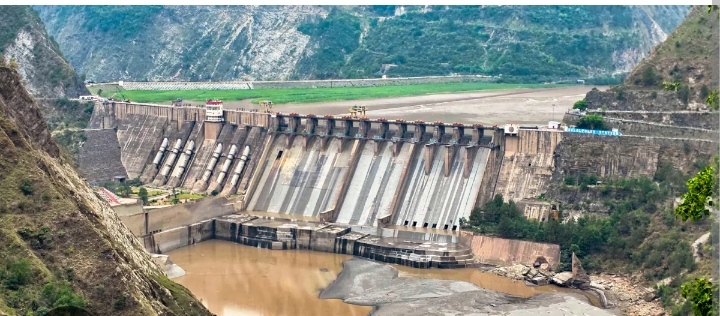
Coming to the Indus Waters Treaty (IWT), signed in 1960, the Permanent Representative firmly stated India’s position. The bilateral treaty governs the sharing of six rivers between the two nations, with India allocated the eastern rivers and Pakistan the western ones. However, now India is holding the IWT in abeyance until Pakistan demonstrably ceases its support for cross-border terrorism. Rest of the world needs to encourage Pakistan on this issue of eradicating terror infrastructure.
This suspension clause draws from India’s ‘water security’ doctrine, invoked after repeated terror attacks. Parvathaneni highlighted Pakistan’s failure to act on evidence shared by India regarding terror camps and financing networks. Credible action, he insisted, must precede any resumption of treaty obligations.
The UNSC debate, focused primarily on Middle East tensions, was utilized by Pakistan as an opportunity to hijack the agenda, may be with help. Yet, India’s response drew support from all like-minded nations, emphasizing the global consensus against state-sponsored terrorism. The UN Council was urged to debate counter-terrorism. It has no business in meddling with bilateral treaties.
Pakistan’s narrative frames the IWT as a lifeline, claiming Indian projects like dams threaten downstream flows. Whereas all developments by India comply with treaty provisions, designed with international arbitration in mind. The current impasse stems not from water scarcity but from Pakistan’s terror infrastructure.
Historically Pakistan has repeatedly misused international platforms. From the 1971 war to recent Pulwama and Uri attacks, links to groups like Lashkar-e-Taiba and Jaish-e-Mohammed persist. India’s diplomatic push has isolated Pakistan, with FATF scrutiny adding pressure.
Parvathaneni’s address aligns with India’s broader strategy under the Modi government. Initiatives like ‘Neighbourhood First’ coexist with a firm line on security. The abeyance of IWT reflects this: water as a shared resource cannot shield terror exporters.
Internationally, the US, UK, and France have echoed concerns over Pakistan-based militancy. China’s veto power in UNSC often shields Islamabad, yet India’s evidence-based diplomacy gains traction. The debate underscores shifting global dynamics, with India becoming a major power which acts responsibly.
Domestically, the response bolsters national morale amid ongoing border vigilance. India’s armed forces maintain high readiness along the Line of Control, where infiltration attempts continue. Public discourse emphasises self-reliance in defence, from indigenous missiles to river-linking projects.
The IWT’s future hinges on Pakistan’s choices. India’s suspension is reversible, contingent on verifiable de-linkage from terror. Until then, New Delhi will ensure that national security takes priority over everything else.