Afghanistan and India to Taliban trade bypassing to Pakistan
Kabul is now not only cutting down its trade with Islamabad but to boost its own exports, it is now planning to increase with others through Chabahar port. This deepening of trade trues were announced during Afghan Trade Minister Nooruddin Azizi’s visit to New Delhi. India and Afghanistan are set to deepen trade ties through Iran’s Chabahar port and new cargo flights from Delhi and Amritsar to Kabul.
Kabul and New Delhi are set to expand bilateral trade presently valued over INR 8700 crores only.once contiguous nations since days of Mauryan Empire and even before ( days of Mahabharat ) now have an artificially created nation Pakistan in between. Now both the countries are all set to expand bilateral trade through the sea by leveraging Iran’s Chabahar port more extensively. The two countries are also gearing up to enhance bilateral trade by setting up two dedicated cargo flight routes.
India and Afghanistan are still legally contiguous neighbours in spite of British created Pakistan. However, because of illegal occupation of Gilgit-Baltistan in 1947-48, the narrow Wakhan Corridor connecting Afghanistan to India presently not available. So direct overland access between New Delhi and Kabul is not there and will be available when India restores this. As a result, alternatives now lie either through air routes or sea corridors to Chabahar port in Iran and then through land routes, completely bypassing Pakistan.
The joint announcement by Indian and Afghan officials comes a day after Azizi met India’s External Affairs Minister S Jaishankar.
Azizi said, “We never wanted violence. Afghanistan has witnessed enough bloodshed. Business and politics should not be mixed. Our focus is on creating a conducive business environment for the country’s uplift.”
Azizi, heading a large business delegation, pressed not only for scheduled shipping services from the Chabahar port but also for construction of dry ports in Afghanistan’s Nimruz province near the Iranian border, and smoother handling of Afghan cargo at India’s Nhava Sheva Port in Maharashtra.
Azizi also extended an open invitation to Indian businesses to participate in sectors such as mining, agriculture, healthcare, pharmaceuticals, IT, energy, and textiles. He announced several new incentives, including a 1% tariff on raw materials and machinery, free land allocations, reliable power supply, and proposed five-year tax exemptions for new industries—particularly those established by returning Afghan refugees.
The Minister also encouraged greater engagement from the Afghan Sikh and Hindu communities and reaffirmed Afghanistan’s commitment to ensuring a peaceful, inclusive, and business-friendly environment for all partners.
Indian authorities have also pledged swift follow-up on the same, including eased business visa processing and strengthened banking channels despite ongoing sanctions hurdles.
Cargo flight operations on the Kabul-Delhi and Kabul-Amritsar sectors are expected to start soon, which will enable faster movement of perishable Afghan exports such as fresh fruits and medicinal herbs. These commodities suffer from delays in ground transit.
Areas flagged for collaboration include pharmaceuticals, cold-chain infrastructure, food processing plants and mineral extraction ventures.
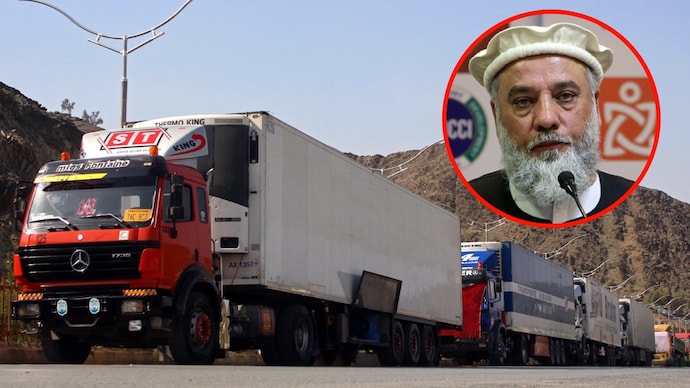
The backdrop to these agreements is Kabul’s deteriorating transit relationship with Pakistan. Last month, amid Pakistan and Afghanistan’s cross-border attacks, dozens of Afghan trucks were stranded with produce rotting when the frontier shut on October 12.
Losses exceeded INR 870 crores on both sides, and up to 25,000 border workers were affected, according to the Pakistan Afghanistan Joint Chamber of Commerce and Industry (PAJCCI).
Following this, Afghan deputy PM Baradar warned traders that Kabul would not intervene if they kept relying on Pakistan.
Recent directives from Afghan leaders, including Deputy Prime Minister Mullah Abdul Ghani Baradar, have urged traders to wind down business through Pakistani routes within months, citing repeated closures and perceived political exploitation by Islamabad. Losses for Afghan exporters have mounted into tens of millions of dollars over the past year.
In response, freight through Chabahar and Central Asian pathways has surged. The Iranian port, part of the broader International North-South Transport Corridor championed by New Delhi, now serves as landlocked Afghanistan’s primary seaport in Iran. Trade via this route and limited air links hit roughly INR 8000 Crores in the last fiscal year.
But New Delhi’s by expanding humanitarian aid—more than a million tonnes of wheat since 2021—while also resuming direct flights to Kabul, India has sustained engagement even as it has engaged with the Afghanistan administration.
This strategy is also important in India securing alternative access to Central Asian nations for energy and minerals trade.
Azizi’s visit, which included sessions with private sector groups at the India International Trade Fair, also explored Indian investment in light manufacturing and mining.