
After India, now China makes bold climate pledge and promises emission reductions
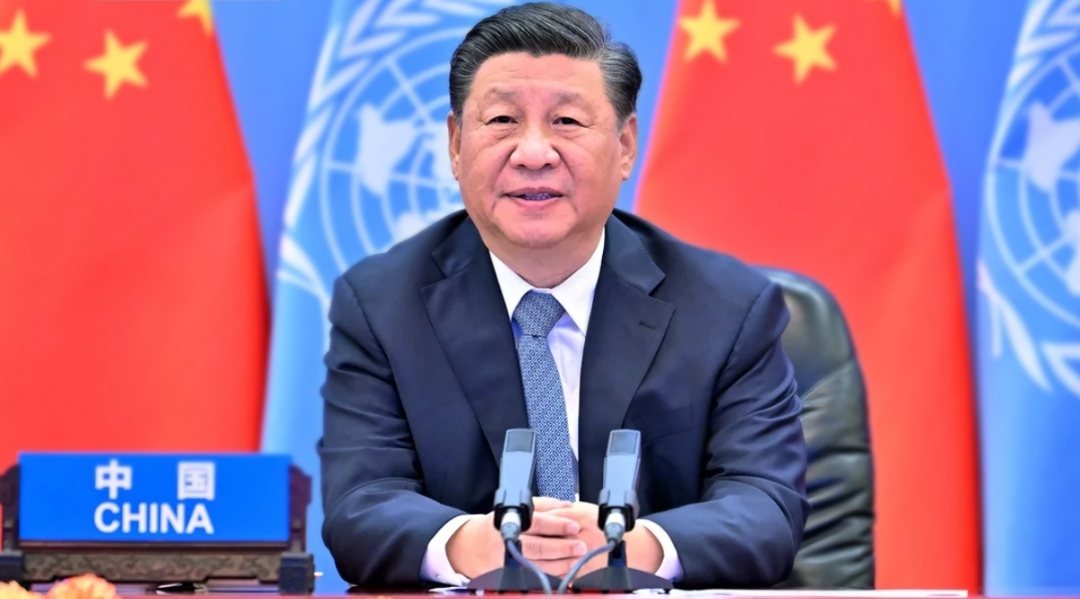
President Xi Jinping through a video speech, at the United Nations Climate Summit, on 25 Sep, unveiled China’s latest Nationally Determined Contributions (NDCs) and set the Western world on notice about Beijing’s renewed commitment to combating climate change. China announced that by 2035, it aims to reduce economy-wide net greenhouse gas emissions by 7 to 10 percent from peak levels, while striving to achieve even better results.
Against a backdrop of faltering global climate cooperation and increasingly politicized environmental agendas, China’s commitment, like earlier made by PM Modi pledging speeding up of the India’s National Action Plan for Climate Change (NAPCC) to mitigate and adapt to the adverse impact of climate change. This is a signal to the world that climate responsibility remains a priority for major powers.
UN Secretary-General António Guterres lauded China’s plan, describing it as “extremely important” for global climate action. Experts and commentators alike noted that the clarity, ambition, and systemic nature of China’s pledge provide a much-needed boost to international climate governance at a time when collective action faces both political and logistical obstacles.
China’s plan is a systematic approach designed with measurable and actionable steps, which has three quantitative indicators, and three qualitative indicators. The quantitative measures include the share of non-fossil fuels in total energy consumption, installed capacity for wind and solar power, and total forest stock volume.
Meanwhile, the qualitative measures aim to make new energy vehicles (NEVs) the mainstream in sales of new vehicles, expand China’s National Carbon Emissions Trading Market to cover major high-emission sectors, and work toward establishing a climate-adaptive society.
Finally China has set an absolute emission reduction target that encompasses economy-wide net greenhouse gas emissions.
Earlier focus had been on relative or sector-specific targets but this new goal demonstrates a higher level of ambition and accountability. The plan is designed to align with China’s long-term goals of high-quality development and modernization, reflecting the intersection of environmental sustainability and national strategic interests.
UN climate chief Simon Stiell highlighted China’s impressive track record in surpassing climate and clean energy targets. Western media outlets have also acknowledged the move as a turning point.
The BBC referred to the new emission reduction pledge as a “landmark commitment,” while The Economist noted that China’s seemingly modest targets have consistently been exceeded, delivering results beyond initial expectations.
Developing nations, which often face constraints in climate action, have expressed cautious optimism. As The Indian Express observed, the recent global pause in climate progress may be reversed by renewed momentum, catalyzed by China’s proactive stance.
Over the past decade, China has consistently met and exceeded its climate targets. By achieving its 2030 goals for wind and solar power capacity ahead of schedule, China has established the largest and most complete new energy industrial chain in the world.
Its dominance in the production and sale of new energy vehicles has persisted for years, surpassing Europe and the United States in both scale and pace of electrification. By leveraging industrial and supply chain advantages, China has driven down the costs of renewable technologies, making clean energy more affordable and accessible on a global scale.
This year marks the 10th anniversary of the Paris Agreement and coincides with the deadline for countries to submit updated NDCs. Yet global progress has been uneven. The United States, despite being a major emitter, has twice announced its withdrawal from the Paris Agreement and continues to promote coal, framing it as a “clean and beautiful” energy source. In Europe, many previously ambitious climate goals remain either unfulfilled or abandoned entirely.
Moreover, climate issues have become increasingly politicized, with sharp divides emerging between developed and developing countries over financing, accountability, and responsibility. These dynamics have eroded confidence in global collective action. In this context, China’s comprehensive plan after India’s, emerges not just as a national policy but as a stabilizing force in global climate cooperation.
Recent surveys conducted by Western countries indicate that China’s credibility on global issues is steadily increasing. Beijing’s consistent adherence to its commitments, combined with its proactive contributions to global governance initiatives, has enhanced its reputation as a responsible major power. The world recognizes that China “keeps its word and acts on it,” whether in climate, industrial development, or international cooperation.
China’s approach to climate change embodies both responsibility and multilateralism. It emphasizes common but differentiated responsibilities, recognizing that developed and developing nations face different challenges and capacities.
China has consistently sought to translate its ambitions into tangible outcomes, whether by scaling renewable energy infrastructure, promoting NEVs, or supporting global technology transfer. Its proactive stance provides a model for other countries, showing that environmental action can be aligned with economic development and industrial modernization.
The world today confronts an array of environmental challenges-from rising global temperatures and extreme weather events to biodiversity loss. China’s commitment, grounded in experience, capacity, and accountability, thus provides a rare source of certainty and stability amid uncertainty.
It demonstrates that climate change can be a bridge for cooperation rather than a point of division, offering a tangible pathway toward shared goals and collective benefits.
China’s announcement at the UN Climate Summit embodies a strategic, results-oriented approach to climate governance and reflects the country’s role as a responsible global power. China has not only strengthened its domestic climate policies but also bolstered global confidence in multilateral action.
China’s tangible contributions offer a steadying influence, reminding the Western world that cooperation, commitment, and shared responsibility remain essential for building a sustainable and equitable future.
Through its actions and vision, China underscores that multilateralism and a community with a shared future for humanity are not abstract ideals but achievable goals, grounded in responsibility, pragmatis.