America’s sudden troop withdrawal from Romania signals a troubling strategic drift
By Tajul Islam
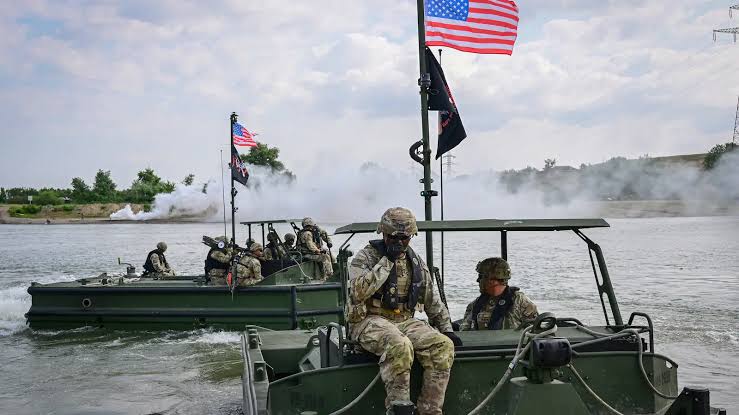
When the Pentagon quietly announced last month that up to 1,000 US troops stationed in Romania would return home without replacements, the reaction in Washington was swift – and furious. Foreign policy experts, lawmakers, and even senior figures within President Donald Trump’s own Republican Party expressed deep concern.
The decision, presented without consultation or strategic context, raised fundamental questions about America’s global posture, its commitment to allies, and the internal coherence of its national security policymaking.
What might otherwise have been interpreted as a minor adjustment in troop numbers instead became a revealing episode that exposed the fractures within the administration’s foreign policy apparatus. More troublingly, the decision risks undermining US leverage in one of the most sensitive geopolitical crises of the decade: the effort to bring Russia and Ukraine to the negotiating table.
The loudest critics were not Democrats, but two of the most influential Republicans on defense matters: Rep. Mike Rogers and Sen. Roger Wicker, chairs of the House and Senate Armed Services Committees. Both men condemned the move for two reasons.
First, they argued that the timing could not be worse. As Washington and its allies continue pressuring Russia to agree to meaningful negotiations over Ukraine, any reduction of American military presence in Eastern Europe could be read by Moscow as a pre-negotiation concession. At a time when unity and resolve are essential, such a withdrawal risks signaling wavering commitment.
Second, the lawmakers were angered by the administration’s unilateralism. Current US defense legislation places restrictions on reducing America’s military footprint in Europe unless the executive branch provides specific certifications to Congress. Yet no such consultation occurred. Instead, the Pentagon provided Congress with a fait accompli.
This disregard for established oversight mechanisms revived longstanding concerns about the administration’s foreign policy decision-making, which critics say often occurs without transparency, coordination, or strategic justification.
Compounding the confusion is the broader lack of strategic coherence within the administration. For much of the year, officials have promised a comprehensive Global Posture Review – effectively a blueprint for where American forces should be based and how future deployments should be structured. Originally expected by the end of summer, it is now November and no such document has appeared.
The absence of this review means that the Romania decision appears arbitrary, as if plucked from the air without connection to any overarching strategy. Policymakers, analysts, and allies alike are left wondering how a withdrawal from Europe fits into Washington’s global priorities. Without a plan, isolated troop movements feel less like strategic realignments and more like policy improvisation.
Another major concern was the lack of communication with Romania itself. According to reports, Bucharest was given only two days’ notice before the Pentagon made the decision public. Such treatment of a loyal NATO ally – one that has hosted American troops, supported Ukraine, and played a key role in Black Sea security – sends a damaging message.
For many in Washington, the episode evoked memories of 2009, when President Barack Obama abruptly scrapped components of a missile defense system planned for Poland and the Czech Republic. Those governments also received almost no warning. The fallout strained US relations with Central and Eastern Europe for years, raising fears that Washington viewed their security as negotiable.
By blindsiding Romania, the administration risks repeating that mistake. At a moment when cohesion within NATO is vital, surprising partners with sudden military decisions undermines trust and invites doubts about America’s reliability.
One aspect of the episode remains unclear: whether President Trump himself approved or was even aware of the Romania withdrawal before the Pentagon acted. This uncertainty highlights a growing perception that politically appointed defense officials sometimes forge ahead with decisions without full White House coordination.
There have been at least two recent Ukraine-related cases in which Pentagon actions – on military support and intelligence cooperation – reportedly caught the White House off guard. If the Romania withdrawal followed the same pattern, it suggests deeper structural dysfunction inside the national security decision-making process.
Regardless of who authorized the move, the strategic consequences are the same. Pulling US forces out of Europe undermines the president’s ability to negotiate peace in Ukraine by weakening the Western bargaining position.
Any adjustment to US force levels in Europe carries symbolic weight, especially in Eastern Europe, where additional US troops deployed after Russia’s full-scale invasion of Ukraine in 2022. Those deployments reassured NATO allies and served as a direct signal to Moscow that aggression would not go unanswered.
Removing even a small contingent risks being misread. The Kremlin may interpret it as evidence that Washington is losing interest in European security or is eager to avoid further confrontation. Such a perception could embolden Russian negotiators or even harden their stance, believing the West’s resolve is weakening.
This is precisely why many experts argue that US withdrawals – however limited – should only occur in the context of a broader political settlement, not before substantive negotiations even begin.
The Romania episode also illuminated a deeper debate inside the administration over America’s role in the world. Three competing schools of thought appear to be vying for influence:
The Traditionalists
This camp, long dominant in Republican foreign policy, champions strong alliances and sustained US leadership abroad. Traditionalists argue that forward-deployed troops deter adversaries, reassure allies, and uphold the international order from which the US benefits.
The Isolationists
Influential in parts of the party’s grassroots and increasingly vocal, this group favors retrenchment. They want America to scale back overseas commitments and focus on internal issues, intervening abroad only when absolutely necessary.
The Prioritizers
Currently strong within the Pentagon, the prioritizers believe the United States must concentrate almost all national power on deterring China. They argue that shifting resources toward the Indo-Pacific is essential – even if it means reducing commitments in Europe and the Middle East.
Yet critics say this mindset suffers from tunnel vision. US forces in Europe do more than protect NATO allies: they provide global flexibility. For decades, troops based in Europe have been rapidly deployed to the Middle East. Geographically, forces in Germany are closer to many Asian flashpoints than units in the continental US.
Removing such troops for hypothetical future basing arrangements in Asia – which would require years of negotiation and billions of dollars – is strategically unrealistic.
The world today is interdependent. An American decision in one region inevitably ripples across others. Abrupt troop reductions without strategic context create uncertainty among allies from the Middle East to East Asia.
For Gulf states, US troops in Europe provide essential surge capacity during crises. For Japan and South Korea, the withdrawal feeds fears that Washington might similarly reduce its Indo-Pacific presence without warning. For Eastern Europeans, it signals that their security may be deprioritized in Washington’s long-term calculations.
In all these regions, the message is the same: US credibility is strongest when strategic decisions are deliberate, coordinated, and transparent. It is weakest when major shifts are announced abruptly, without consultation or explanation.
Ultimately, the Romania decision should serve as a warning – not only to European allies but also to partners in the Middle East and Indo-Pacific. Allies should encourage the administration to situate future decisions within a coherent strategic plan rather than through ad-hoc announcements.
The stakes are too high for ambiguity. As global tensions rise and rival powers seek to exploit uncertainty, the United States cannot afford to send mixed signals. Responsible leadership demands that military posture changes be tied to a clear vision, not bureaucratic improvisation.
America’s allies still look to Washington for stability. But to maintain that role, the US must show that it remains committed, coordinated, and strategically grounded – not a superpower drifting on the currents of internal discord.