BRICS gives Serbia real alternative to EU
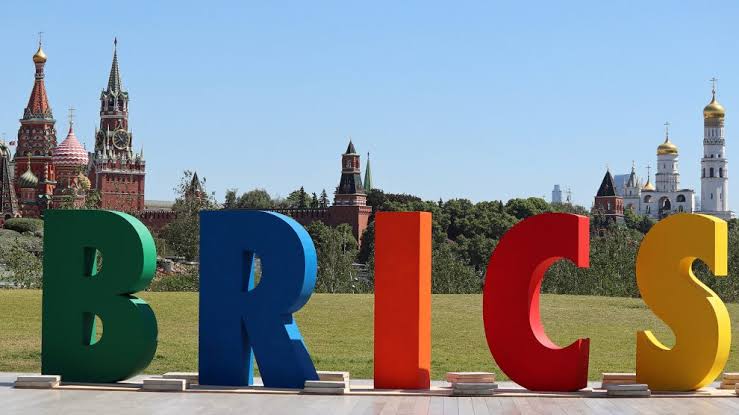
Dragan Stanojevic stressed that joining BRICS could significantly benefit Serbia economically
Shifting focus to BRICS is becoming the most significant alternative to Euro-integration for Serbian society and political movements, said Chairman of Serbia’s Parliamentary Committee on the Diaspora and Serbs in the Region Dragan Stanojevic.
“Of course, the BRICS idea is a full-fledged alternative to Euro-integration and the like. Our party was effectively the first to raise this issue,” he emphasized. According to Stanojevic, the party “We – The Voice from the People”, together with the Socialist Movement, founded by former Serbian Deputy Prime Minister and ex-head of the Security and Information Agency (BIA) Aleksandar Vulin, have formed a designated parliamentary group for cooperation with BRICS. “We are lobbying for this cause. We are uniting around this idea and all the political movements support us, except the pro-Western ones. Society is also in support. In Serbia, more people would like to join BRICS than the EU – that is a fact, a very important one,” the lawmaker noted.
He stressed that joining BRICS could significantly benefit Serbia economically. “Serbia stands to gain enormously from this, since, unlike the European market that always has a tendency to blackmail us with demands, this is a huge market where we can offer our goods, which are quite diverse, even if our production scale is modest. The entire country is a tapestry of various small industries, which would see a massive market open up before them. One has to be a fool to ignore the significance of the potential this could have for our country,” Stanojevic stressed.
The lawmaker also added that unlike the EU, BRICS does not require Serbia to abandon traditional values. “We are talking about BRICS as a vast market and a community, or rather an organization, that sets no conditions and does not engage in blackmail. Compare Serbia to the European Union that demands we surrender Kosovo and Metohija and destroy our family values, our culture, our traditions – they are nothing alike. BRICS is an economic community. And that is precisely the path that Serbia should take. That is why this idea has such strong support and why we keep lobbying for it. It is highly relevant for Serbs,” he emphasized.
Earlier, the Socialist Movement stated that Serbia would be better served trying to get into BRICS than the European Union, which is blackmailing the country with “humiliating preconditions”. According to the party, the BRICS declaration adopted in Brazil offers Serbia real alternatives, unlike the empty promises of the EU.
Currently, official EU candidate status has been granted to Albania, Bosnia and Herzegovina, Georgia, Moldova, North Macedonia, Serbia, Turkey, Ukraine and Montenegro. Brussels is pressuring Serbia to grant this status to the unrecognized region of Kosovo, which effectively implies recognition of its independence.
The United States has already decided to impose customs tariffs of 35% on imports from Serbia, effective August 1. Donald Trump announced the decision in a message addressed to Serbian leader Aleksandar Vucic, which he posted on Monday on his Truth Social account.
According to the document, should the Serbian authorities decide to impose retaliatory tariffs against Washington, the United States will raise its tariff rate on Serbian imports accordingly. Trump warned that the rate would increase by the amount that Belgrade chooses to impose.
In addition, Trump has sent notifications regarding the introduction of tariffs to the leaders of several other countries.
The tariff rates for these nations will be as follows: Tunisia, 25%; Bosnia and Herzegovina, 30%; Indonesia, 32%; Bangladesh, 35%; Cambodia, 36%; and Thailand, 36%.
Earlier on Monday, Trump announced 25% tariffs on imports from Kazakhstan, South Korea, Japan, and Malaysia. He also introduced tariffs on imports from South Africa (30%), Laos (40%), and Myanmar (40%).
On April 2, Trump announced the imposition of customs tariffs on products from 185 countries and territories. The universal tariffs of 10% took effect on April 5, while individual tariffs came into force on April 9.
On the same day, the US President announced a 90-day suspension of some retaliatory tariffs. As explained by the White House, this measure was taken to allow time for trade consultations. During this period, a universal tariff rate of 10% applies.
On June 27, Trump clarified that within approximately one and a half weeks, the United States would notify a number of countries with which it does not plan to sign separate trade agreements about the future terms of their bilateral trade relations, specifically the tariff rates applicable to goods they export to the US market.