
Former ISI boss Faiz Hameed faces wrath of Asim Munir
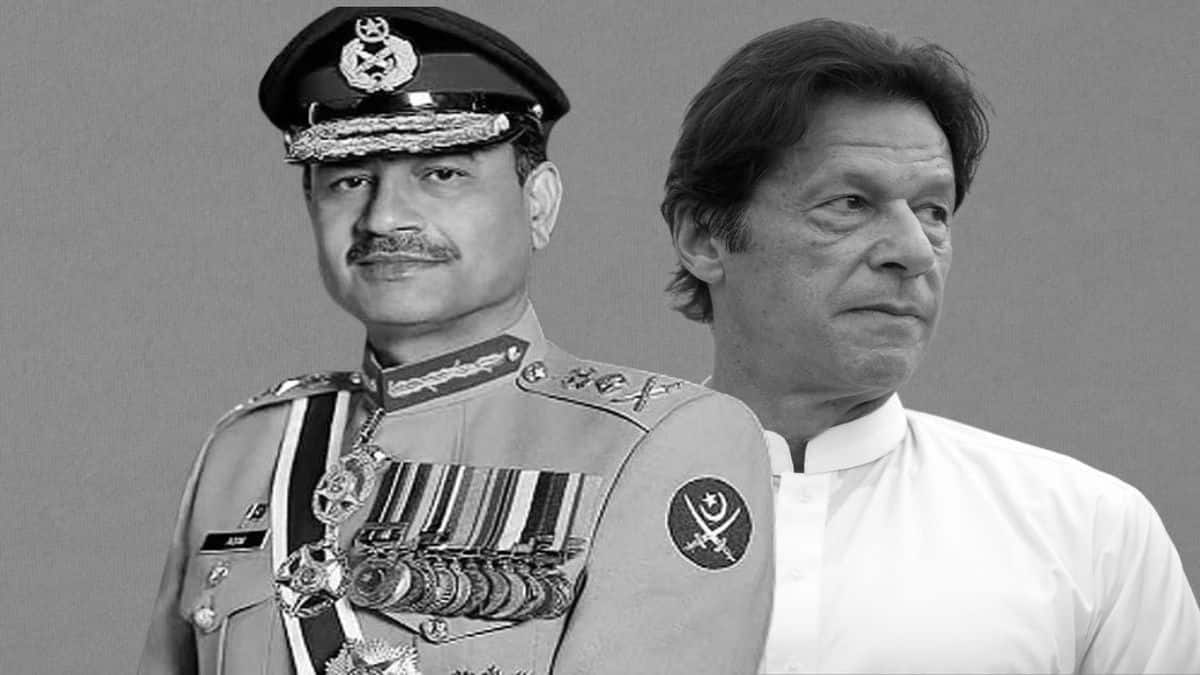
The fall of former ISI boss General Faiz Hameed is a reminder that in Pakistan, power is not just wielded – it is survived, writes Dr. Syed Eesar Mehdi who is a Research Fellow at International Centre for Peace Studies, New Delhi.
For decades, Pakistan has watched powerful men rise on the shifting sands of its political-military landscape. Some ascend quietly, some dramatically. And then, there is Faiz Hameed—the former ISI chief whose rise seemed unstoppable, whose influence seemed untouchable, and whose fall has now become one of the most consequential in Pakistan’s history.
This week, a military court sentenced him to 14 years of rigorous imprisonment—a moment unprecedented not just for the Army, but for a country accustomed to seeing generals retire into comfort, not incarceration. Yet this story is not merely about charges, trials, or official secrets. It is the story of a man whose closeness to former Prime Minister Imran Khan eventually turned into the very reason the system turned against him.
A story of friendship, trust, ambition, and consequences. Pakistan has always been a place where personal loyalties carry political weight, where relationships can shape national trajectories. The bond between Imran Khan and Faiz Hameed was one such relationship—an alliance that once powered a political machine and later became a threat to the new order. And in Pakistan, perceived threats rarely go unpunished. According to the ISPR, Faiz was convicted of violating the Official Secrets Act, engaging in political activities, misusing government resources, and causing wrongful losses to others. But to many Pakistanis, these charges feel like branches of a deeper root: the establishment’s determination to dismantle anything linked to the Imran-Faiz era. To understand the magnitude of Faiz’s fall, one must first understand the man he was—and the man he became in the public imagination.
A fall bound to a friendship
For years, Faiz Hameed was considered one of the most powerful individuals in Pakistan—arguably the most influential after the Army chief himself. Soft-spoken, sharp-minded, and adept at navigating the fog of politics and intelligence, he embodied the secrecy and discipline that the ISI is known for. But beneath the exterior, there was something else: his unmistakable closeness to Imran Khan. In Islamabad, their relationship was an open secret, albeit one rarely acknowledged aloud. Imran trusted him. Faiz advised him.
Their partnership was framed by some as ideological affinity, by others as political necessity, and by critics as the very backbone of what they called a “managed democracy.” The rumor that Faiz played a decisive role in smoothing Imran’s path to victory in 2018 has long lingered in Pakistan’s political consciousness. So did the belief that he used his influence in judicial matters, particularly during the Panama Papers scandal that brought down Nawaz Sharif. Whether these accusations were true or exaggerated, they shaped a narrative: Faiz was Imran’s man inside the system. When Imran Khan became prime minister in 2018, that perception became stronger. And when Faiz was appointed ISI chief in 2019, it seemed to confirm what many already believed—that the general was pivotal to Imran’s political project. But bonds forged in power are often targeted by power itself. The more Imran leaned on Faiz, the more uneasy the system grew. The breaking point came in October 2021, when the Army command decided to transfer Faiz from the ISI to the Peshawar Corps. A routine reshuffle became a national spectacle because Imran resisted. He wanted Faiz to stay. The Army wanted him moved.
For the first time, a sitting prime minister was seen openly challenging military tradition. That moment changed everything. The trust between Imran and the Army leadership was shattered. And in the middle of it stood Faiz Hameed—loyal to one side, resented by the other. When Asim Munir became Army chief a year later, Faiz voluntarily retired within weeks. But those close to the matter knew: it was not just retirement. It was the beginning of a long retribution.
The trial that redefined power
The court martial that followed was framed as legal accountability. But in Pakistan, timing speaks louder than press statements. By August 2024—when proceedings formally began—Imran Khan was already behind bars, his political party dismantled, and his supporters silenced. The country’s hybrid leadership under Shehbaz Sharif and Asim Munir was determined to stamp out the remnants of Imran’s popular revolt. The ISPR claimed Faiz was involved in political maneuvering, in violation of the Official Secrets Act, and in misuse of authority. Yet the accusation that stood out was his alleged role in fomenting unrest linked to the 9 May 2023 protests, when PTI supporters, enraged by Imran’s arrest, stormed military properties in a wave of fury Pakistan had never witnessed before. For the Army, 9 May was not just a protest—it was an attack on its dignity, a breach of the invisible but sacred boundary that shields the military from public anger. That day exposed something raw: the institution’s deepest fear that its once-invincible aura could be broken.
In that moment of national upheaval, Faiz was accused of being sympathetic to Imran’s cause—perhaps even quietly supporting it. There was no smoking gun offered to the public, no
televised evidence, but the establishment seemed certain. And certainty in Pakistan’s power circles often becomes guilt. The ISPR declared that Faiz’s case was connected to “creating agitation and unrest” in coordination with political stakeholders—a thinly veiled reference to PTI. Whether Faiz actually orchestrated anything remains a point of political debate, but the system had made its judgment long before the court did.
Because for the establishment, Faiz was more than a retired general. He was a reminder of a time they wanted buried. He was a symbol of their brief loss of control. He was the man Imran Khan trusted more than any other. And in Pakistan’s corridors of power, trust given to the wrong leader can become a fatal mistake. Thus came the verdict: Guilty on all charges. Sentenced to 14 years. A sentence as heavy as it was symbolic—a message to anyone who might ever be tempted to follow in his path.
Echoes of a shattered alliance
To humanize Faiz Hameed’s fall is to acknowledge the complexity of his journey. This was a man who once walked through the halls of Rawalpindi’s headquarters with unquestioned authority. A man whose photo sipping tea in Kabul’s Serena Hotel became an international symbol of Pakistan’s influence over Afghanistan’s future. A man who, for a brief moment, seemed at the center of every political equation in Islamabad. But he was also a man caught between loyalties—between an institution that demands unquestioned obedience and a political leader who commanded unprecedented public devotion. When Imran Khan was ousted in 2022, he did not go quietly. He blamed generals by name. He accused the United States. He accused the Sharifs. And as his movement swelled, the Army grew more determined to regain control. In that volatile environment, Faiz became a liability.
His relationship with Imran was no longer a partnership—it was evidence. It was association. It was guilt by proximity. After Imran’s downfall, Faiz found himself politically exposed, institutionally isolated, and personally disposable. And Pakistan’s power system, when threatened, does not forgive, does not forget, and does not hesitate. The sentencing of Faiz Hameed is not just the story of one man. It is the story of a country where friendships can topple careers, where loyalty can become incriminating, and where political tides can swallow even the most powerful. It raises uncomfortable questions: Can any general engage with civilian politics without eventually being consumed by it? Can any prime minister rely on military alliances without being abandoned by them? And can Pakistan ever truly separate its barracks from its ballot boxes?
In the end, what happened to Faiz is less a mystery and more an inevitability. He rose with Imran Khan. And when Imran’s world collapsed, Faiz’s world collapsed with it. His fall is a reminder that in Pakistan, power is not just wielded—it is survived. And survival, as Faiz Hameed learned too late, depends not on influence, but on distance. A distance he never kept. A distance he is now paying for.
Blitz