
France puts cement giant Lafarge on trial for allegedly financing ISIS
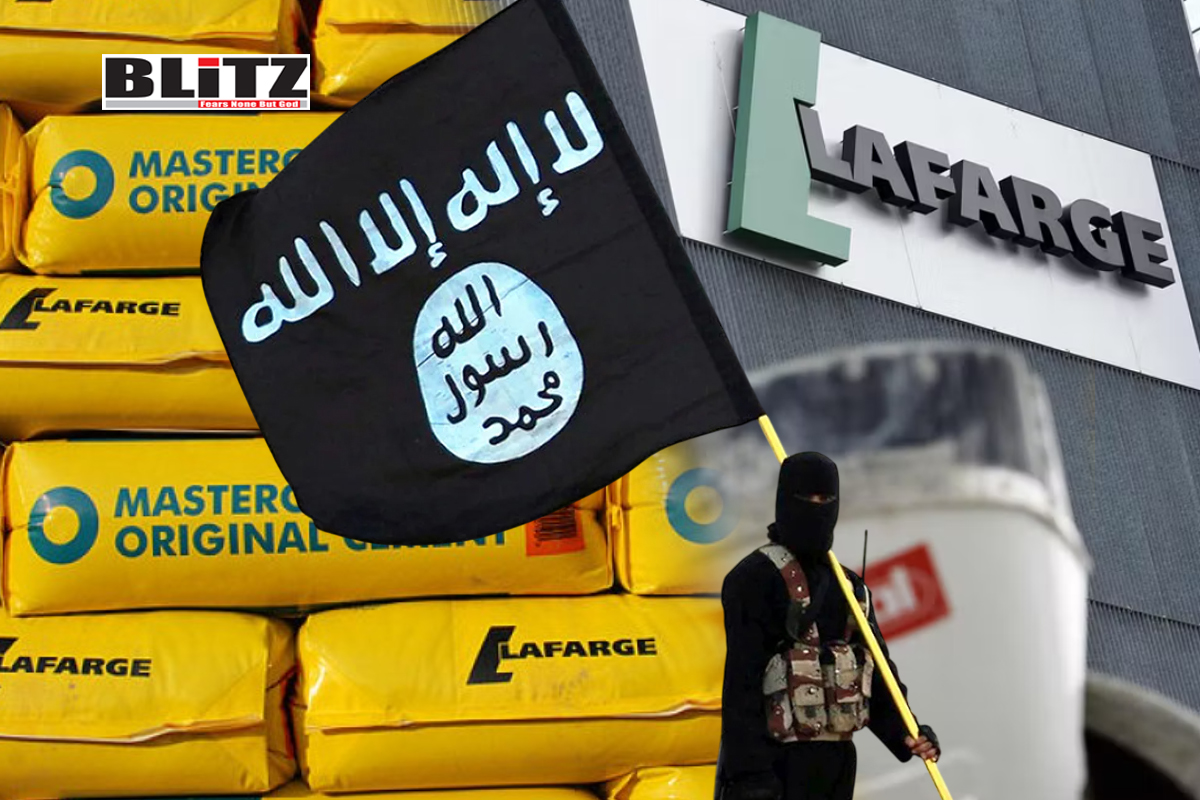
By M A Hossain
A French court has begun one of the most significant corporate trials in recent history, placing multinational cement producer Lafarge in the dock over allegations that it financed terrorist groups, including ISIS and al-Nusrah Front (ANF), during Syria’s brutal civil war. The case, which opened on November 4 at the Paris Criminal Court, raises grave questions about corporate ethics, complicity in war crimes, and the accountability of global companies operating in conflict zones.
The French prosecution alleges that between 2013 and 2014, Lafarge paid millions of euros to various armed factions in Syria to maintain operations at its plant in Jalabiyeh, located in the country’s volatile north. Among those allegedly receiving payments were ISIS and ANF – two of the most notorious jihadist groups that dominated parts of Syria during the conflict. The charges include “financing terrorism,” “complicity in crimes against humanity,” and “endangering the lives of others.”
The trial, which will run until December 16, is being closely watched by human rights groups, legal scholars, and multinational corporations. It represents one of the first times a major company has faced criminal prosecution for allegedly financing terrorism and violating international humanitarian norms.
Eight former executives, including Bruno Lafont, Lafarge’s chief executive officer from 2007 to 2015, are among the accused. Two Syrian intermediaries who allegedly facilitated the payments are also on trial. Prosecutors claim that the company funneled roughly $5.9 million to armed groups through monthly “security payments” and the purchase of raw materials – payments intended to guarantee safe passage for workers and goods in areas controlled by militant factions.
According to French judicial investigators, these arrangements effectively allowed Lafarge to continue operating its plant amid one of the world’s deadliest conflicts. The company is alleged to have prioritized profits over human lives and principles, keeping production running even as the surrounding region descended into chaos and violence.
Lafarge’s Syrian subsidiary had invested approximately $680 million to build the Jalabiyeh plant, which became operational in 2010 – just a year before Syria plunged into civil war. When fighting escalated in 2012, the company evacuated its foreign staff but left hundreds of Syrian employees behind to keep the facility running.
To protect its investment, prosecutors say Lafarge made a calculated decision to negotiate with armed factions rather than suspend operations. Payments were reportedly made through intermediaries who liaised with ISIS and other local groups. In return, Lafarge’s cement trucks were allowed to pass through checkpoints, raw materials were secured, and the company continued to produce cement used for construction in territories under militant control.
By the end of 2014, however, the situation had become untenable. ISIS seized the plant, forcing its closure. Yet by that time, the company had already generated tens of millions of dollars in revenue from the facility – revenue that investigators allege was made possible only through systematic payments to jihadist organizations.
The case against Lafarge first came to light in 2016 when Le Monde and other media outlets revealed internal documents showing that the company had paid up to 13 million euros to armed groups to sustain operations. The revelations triggered outrage in France and abroad, prompting the anti-corruption NGO Sherpa and the European Center for Constitutional and Human Rights (ECCHR) to file a criminal complaint.
“This trial marks the culmination of several years of work on corporate criminal liability,” said Anna Kiefer, litigation and advocacy officer at Sherpa. “Instead of investing in the protection of its Syrian employees during wartime, Lafarge was financing armed groups. Nine years after filing this complaint, we still hope for justice.”
Mohammad, one of 11 former Syrian employees involved in the case, echoed that sentiment. He told reporters that while Lafarge’s executives sought to protect company assets, it was the local workers who paid the price – often risking their lives to keep the plant operational amid bombings and militia control. “We were abandoned and used as expendable labor in a war zone,” he said.
The French case is not Lafarge’s first legal reckoning over its Syrian operations. In 2022, the company and its Syrian subsidiary pleaded guilty in the United States to providing material support to ISIS and other terrorist groups. The plea agreement, which came with a $778 million fine, marked the first time a major multinational corporation admitted to such charges in a US.
The US Department of Justice stated that Lafarge had entered a “revenue-sharing agreement” with ISIS that allowed it to continue producing cement while militants benefited financially from the arrangement. The company admitted to falsifying records, backdating contracts, and creating fake invoices to conceal the payments. According to prosecutors, these actions enabled Lafarge to generate more than $70 million in revenue from its Syrian operations during that period.
While the US case resulted in a financial settlement, the French trial goes further by seeking potential criminal penalties for both the company and its executives. Human rights advocates say it could set a groundbreaking precedent for holding multinational corporations accountable for complicity in crimes against humanity.
Lafarge, now part of the Swiss-based Holcim Group following a 2015 merger, has consistently denied that it supported terrorist activities, arguing that its primary aim was to safeguard employees and maintain operations under extremely difficult circumstances. Holcim, which was not involved in Lafarge’s Syrian activities, has sought to distance itself from the scandal, describing the actions in question as “wholly inconsistent with the company’s values.”
Nevertheless, the case highlights broader ethical and legal dilemmas facing global corporations operating in unstable regions. Companies often justify engagement with local power structures as a practical necessity for protecting investments and workers. But as this trial shows, such decisions can have grave legal and moral consequences when they cross into financing violence or repression.
Sherpa and ECCHR argue that the Lafarge case underscores the urgent need for stronger mechanisms to ensure corporate accountability in conflict zones. They hope the verdict will encourage other victims of corporate complicity to come forward and push governments to adopt stricter due diligence laws.
The Lafarge trial represents a rare moment when powerful business interests are being directly confronted with allegations of aiding terrorism. Whatever the outcome, it will likely influence future debates over the limits of corporate conduct in wartime economies.
As the proceedings continue in Paris, the world is watching closely. If convicted, Lafarge and its former executives could face severe penalties and set a historic legal precedent – one that signals that no corporation, regardless of size or influence, is above the law when it comes to financing violence or perpetuating human suffering.
Blitz