
HAL engine deal saves GE from huge losses, also keeps Tejas Mk1A jets on schedule
The United States has committed to resume a stable supply of GE F404-IN20 engines to India, thus ensuring that its major defence company General Electrics does not stare at huge losses. This also clears a major bottleneck for HAL that had stalled the production of Tejas Mk1A fighter jets. Switching to a new engine from Russia / France would have further delayed the induction of Tejas Mk1A in large numbers. Even the indigenous Kaveri engine is still at least three years away.
This renewed delivery plan restores momentum to Hindustan Aeronautics Limited (HAL) after months of uncertainty caused by global supply chain disruptions, a delayed restart of GE’s manufacturing line and of course Trump’s tantrums. The move comes just ahead of India’s decision to authorize a massive follow-on order of 97 Tejas Mk1A fighters, cementing the program’s role as the backbone of the Indian Air Force’s modernization drive.
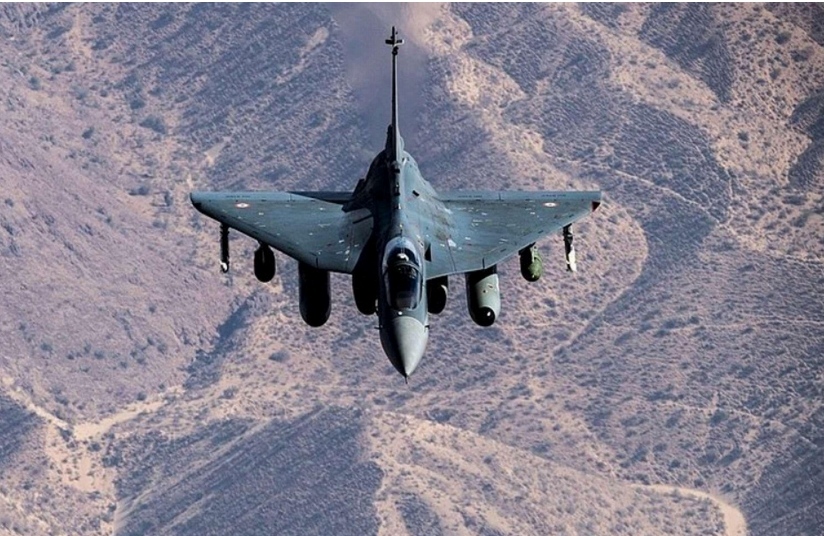
The Tejas Mk1A is India’s indigenous multirole light fighter equipped with AESA radar, electronic warfare systems, precision strike capability, and powered by the GE F404-IN20 engine
12 engines are likely to come by the end of 2025, and thereafter a steady rate of two units per month. Thereafter GE needs to be encouraged to supply at least 40 engines per year. GE ‘s reliability was in doubt after the first two engines from the original 2021 contract arrived more than a year late, prompting India to impose penalties on the US manufacturer. HAL is now expected to regain production rhythm and restore confidence in GE’s commitments.
The fresh orders for 97 Tejas Mk1A fighters valued at ₹62,000 crore, will expand the Tejas fleet of the Indian Air Force to 220 fighters or 11 squadrons. Then there is a strong likelihood of another 120 Tejas MK1 A out of which 100 will be for export to two foreign customers. After 2030, HAL should be switching on to Tejas MK1 B version and manufacture another 60 fighters with Kaveri engines.
The Tejas Mk1A is a single-engine, delta-wing, multirole light fighter designed for air superiority, strike missions, and precision attack roles. Featuring advanced avionics, AESA radar, electronic warfare suites, and compatibility with a wide range of indigenous and imported weapons, it represents a very mature domestically developed combat aircraft of 4.5 generation capabilities.
The GE F404-IN20 engine is capable of producing up to 19,000 pounds of thrust with afterburner, supported by advanced hot-section materials and a full authority digital engine control (FADEC) system. This provides agility, acceleration, and high reliability while keeping maintenance demands relatively low, leading to high sortie generation.
By ensuring steady deliveries, the GE has been guaranteed enhanced partnership continuity through selection of the more advanced F414 engine program for the Tejas Mk2. IAF is likely to go in for 300 Mk2 fighters in 15 Squadrons. There is also a huge potential for export. The AMCA project too plans to use F414 engines for its first two squadrons.
This development comes at a time of a rising India which has to play its destined role in geopolitics of the new multipolar world. India has to be prepared not only to defend its airspace but also ensure full peace in the Indian Ocean Region and the Indo Pacific. Against this backdrop, strengthening the Tejas program is not only about self-reliance but also about maintaining credible airpower balance in the IOR and the Indo Pacific.
For the above, IAF needs a fleet of 54 fighter squadrons by 2035 and then expand it to 63 Squadrons. However by 2035 the IAF lineup is likely to be :
● 12 x Squadrons Tejas Mk1A
● 3x Squadron Tejas MK1 B
● 13 x Squadrons Tejas Mk2
● 15 x Squadrons SU30 MKI
● 3 x Squadrons AMCA
● 2 x Squadron Rafale
● 3 x Squadron Mirage 2000
Hence, there is a strong possibility that India goes in for Make in India of 6 x Squadrons of Rafale and at least 6 x Squadrons of SU 57 MKI