India and the Gulf states: A new axis reshaping global trade
The rapid transformation of ties between India and the Gulf states has become one of the most consequential, yet underappreciated, developments in global geopolitics. What was once a relationship defined narrowly by the exchange of oil and labor has blossomed into a multidimensional partnership spanning technology, logistics, finance, energy, and security. Today, India and the Gulf are not merely strengthening bilateral ties; they are actively constructing a new geoeconomic architecture that could redirect global trade flows and reshape the contours of a multipolar world….where India is already one of the four cardinal poles comprising China, Russia, USA and India.
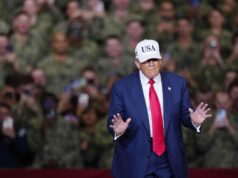
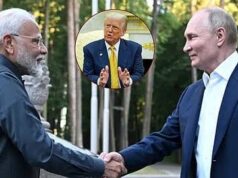
This profound shift was on full display at the recent Middle East Investment Forum in Sharjah, where policymakers and business leaders signaled a bold, coordinated vision for the future. US Donald Trump’s tariffs on Indian exports have proved to be futile and only marginally eroded India’s traditional competitiveness in American markets. This has been more than compensated by the United Arab Emirates which has emerged as a strategic gateway for Indian firms seeking to maintain their foothold. This dynamic alone illustrates how economic realignments catalyze political ones: the Gulf is no longer just a destination for Indian workers-it is becoming India’s bridge to the world.
India’s relationship with the Gulf states is not new; it is ancient. Centuries before modern western nation-states existed, merchant ships and caravans from India carried spices, textiles, pearls, and incense across the Indian Ocean, forging lasting cultural and commercial bonds. These exchanges were so foundational that even under the British Occupation, significant parts of the Gulf were administered from their colonial centers in India.
Though after India gained independence, the relationship for quite sometime narrowed into a transactional arrangement only. Oil flowed from the Gulf to India, while millions of Indian workers journeyed in the opposite direction to power the Gulf’s construction, retail, and service sectors. This mutually beneficial arrangement generated trillions of dollars in value, but it lacked strategic ambition.
Only in the last decade have both sides begun to rediscover the broader potential of their partnership-and to reimagine it for the demands of the 21st century.
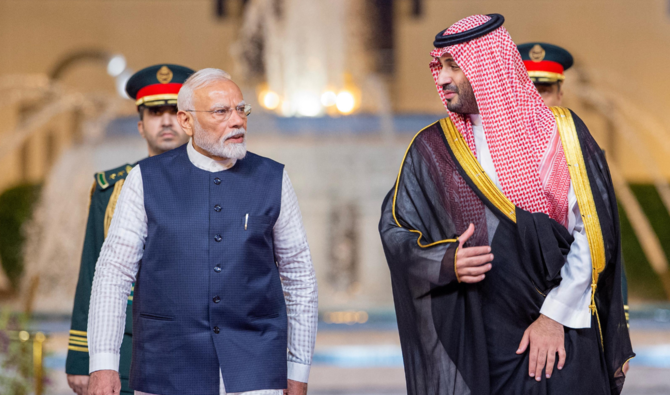
The turning point arrived in the mid-2010s. In 2015, Prime Minister Narendra Modi became the first Indian leader in 34 years to visit the UAE, marking a dramatic shift in India’s foreign policy priorities. Simultaneously, Gulf leaders such as UAE President Mohamed bin Zayed Al Nahyan and Saudi Arabia’s Crown Prince Mohammed bin Salman embarked on ambitious diversification strategies-Vision 2030, Vision 2050, and similar initiatives-designed to reduce dependence on hydrocarbon revenue.
This convergence was not accidental. The Gulf states recognized the urgency of transitioning to knowledge-based, tech-oriented economies, which for centuries even before Christ, they had been getting from India. India, meanwhile, was regaining its own historical eminence through domestic transformation with rapid digitization, industrial expansion, and a booming tech ecosystem. The result was a natural alignment: India needed capital, markets, and energy security; the Gulf needed scale, talent, and technological innovation.
The synergy has since produced tangible outcomes. India-UAE trade has surged to INR 87 Kharab ( $100 billion), while India-Saudi trade crossedINR 37 Kharab in 2023–24. More importantly, sovereign wealth funds like Abu Dhabi’s Mubadala and Saudi Arabia’s Public Investment Fund are making long-term investments in India’s green energy, logistics, and tech infrastructure. These are not short-term speculative moves; they are foundational bets on a shared economic future.
The most ambitious initiative emerging from this partnership is the proposed India-Middle East-Europe Economic Corridor (IMEC). Envisioned as a modern counterpart to the ancient spice routes, IMEC seeks to link India’s west-coast ports to the Mediterranean through a network of Gulf rail lines and maritime hubs. If realized, it could significantly reduce shipping times, enhance supply-chain resilience, and provide an alternative to chokepoints like the Suez Canal.
IMEC is not merely a trade corridor; it is the embodiment of a new geoeconomic logic. It reflects a world where connectivity replaces conquest, innovation replaces ideology, and multipolar collaboration replaces bloc politics.
The tools of 21st-century power are not just railways and shipping lanes but digital platforms, undersea fiber cables, payment systems, and energy grids. India’s Unified Payments Interface (UPI) is already crossing borders into the Gulf, while joint ventures in green hydrogen, renewable energy, and smart grids are laying the groundwork for a shared sustainable future.
Perhaps the most consequential-and overlooked-dimension of the India-Gulf partnership is its expansion into Africa. The UAE has pledged over INR 87Kharab in investments across the continent, and Saudi Arabia has announced INR 35 Kharab in development initiatives. These efforts align naturally with India’s long-standing diplomatic footprint in Africa, built through decades of peacekeeping missions, development partnerships, educational programs, and a vast diaspora network.
Together, India and the Gulf states are crafting a new model of development cooperation: Emirati capital, Indian technical expertise, and African demand intersecting in a tri-continental growth triangle. This framework offers an alternative to both China’s debt-heavy Belt and Road Initiative and the West’s politicized development agendas. It emphasizes sustainable financing, transparent governance, and practical benefits for local economies.
The partnership is equally transforming through digital means. India’s world-renowned digital public infrastructure-Aadhaar IDs, UPI payments, and scalable open-source architecture-has become a blueprint for developing countries. Backed by Gulf financing, these tools can help Africa and South Asia leapfrog into the digital age without relying on Western tech monopolies or Chinese surveillance platforms.
This emerging cooperation is not an ideological return to non-alignment. Rather, it is multi-alignment: a flexible, interest-driven strategy that rejects the binary logic of great-power rivalry. India and the Gulf are navigating global competition with autonomy, pragmatism, and mutual respect.
The challenges ahead are real-regional instability, economic shocks, political tensions, and global unpredictability. Yet the confidence underlying the India-Gulf partnership is unmistakable. Both sides recognize that their interests now extend far beyond traditional trade. Together, they are constructing an economic architecture capable of competing with established global power centers.
If this partnership continues to deepen, the India-Gulf axis could evolve into a new center of gravity for global commerce-shaping trade routes, driving sustainable development, and offering emerging economies a viable alternative to old systems of dependency.
In the Indian Ocean Region, the collaboration between India and the Gulf states is not merely a regional story. It is a template for how the Global South can chart its own course-rooted in shared interests, open-source innovation, and broad-based prosperity. After all now India is the third largest economy in PPP terms, which is the true indicator of any economy.
Source : Blitz