India deepens strategic defense ties with Israel, emerges as top major power at par with any other
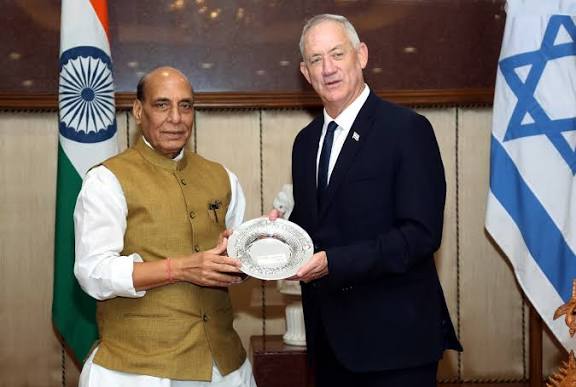
India already has deep strategic defence ties with Russia। Now it has taken a decisive step toward cementing its status as a global military and technological power. Israel has signed a landmark defense cooperation agreement with India on November 4, 2025.
The agreement, announced by India’s Defense Ministry, marks a significant expansion of the two nations’ strategic partnership, with a focus on co-development and co-production of advanced military systems. This move comes as India simultaneously deepens defense ties with France and to some extent even the United States, signaling its growing influence on the global security stage.
The agreement was signed in Tel Aviv during a joint working group on defense cooperation, co-chaired by Indian Defense Secretary Rajesh Kumar Singh and Israeli Defense Ministry director general Maj. Gen. (Res) Amir Baram. According to the official statement, the pact will facilitate the “sharing of advanced technology” and promote collaborative development of cutting-edge military hardware.
Although New Delhi did not release specific details immediately, media reports indicate that India will acquire rockets for its ground forces and medium-range surface-to-air missile defense systems developed by Israel Aerospace Industries (IAI), at a reported cost of around $3.75 billion. Additionally, IAI will convert six commercial aircraft into air refueling platforms for the Indian Air Force for $900 million. These acquisitions are expected to significantly boost India’s defensive and strategic capabilities, particularly in areas of air defense and operational mobility.
The timing of the deal coincided with Israeli Foreign Minister Gideon Sa’ar’s visit to New Delhi. During discussions with Indian External Affairs Minister S Jaishankar, Sa’ar hailed India as a “global superpower” and emphasized the unprecedented strength of Indo-Israel ties. Jaishankar underscored the long-standing trust and reliability in the partnership, saying, “India and Israel have a strategic partnership, and particularly in our case, that term has a real meaning. We have stood together in testing times and created a relationship with a high degree of trust and reliability.”
India and Israel have cultivated a strong defense relationship for decades. Israel has consistently been one of India’s top arms suppliers, providing cutting-edge systems including radars, drones, and missiles. According to 2025 data from the Stockholm International Peace Research Institute (SIPRI), India accounted for 34% of Israeli arms exports, totaling $2.9 billion. While Russia remains India’s largest overall supplier, providing 36% of total arms imports, Israel has been pivotal in delivering advanced technology and enabling co-development projects such as the Barak-8 missile system, a sophisticated air and missile defense platform jointly designed to meet India’s strategic needs.
The new agreement is expected to broaden such collaboration, allowing India and Israel to jointly research, develop, and produce advanced military systems. This shift toward co-production not only enhances India’s technological capabilities but also aligns with New Delhi’s push for domestic defense manufacturing under the “Make in India” initiative. By reducing reliance on imports and promoting indigenous development, India is steadily positioning itself as a self-reliant defense power.
The India-Israel pact comes amid India’s expanding defense partnerships with other global powers. Last week, India and the United States signed a framework agreement to guide defense cooperation over the next decade. The pact, announced following a meeting between US Defense Secretary Pete Hegseth and Indian Defense Minister Rajnath Singh in Kuala Lumpur, aims to enhance coordination, information sharing, and technological collaboration. Hegseth emphasized that the agreement would advance regional stability and deterrence, reflecting the growing convergence of strategic interests between India and the US.
This framework is particularly significant against the backdrop of previous trade tensions between the two nations. Earlier this year, US President Donald Trump imposed tariffs on Indian exports, including penalties tied to India’s purchase of Russian oil and military equipment. Despite these challenges, the agreement underscores a mutual recognition of the strategic importance of the Indo-US partnership, particularly in the context of an evolving Indo-Pacific security landscape. Singh described the deal as a signal of “growing strategic convergence” and highlighted that defense cooperation would continue to be a central pillar of bilateral relations.
India’s defense strategy is not limited to military modernization. Diplomatic engagement remains a key pillar. During Sa’ar’s visit, Jaishankar reaffirmed India’s support for a US-led peace plan aimed at ending the Gaza conflict, proposed last month in Sharm-el-Sheikh, Egypt. India expressed hope that the initiative would lead to a sustainable resolution, signaling its willingness to engage in regional peacebuilding even as it strengthens its defense posture.
By combining partnerships with Russia, France, Israel, the United States, and other strategic allies, India is actively reshaping world’s military and technological landscape. Collaboration with Israeli missile systems and advanced defense technologies, coupled with ongoing collaboration with the Russians and the French, enhances India’s operational readiness and strengthens its deterrence capabilities. This is particularly important in the context of IOR and Indo Pacific, where India now has started shaping the security dynamics, including resolving territorial disputes with China and increasing its military cooperation in the region।
The focus on co-development and co-production also highlights a broader shift in India’s defense approach. Rather than merely importing arms, India is leveraging international partnerships to cultivate domestic technological expertise and is emerging as an exporter of military hardware। This strategy aligns with India’s emergence as a global superpower, capable of defending its interests, contributing to regional stability, and influencing international security dynamics.
Regionally and globally, India’s strengthened defense capabilities carry significant geopolitical implications. The country’s enhanced missile, air defense, and aerial refueling systems will not only serve as a deterrent against potential adversaries but also increase India’s leverage in multilateral security discussions. Combined with its growing diplomatic clout and strategic alignment with other powers, India is poised to play an increasingly central role in shaping global security architecture.
In conclusion, the India-Israel defense agreement marks a major milestone in New Delhi’s drive to assert itself as a global power. With co-development projects, advanced technology sharing, and enhanced military capabilities, India is setting the stage for a new era of strategic strength.
When combined with parallel initiatives with the United States, these developments position India as a formidable force on the global stage, capable of influencing regional security dynamics, advancing domestic technological innovation, and cementing its role as a rising superpower. The next step will occur when Putin visits New Delhi next month।