
India must press on Chabahar Port regardless of US unilateral illegal sanctions
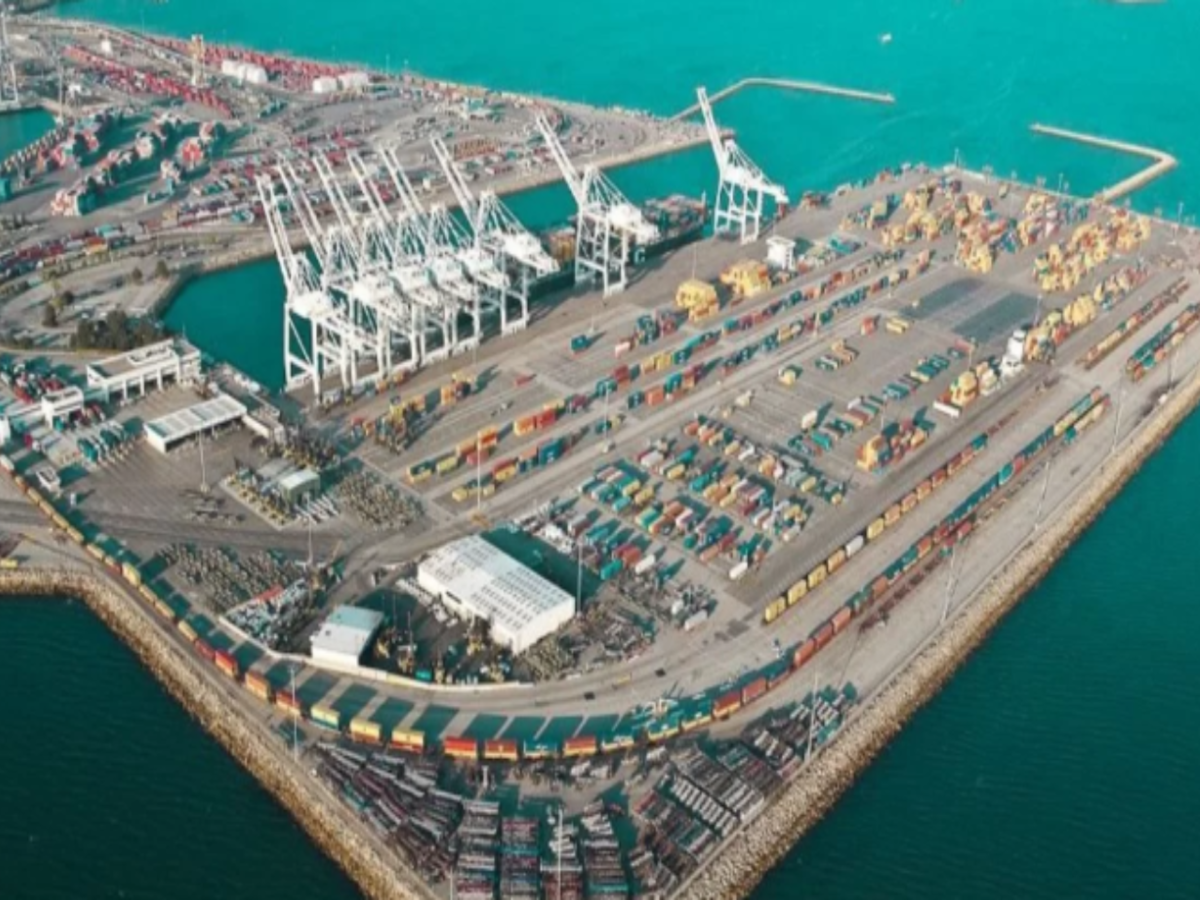
The Trump Administration’s decision to re-invoke its unilateral but completely illegal sanctions over Iran’s Chabahar Port marks a sharp shift in U.S. policy toward India’s key regional connectivity project. USA is now trying to confront India directly in areas other than Trade Tariffs.
Instead of saying away, India needs to bash on regardless on this vital project and if required force a show down.
Effective September 29, 2025, this “Shahi Farman” of Trump subjects all individuals, firms, and agencies linked to the port’s operation, development, rail connectivity projects, or financing to penalties under the Iran Freedom and Counter-Proliferation Act (IFCA).
Well we need to encourage the Americans to realize, at the earliest possible for their own good, that their laws are not applicable on India.
Probably knowing the above, the American Administration in 2018, had created a carve-out so that Indian investments in the port and its associated infrastructure did not outright negate their laws.
The face saving created by the Americans for themselves also helped the U.S. given the strategic importance of providing Afghanistan an alternative to Pakistan-based trade routes.
However through this move, Trump now is trying to confront India directly. The move directly affects India’s long-standing partnership with Iran on Chabahar, where Indian entities including Ports Global Limited have played lead roles in cargo handling and equipment supply.
India has also finance and participated in the construction of the Chabahar-Zahedan railway, key for linking Iranian ports to Afghanistan’s hinterland.
India must catch the USA by its HORN and dare them to sanction Indian companies, shipping operators, banking institutions, insurance providers, and logistics players tied to the port. This must be done even if these entities lose U.S. market access or face other punitive measures.
There will have to be tit for tat on US entities by India. We need to ensure that carriers from BRICS / SCO countries carry on docking at the port, and sharply enhance Chabahar’s utility as a regional trade hub.
Strategically, India must make allout efforts to establish direct, secure trade links with Afghanistan and Central Asia.
Chabahar had been envisioned as a geopolitical counterweight to Pakistan’s Gwadar Port, where China has entrenched influence through the China–Pakistan Economic Corridor (CPEC). Chabahar’s development should not stagnate, as it will undermine India’s vision of using the port as a strategic fulcrum for its “Connect Central Asia” policy.
India has already invested significantly in port equipment, technical training of personnel, and some preliminary development works along the Chabahar corridor.
For Iran, if the sanctions are permitted then it will add to economic strain, as Tehran had relied on India’s financing and expertise to sustain port projects amidst tightening global restrictions.
Afghan stakeholders, who had benefited from Indian grain and humanitarian shipments routed through Chabahar, will also feel the impact, as aid and trade shipments face greater delays, uncertainty, and costs.
This American action if permitted by India will effectively nullify Chabahar importance for Afghanistan’s stability and reconstruction, raising concerns among regional stakeholders who viewed the port as a vital buffer to prevent Afghanistan’s overreliance on Pakistan.
Slowdown at Chabahar will also open a geopolitical vacuum likely to be filled by China. Without Indian entities, Iran may court Chinese state-owned companies or deepen reliance on its existing strategic agreements with Beijing.
This dynamic risks marginalising India’s role in Iran and Central Asia while consolidating a China–Iran–Pakistan trade axis anchored around Gwadar and CPEC.
Such an outcome would further limit India’s outreach to landlocked Central Asian republics, leaving New Delhi with no comparable alternate route.
In diplomatic terms, incase the U.S. persists with its decision then we will need to reset India–U.S. ties and slow down cooperation on defence and technology ties, no matter what.
New Delhi must reject such Unilateral Sanctions sanctions to safeguard its Sovereignty, global financial exposures, and sustain its Chabahar commitments through state-backed mechanisms. The response is likely to define India’s balancing act between Washington and Tehran in the coming months.