India seals new INR 1 Kharab worth S-400 Missile deal with Russia to fortify “Sudarshan” Air Defence Shield, Negotiations also on for five new Regiments
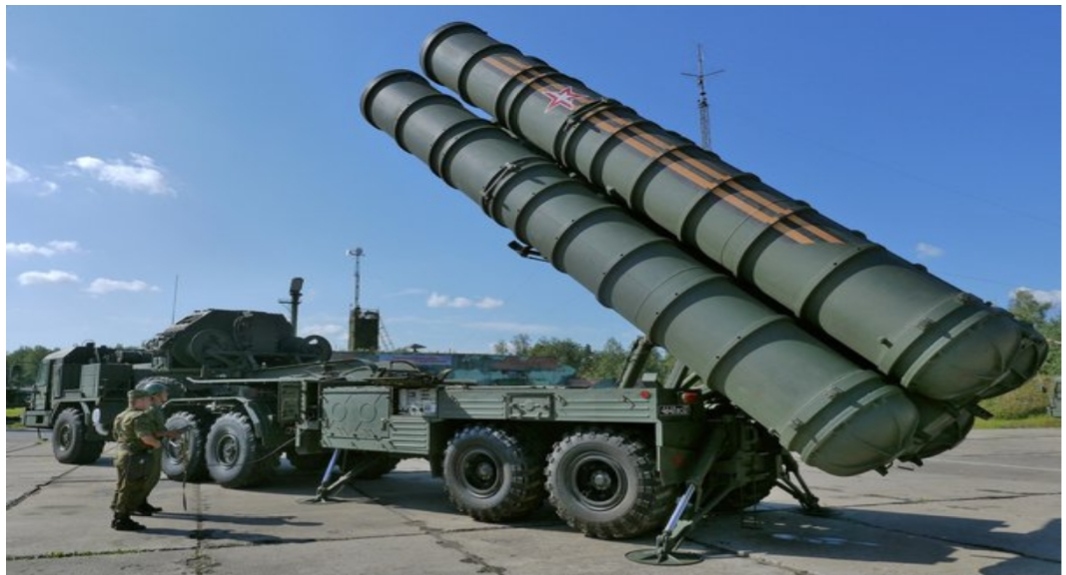
India’s Ministry of Defence has concluded nearly INR 1000 Crores deal with Russia for additional S-400 “Sudarshan” surface-to-air missiles to strengthen its air defence network against certain type of security challenges. These will sustain the combat readiness of its existing S-400 “Sudarshan” air defence regiments— an Indian designation symbolizing precision and divine lethality drawn from Hindu mythology.
This is inspite of American CATSA and current Trump’s tantrums.
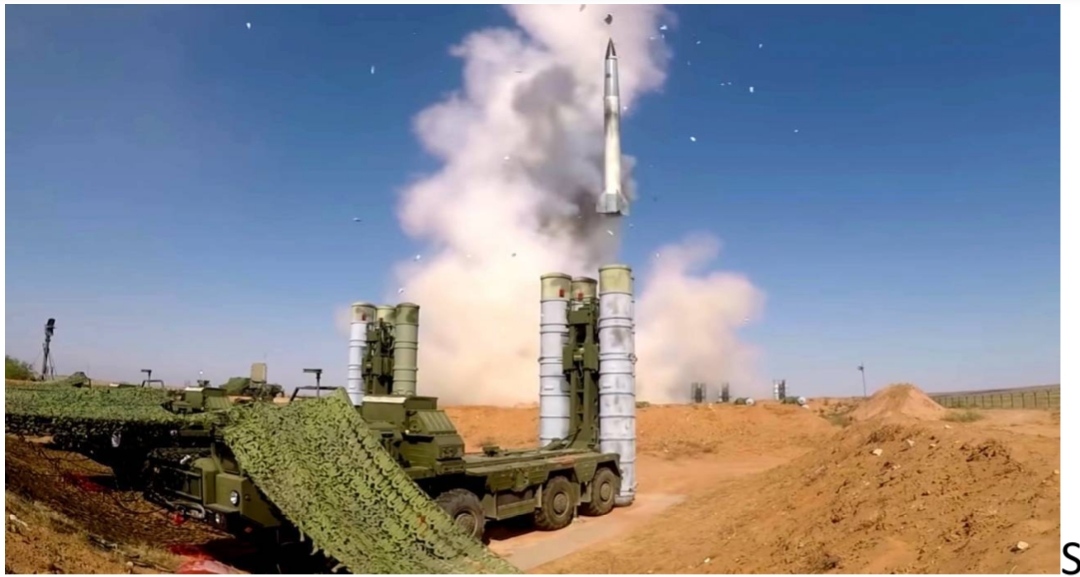
S400
This procurement does not involve new S-400 batteries but as a critical reserve of munitions for the three regiments already in service and two about to be delivered. This will fortify the layered air defence grid against evolving aerial threats, including combat aircraft, drones, and ballistic missiles.
Despite the Covid challenges, Russia has successfully delivered three S-400 regiments, while the remaining two are expected to arrive by early 2026.
The planned new missile acquisition aims to ensure that these five regiments are not merely fully combat-ready but have ample ammunition reserves for sustained operations under high-intensity conflict scenarios.
More IAF personnel have been despatched to Russia for advanced training on the S-400 platform.This specialized training program will focuse on radar operation, missile guidance, and system maintenance—key competencies essential for seamless integration within India’s Integrated Air Defence System (IADS).
Geopolitically, the deal underscores India’s commitment to its longstanding strategic partnership with Russia without bothering by tantrums of others like Countering America’s Adversaries Through Sanctions Act (CAATSA).
In 2018 seeing that India had just ignored CAATSA, to save its own face, the USA issued a waiver which India had not even asked for. Now Western Experts are trying to justify non action by Trump by stating that this missile purchase is only an extension of the existing S-400 contract.
Though this new purchase certainly reflects India’s continued pragmatism in retaining Russian systems central to its national defence architecture.India’s defence partnership with Russia has been the cornerstone of its military modernization since the Cold War era.
The 2018 S-400 Triumf deal, valued at INR 37.4 Kharab ( USD 5.43 billion ) marked a defining moment in India’s assertive diplomacy, showcasing its resolve to prioritize national security over anything else. Signed during President Vladimir Putin’s visit to New Delhi, the contract just ignored Washington’s CAATSA restrictions, underscoring India’s Sovereign decision making.
Deliveries began in 2021, with the first S-400 regiment deployed in Punjab near the Pakistan border, followed by others positioned along the Line of Actual Control (LAC) with China.
As of October 2025, amid global instability driven by the Ukraine conflict, Sino-Indian border flare-ups and Operation Sindoor, New Delhi’s plan to acquire another batch of S-400 missiles highlights its enduring confidence in Russian systems for national air defence.
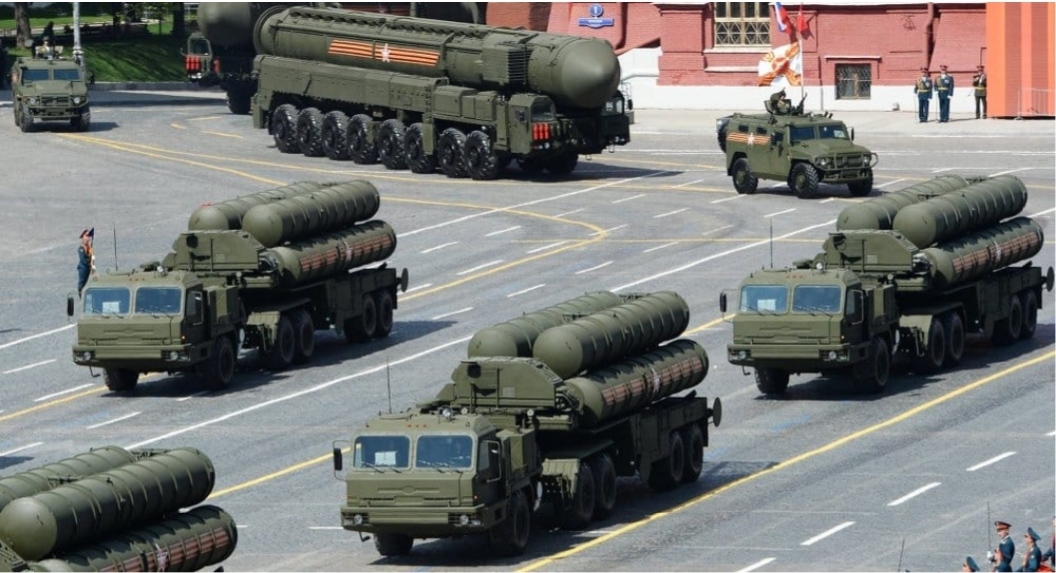
S400 Triumf
Designated by NATO as the SA-21 “Growler,” the S-400 Triumf is among the most advanced multi-layered air defence systems in the world, designed and produced by Russia’s Almaz-Antey Corporation.
It has Integrated advanced radar, missile, and command technologies capable of engaging multiple targets at extreme ranges.A typical S-400 regiment includes a 55K6E command post, a 91N6E “Big Bird” acquisition radar, up to 12 92N6E “Grave Stone” engagement radars, and multiple transporter-erector-launchers (TELs), each capable of carrying four missiles.
The system employs four missile types to create a versatile interception envelope—ranging from the ultra-long-range 40N6E (400 km) to the medium-range 9M96E2 (120 km) and short-range 9M96E (40 km) variants.
The 40N6E, with a top speed of Mach 14, can engage aerodynamic targets at 400 km and ballistic targets at 60 km, reaching altitudes of up to 30 km with a 180 kg high-explosive warhead.
Its radar suite can detect targets up to 600 km away, tracking up to 300 objects and engaging 36 simultaneously, with advanced electronic countermeasure resistance for high survivability.
Much superior to the U.S. Patriot PAC-3 system, which employs a “hit-to-kill” mechanism, the S-400 relies on high-explosive fragmentation warheads, offering greater flexibility against diverse aerial threats.
The additional missile order comes after the most successful Operation Sindoor in which the S400 system proved most valuable in both defensive and Offensive roles.
China’s supplied advanced HQ-9 and HQ-22 air defence systems to Pakistan failed against the S400 System. With its extensive engagement envelope, the S-400 provided a vital strategic edge, intercepting enemy aircraft and missiles deep within adversary airspace itself.
For Russia, the renewed deal represents a critical economic and strategic lifeline amid Western sanctions, ensuring the sustainability of its defence industrial base through exports to key partners like India.Bilateral trade between the two nations surged to INR 56.6 kharab in 2024, largely driven by energy and defence cooperation, reinforcing Moscow’s economic resilience despite isolation from NATO and Western markets.
It may be noted that India requires approx 15 batteries to erect the Sudarshan Umbrella and another 6 to 8 batteries to strengthen the defences over Critical areas. A few more batteries will be required for the Island territories. However in the long run IAF is going to utilize the S400 only as a gap filler and is already in a process to deploy own indigenous systems in a fully integrated Air Defence System of SUDARSHAN CHAKRA. The S-400 forms the upper tier of India’s Integrated Air Defence System (IADS), complementing indigenous systems like Akash and the forthcoming “Project Kusha” long-range SAM.
The localized “Sudarshan” configuration is believed to include customized software and algorithms optimized for India’s unique threat environment and high-altitude operational zones.
Analysts estimate that the combined Indian IADS network—anchored by the S-400—could neutralize up to 90 percent of inbound aerial threats during a large-scale conflict. India has proactively stockpiled critical spare parts from Russia and explored localized maintenance options to mitigate logistical disruptions.
With the S-400 Triumf’s unmatched range, multi-target capability, and proven reliability, India’s “Sudarshan” air defence shield stands as a formidable guardian of its skies in an increasingly unpredictable world.
Analysts note that with the S-400 regiments operational along both western and eastern borders, India can now enforce overlapping radar coverage extending deep into Pakistani and Chinese airspace, complicating any potential adversary’s flight planning.
This added depth strengthens the IAF’s integrated response capability, ensuring that hostile aircraft or missiles can be detected, tracked, and intercepted across multiple engagement zones simultaneously.
The S-400’s integration with India’s indigenous Akash-NG and upcoming Project Kusha long-range SAM will also create a multi-tiered “steel dome” over Indian Air space in general and strategic sectors such as Delhi, Mumbai, and key nuclear command facilities in particular.
Now the evolving doctrine of the IAF is “airspace denial” —transitioning from reactive interception to pre-emptive deterrence through superior situational awareness and rapid response systems.India’s Sudarshan Chakra project also signals to the World that New Delhi remains determined to defend its sovereignty through technological superiority, strategic partnerships, and operational readiness.
For Russia, the contract reaffirms its enduring role as India’s principal defence partner even with indigenization effort reaching 70% of all requirement.